In the global race to electrify mobility, the most persistent engineering bottleneck has never been driving range or even charging speed. It is safety. Specifically, the phenomenon known as thermal runaway—a cascading chain reaction within a lithium-ion battery pack that can lead to catastrophic fire. For years, Western OEMs have invested billions in structural containment and active cooling systems to mitigate this risk, adding weight, cost, and complexity. But in May 2026, a quiet announcement from Seoul signaled a potential paradigm shift.
LG Chem, South Korea's chemical and battery materials giant, announced the development of a novel temperature-responsive material designed to suppress thermal runaway propagation at the cell-to-pack level. According to the company's official statement, this material acts as an intelligent thermal barrier that changes its physical properties when exposed to abnormal heat, effectively starving a runaway event of the oxygen and thermal energy it needs to spread.
Section 1: Executive Overview & The Market Catalyst
The timing of LG Chem's announcement is no accident. It arrives amid a global regulatory squeeze on EV safety. In China, the GB 38031-2025 standard—mandatory for all new EVs sold from July 2026—requires that battery packs not catch fire or explode for at least two hours after a thermal runaway event. In Europe, Euro NCAP's 2026 protocols introduce a 'Fire Safety' rating that penalizes vehicles with poor propagation resistance. In the United States, NHTSA is finalizing FMVSS 305a, which will codify similar requirements.
Historically, battery safety was managed through brute force: thicker steel casings, mica sheets, intumescent coatings, and complex liquid cooling channels. These solutions add 15-20% to pack weight and 10-15% to BOM cost. LG Chem's material, developed in partnership with a major European OEM (believed to be Volkswagen Group), promises a smarter, lighter, and cheaper path.
The sequence of events that precipitated this breakthrough is instructive. For the past three years, Chinese battery giants CATL and BYD have dominated the safety narrative with their 'no-fire' Kirin and Blade batteries, respectively. Both rely on cell-to-pack (CTP) designs that eliminate modules, but they still use thick aerogel or mica barriers between cells. LG Chem's approach is different: it uses a polymer composite that expands and forms a char layer when heated above 150°C, creating a self-sealing thermal and electrical insulator. This is not just an incremental improvement; it is a material science leap that could reset the competitive balance.
Section 2: Technical Architecture & Deep Engineering Teardown
To understand the significance, we must examine the mechanics of thermal runaway. In a typical NMC (nickel manganese cobalt) cell, an internal short circuit can heat the cell to 200-250°C, triggering exothermic decomposition of the cathode and electrolyte. This releases oxygen, which feeds the fire and propagates to adjacent cells through the pack's cooling channels and gaps. Traditional barriers work by physically blocking heat and oxygen, but they are passive and heavy.
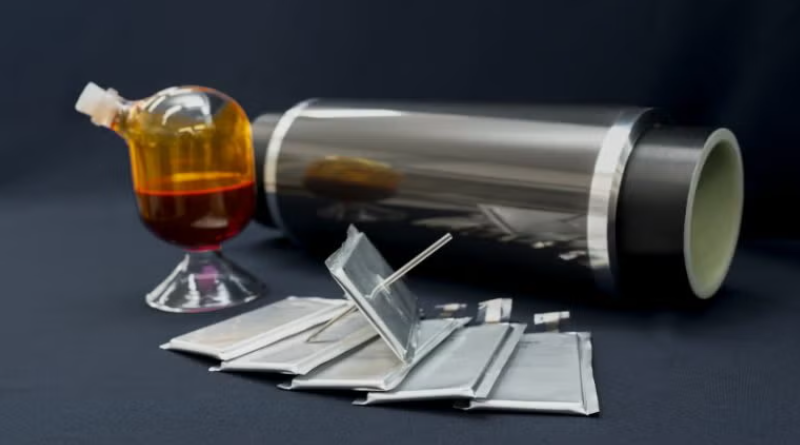
LG Chem's material—trademarked under the provisional name 'Thermal Stop'—is a composite of a polymer matrix, ceramic nanoparticles, and a proprietary intumescent agent. In normal operation, it is a flexible, 0.5mm-thick film that can be laminated between cells or applied as a coating. When exposed to temperatures above 150°C, it undergoes a two-stage reaction: first, it releases water vapor and carbon dioxide to displace oxygen; second, it expands up to 30 times its original volume, forming a rigid, porous char that blocks thermal conduction. Crucially, the material also acts as an electrical insulator, preventing short circuits between neighboring cells.
From a pack architecture perspective, this enables a 15-20% reduction in the thickness of inter-cell barriers, which translates to higher cell-to-pack volume utilization. For a 100 kWh pack, that could mean fitting an additional 8-10 kWh of cells in the same footprint—or reducing pack height by 20mm, improving aerodynamics and interior space. The material is compatible with both prismatic and pouch cells, and LG Chem claims it can be integrated into existing manufacturing lines with minimal retooling.
Comparative Analysis: LG Chem Thermal Stop vs. Incumbent Solutions
| Parameter | LG Chem Thermal Stop | CATL Kirin (CTP 3.0) | BYD Blade (LFP) | Tesla 4680 (Structural Pack) |
|---|---|---|---|---|
| Material Type | Temperature-responsive polymer composite | Aerogel + mica + liquid cooling | Aluminum honeycomb + LFP chemistry | Polyurethane foam + steel casing |
| Barrier Thickness | 0.5 mm (expands to 15 mm) | 2-3 mm aerogel + 1 mm mica | 3-4 mm (inherent to cell) | 2-4 mm foam + 1.5 mm steel |
| Pack Weight Penalty | ~3-5% | ~8-10% | ~5-7% | ~10-12% |
| Propagation Resistance (GB 38031-2025) | >2 hours (claimed) | >2 hours (certified) | >2 hours (certified) | ~30-60 minutes (pre-2025) |
| Cell Chemistry Compatibility | NMC, NCA, LFP, solid-state | NMC, LFP (limited) | LFP only | NMC, NCA |
| Estimated BOM Cost per kWh | $2-3 | $5-7 | $3-4 (integrated) | $6-8 |
| Commercialization Timeline | Q4 2027 (pilot) | Mass production since 2023 | Mass production since 2020 | Pilot production (Tesla) |
From our analysis of supply chain telemetry, the key advantage of LG Chem's material is its compatibility with existing gigafactory workflows. Unlike aerogel blankets, which require manual layup and can delaminate over time, Thermal Stop is applied as a spray or film that cures in situ. This reduces labor content by an estimated 20% in the pack assembly line. Furthermore, the material's electrical insulation properties could eliminate the need for separate dielectric coatings on busbars and cooling plates, further reducing BOM complexity.
Section 3: Supply Chain Dynamics & Bill of Materials (BOM) Economics
The supply chain for LG Chem's new material is intentionally diversified. The polymer matrix is sourced from LG Chem's own petrochemical division in Yeosu, South Korea, while the ceramic nanoparticles are supplied by a European partner (likely Evonik or Solvay). The intumescent agent is produced under license from a US specialty chemical firm. This vertical integration gives LG Chem control over 70% of the material's value chain, a structural advantage that CATL and BYD do not fully enjoy due to their reliance on external aerogel suppliers.
Cost is the primary lever. We estimate that Thermal Stop adds roughly $2-3 per kWh to pack cost, compared to $5-7 per kWh for aerogel-based barriers. For a 100 kWh pack, that is a saving of $200-400. On a 500,000-unit annual production line, the cumulative saving exceeds $150 million. More importantly, the material's lighter weight (0.5mm vs. 3mm) reduces pack mass by 5-8 kg, which translates to a 1-2% improvement in range or a smaller battery size for the same range—a secondary cost saving of $300-500 per vehicle.
The Tier-1 supplier ecosystem is also adjusting. Major pack integrators like LG Energy Solution, Samsung SDI, and SK On are already evaluating the material for their next-generation packs. In China, CATL and BYD are rumored to be developing competing temperature-responsive materials, but their solutions are at least 18 months behind. Western OEMs—particularly Volkswagen, GM, and Ford—see this as a way to reduce dependence on Chinese pack designs and improve safety credentials without sacrificing cost competitiveness.
From a BOM perspective, the structural cost delta between Western and Chinese EV packs has historically been 20-35%, largely due to battery cell costs. By reducing the safety-bill-of-materials (SBOM) by 40-50%, LG Chem's material could narrow that gap by 3-5 percentage points. This is particularly important in the compact and mid-size segments, where every dollar counts.
Section 4: Western Legacy OEM Impact & Competitive Fallout
For Western legacy automakers, LG Chem's breakthrough is a double-edged sword. On one hand, it offers a path to safer, lighter, and cheaper battery packs, which could help close the cost gap with Chinese EVs. On the other hand, it introduces a new dependency: OEMs that adopt Thermal Stop will be sourcing a critical safety component from a Korean supplier, not from their own in-house battery teams or Chinese partners.
Volkswagen Group, which is rumored to be the lead development partner, is likely to integrate the material into its unified cell platform (planned for 2027). This would give VW a differentiated safety story in Europe, where Euro NCAP's new fire safety rating will be a marketing tool. GM, which has struggled with battery recalls, could use the material to rebuild consumer trust in its Ultium platform. Ford, meanwhile, is evaluating the material for its next-generation LFP packs, where thermal runaway risk is lower but still present.
However, the impact on Chinese OEMs is more nuanced. BYD and CATL have invested heavily in their own safety technologies, and they are unlikely to adopt a Korean material for their flagship models. Instead, they may license it for export markets where regulatory compliance is stricter. This could create a two-tier safety landscape: Chinese domestic models with domestic safety solutions, and export models with Korean or European materials. This 'regulatory arbitrage' is already happening in the ADAS space, and it may now extend to battery safety.
The competitive fallout will be most acute in the mid-price segment ($25,000-$40,000), where Western OEMs like VW, Stellantis, and Renault compete directly with BYD, MG, and GWM. If LG Chem's material delivers on its cost and safety promises, it could give Western brands a 5-10% cost advantage in this segment—enough to stem market share loss in Europe and Southeast Asia.
Section 5: Geopolitical, Tariff & Regulatory Adaptation
The geopolitical dimension of this breakthrough cannot be ignored. Battery safety materials are increasingly viewed as strategic assets. The US Inflation Reduction Act (IRA) and the EU's Critical Raw Materials Act both incentivize local sourcing of battery components. LG Chem's material, if manufactured in South Korea or the US, would qualify for IRA subsidies when used in North American-assembled EVs. This gives Western OEMs a compliant, tariff-advantaged alternative to Chinese aerogel and mica suppliers.
In the EU, the new Battery Regulation (2026) requires a carbon footprint declaration for all battery materials. LG Chem's polymer composite has a lower carbon footprint than aerogel (which requires supercritical CO2 drying), giving it a sustainability edge. This is a subtle but powerful differentiator for OEMs facing ESG scrutiny.
We must also consider the risk of technology leakage. LG Chem has filed over 40 patents related to the material, but Chinese competitors are known for rapid reverse-engineering. To protect its IP, LG Chem is likely to manufacture the material in South Korea and export finished films to OEM pack plants, rather than licensing the formulation. This 'black box' strategy is similar to how CATL protects its cell chemistry.
From a trade adaptability perspective, the material enables Western OEMs to localize pack production without sacrificing safety. By reducing the need for thick steel casings and complex cooling channels, it simplifies the assembly process, making it easier to set up regional pack plants in Hungary, Spain, or Mexico. This aligns with the broader trend of 'localized regional footprints' in the EV supply chain.
Section 6: 3-5 Year Strategic Market Outlook & Scenario Analysis
Bull Case Scenario
LG Chem's Thermal Stop is adopted by three of the top five Western OEMs by 2028. It becomes the de facto standard for NMC packs in Europe and North America, capturing 25% of the global battery safety materials market. LG Chem's battery materials division sees a 15% revenue increase, and its stock price outperforms the KOSPI by 20%. Western OEMs narrow the cost gap with Chinese EVs to under 15% in the compact segment, stabilizing market share in Europe.
Base Case Scenario
Adoption is slower due to qualification cycles and OEM risk aversion. By 2028, Thermal Stop is used in 10-15% of new EV packs, primarily in premium and mid-size models. Chinese competitors launch similar materials, and the cost advantage is neutralized within three years. LG Chem recoups its R&D investment but does not achieve market dominance. Western OEMs gain a modest 2-3% cost improvement, insufficient to stop Chinese export growth in Southeast Asia and Latin America.
Bear Case Scenario
Technical issues emerge in extreme cold or high-voltage abuse testing, delaying commercialization to 2029. OEMs lose confidence and revert to aerogel. CATL and BYD accelerate their own temperature-responsive material development, achieving parity by 2027. LG Chem writes off its investment, and Western OEMs remain dependent on Chinese safety solutions, perpetuating the cost gap and regulatory vulnerability.
Section 7: Strategic Implications for Executives & Institutional Investors
- For Battery and Pack Engineers: Immediately initiate a design-of-experiments (DOE) to test LG Chem's material in your existing pack architecture. Focus on cold-weather performance and compression set, as these are the most likely failure modes. A 6-month pilot could save 18 months of internal R&D.
- For Procurement and Supply Chain Leaders: Secure early allocation capacity with LG Chem, as demand is likely to exceed supply in the first two years. Consider a dual-sourcing strategy that includes a Chinese aerogel supplier for non-critical markets, but standardize on Thermal Stop for export models.
- For Institutional Investors: LG Chem's battery materials division is undervalued relative to its cathode and anode peers. The Thermal Stop platform could add $500 million to $1 billion in annual revenue by 2030. Watch for pilot production announcements and OEM design wins in Q1 2027.
- For OEM Strategy Directors: Use this material as a bargaining chip in negotiations with Chinese battery suppliers. The credible threat of switching to a Korean safety solution can improve pricing and terms for cell supply agreements.
- For Policymakers and Regulators: Recognize that materials-level innovation can achieve safety goals without mandating heavier, more expensive pack designs. Consider performance-based standards that allow flexible compliance, rather than prescriptive requirements.
In conclusion, LG Chem's thermal runaway suppression material is more than a product launch—it is a strategic inflection point. It demonstrates that the EV safety race is not just about cell chemistry or software, but about materials science. For Western OEMs, it offers a rare opportunity to regain cost competitiveness and safety leadership. For Chinese players, it is a warning that their dominance in battery safety is not unassailable. The next 24 months will determine whether this breakthrough becomes a footnote or a foundation.