Thermal anxiety remains one of the most significant hurdles to widespread electric vehicle adoption in Western markets. While laboratory-level puncture tests are common, Geely Galaxy, in partnership with battery giant CATL and China Merchants Testing (CMTC), recently raised the stakes by conducting a highly publicized, live-passenger vehicle thermal runaway test. This dramatic demonstration highlights how rapid advancements in integrated active safety architectures are establishing rigorous new benchmarks for global EV battery safety standards.
As a thermal management analyst monitoring global supply chain developments, I view this demonstration as more than just a marketing stunt. It represents a shift from component-level isolation to system-level, real-world validation. For Western OEMs and global tier-1 suppliers, this test establishes a highly challenging validation benchmark that highlights the necessity of deep technology integration between automakers and battery suppliers.
The Live-Passenger Thermal Runaway Test: What Happened?
The test, conducted at the CMTC Fire Safety Laboratory, involved triggering a localized thermal runaway within the battery pack of a Geely Galaxy series vehicle while a human passenger sat inside the cabin. Traditionally, thermal runaway safety is evaluated at the cell or pack level using mechanical nail penetration or external heating.
During this test, despite the high-energy density cells reaching extreme internal temperatures during the induced failure, the vehicle cabin showed:
- Zero Toxic Gas Intrusion: Multi-layer sealing and positive pressure ventilation successfully prevented harmful off-gasses from entering the passenger zone.
- Controlled Cabin Temperature: The climate control and thermal barriers kept interior temperatures within safe, comfortable thresholds throughout the duration of the thermal event.
- Ample Escape Window: The vehicle structural design ensured structural integrity, allowing the passenger doors to remain functional for immediate exit.
Why This Redefines Global EV Battery Safety Standards
Modern EV battery safety standards, such as the global UN GTR 20 regulation, mandate a minimum of 5 minutes of warning time for passengers to exit a vehicle after a thermal runaway event is detected. The Geely-CATL system effectively pushes this boundary from a mere 'warning window' to complete cabin isolation.
The Technology Behind the Safety
This level of protection is achieved through a multi-layered, integrated approach rather than relying solely on battery chemistry:
- Geely Aegis Safety System: A physical and digital shield that monitors cell health in real-time using high-frequency AI diagnostics to predict thermal anomalies before they occur.
- CATL Non-Propagation Chemistry: Cells designed with high thermal stability interfaces and directional venting valves that release gas downward and away from the cabin floor.
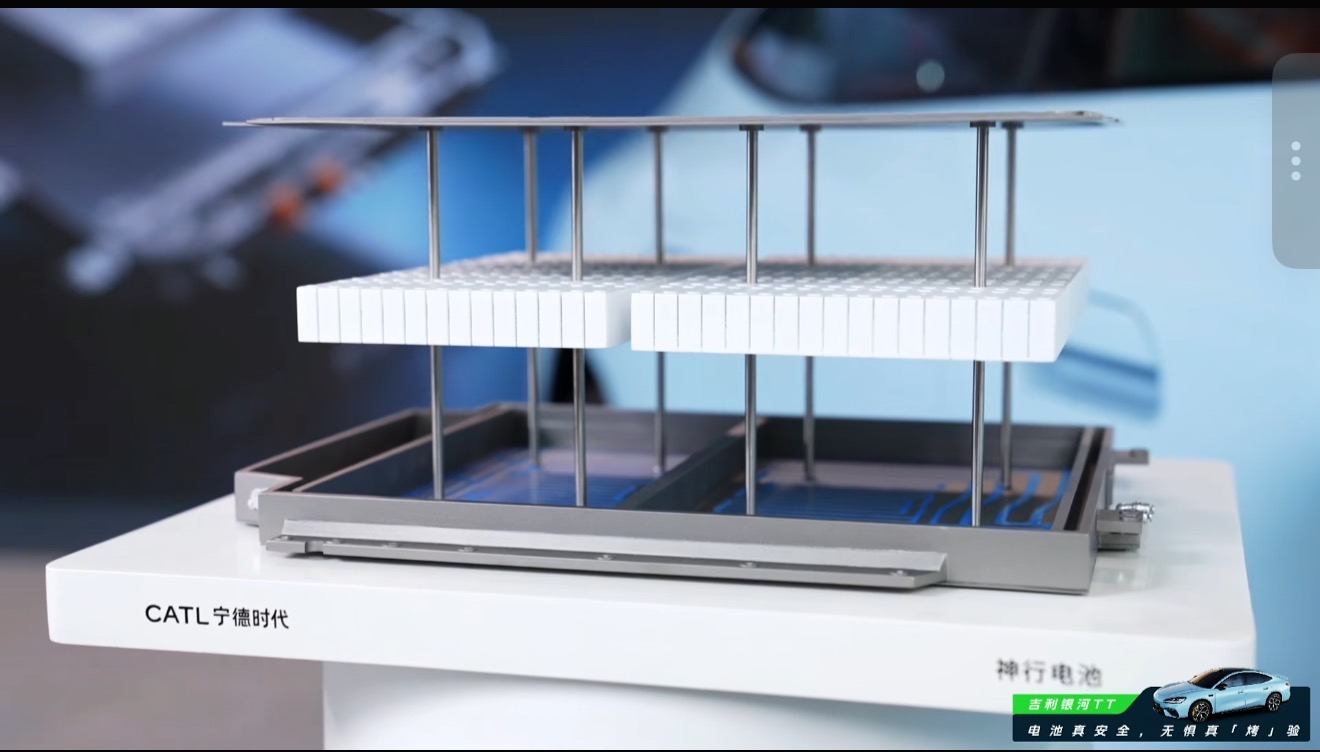
- Aerogel and Liquid Cooling Integration: Advanced composite aerogel plates situated between the battery pack and the cabin floor act as extreme thermal insulation barriers, blocking heat transfer to the passenger cabin.
| Safety Metric | Standard Regulatory Testing (UN GTR 20) | Geely-CATL Live Validation Standard |
|---|---|---|
| Escape Time Window | Minimum 5 minutes warning | Indefinite cabin thermal/gas isolation |
| Gas Prevention | Not strictly measured in cabin | Active exclusion of CO, HF, and VOCs |
| Test Scope | Pack or module level in isolation | Full vehicle integration with active HVAC |
Strategic Implications for Western OEMs and Investors
For global automakers, this test emphasizes the importance of strategic sourcing alliances and tight technology integration. Buying off-the-shelf battery cells and placing them in generic chassis is no longer sufficient to meet evolving consumer safety expectations. Safety is increasingly determined by how well the battery, battery management system (BMS), thermal insulation, and vehicle body structure interact under stress.
Western brands seeking to strengthen their localized footprints can benefit from deep collaborative engineering with advanced battery partners. By leveraging global supplier expertise and co-developing integrated thermal barrier technologies, automakers can address consumer anxieties, satisfy regulatory requirements, and establish safety as a core brand differentiator in the highly competitive EV market.