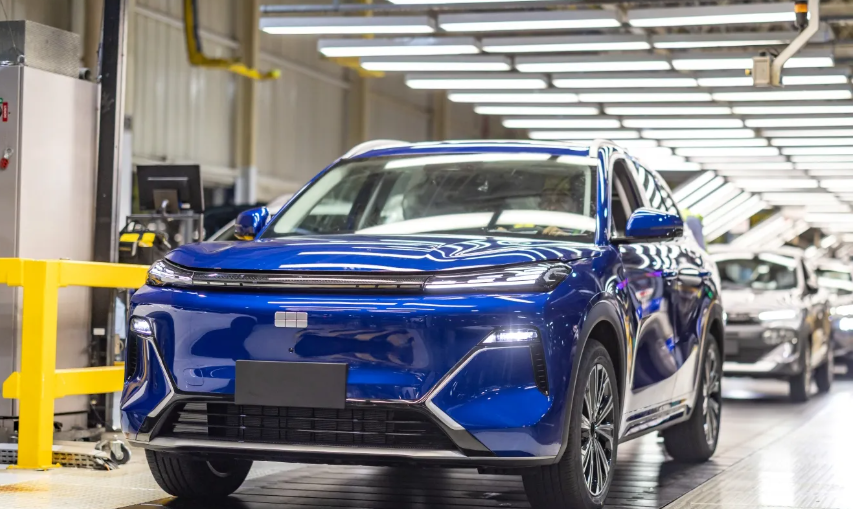
The Latin American automotive landscape is undergoing its most profound structural disruption in half a century. Historically dominated by European and American legacy OEMs producing localized, cost-optimized internal combustion engines (ICE), the Brazilian market has suddenly become a hyper-competitive battleground for electrification. As Chinese giants like BYD and Great Wall Motor (GWM) aggressively build local manufacturing footprints in the region, established players face an existential imperative: adapt to the rapid technological curve or lose market share in one of the world's most lucrative emerging markets. In response to this shifting paradigm, Renault and Geely have announced a massive BRL 2 billion (approximately $388 million USD) investment to deploy the advanced Geely Global Electric Architecture Brazil framework, marking a watershed moment for cross-border engineering collaborations.
To fully understand this development, one must examine the historical context of the Renault-Geely relationship. Rather than embarking on a costly, isolated development cycle for emerging market EVs, Renault has systematically deepened its ties with Geely. This partnership was formalized through the creation of 'Horse Powertrain,' a 50-50 joint venture dedicated to developing highly efficient hybrid and low-emission powertrains. By utilizing Geely's highly modular and cost-competitive architectures—previously proven in the European market through Volvo, Polestar, and Zeekr—Renault is executing a capital-efficient product strategy. The transition from utilizing the Compact Modular Architecture (CMA) in South Korea to deploying the cutting-edge Geely Global Electric Architecture (GEA) in Brazil represents a significant technological leap, aimed directly at capturing the mid-to-high-tier electrified segments in South America.
Section 2: Technical Architecture & Deep Engineering Teardown
At the core of this joint venture's localized product strategy is the Geely Global Electric Architecture (GEA). Developed as an evolution of Geely’s highly acclaimed Sustainable Experience Architecture (SEA), the GEA is a highly flexible, multi-energy platform. Unlike rigid, single-powertrain platforms, the GEA is engineered from the ground up to support Battery Electric Vehicles (BEVs), Plug-in Hybrid Electric Vehicles (PHEVs), and Range-Extended Electric Vehicles (EREVs). This versatility is critical for the Brazilian market, where the infrastructure for pure BEVs is still in its infancy, and localized biofuels (specifically sugarcane ethanol) remain a dominant fuel source. The platform's ability to integrate high-efficiency hybrid drivetrains with variable battery capacities ensures that Renault can scale its product portfolio in lockstep with regional infrastructure development.
From a mechanical and electrical standpoint, the GEA features several advanced engineering characteristics. It supports system voltages ranging from standard 400V up to ultra-fast-charging 800V architectures, although the localized Brazilian variant is highly likely to utilize a cost-optimized 400V setup to align with local grid constraints. The platform incorporates a high-efficiency multi-in-one electric drive system, utilizing silicon carbide (SiC) MOSFETs in the power inverter to achieve peak motor efficiencies exceeding 92%. Battery integration is achieved via Cell-to-Body (CTB) structural technology, which optimizes space utilization, increases torsional rigidity, and significantly improves safety margins in side-impact scenarios. Additionally, the GEA’s thermal management system is highly integrated, utilizing a centralized heat pump that can redirect waste heat from the electric drive unit and battery pack to optimize cabin heating and battery pre-conditioning.
To illustrate how this technology compares to its primary global and regional competitors, we have compiled a detailed engineering and marketing comparison matrix:
| Platform Architecture | Primary Developer | Powertrain Support | Battery Integration | Nominal System Voltage | Target Market Segment |
|---|---|---|---|---|---|
| Geely GEA (Renault Brazil) | Geely Auto Group | BEV, PHEV, EREV (Ethanol compatible) | Cell-to-Body (CTB) / Modular Pack | 400V / 800V | Emerging Markets / LATAM Mid-size |
| BYD e-Platform 3.0 | BYD Auto | BEV Only (DM-i for hybrids) | Cell-to-Pack (CTP) Blade Battery | 400V / 800V | Global Mass Market (Dolphin/Yuan) |
| Stellantis STLA Medium | Stellantis | BEV, Hybrid (Multi-energy) | Standard Modular Pack | 400V | Europe / North America C/D-Segment |
| Tesla 2nd Gen Platform | Tesla Inc. | BEV Only | Structural Pack (4680 / 2170) | 350V - 400V | Global Premium/Mass Market (Model Y) |
Section 3: Supply Chain Dynamics & Bill of Materials (BOM) Economics
By using the Geely Global Electric Architecture Brazil strategy, Renault is leveraging unparalleled economies of scale. Geely’s massive volume across its various sub-brands (including Lynk & Co, Zeekr, Volvo, and Geely Galaxy) allows it to negotiate highly favorable pricing from tier-1 and tier-2 suppliers. For a localized vehicle produced in Brazil, this shared architecture reduces the initial Bill of Materials (BOM) by an estimated 20% to 25% compared to a proprietary platform developed by Renault in isolation. This cost reduction is achieved by sourcing globally standardized electronic control units (ECUs), drive motors, and integrated power electronics modules directly from Geely's trusted partner network, including Tier-1 suppliers like Bosch, Valeo, and CATL.
However, the real operational advantage lies in localization. Under Brazil's complex fiscal and industrial regime, localized production is critical for long-term profitability. By investing BRL 2 billion in local assembly and supply chain development, Renault and Geely are working with local component manufacturers to produce stampings, structural elements, suspension assemblies, and interior trim within Brazil. This strategy not only satisfies local-content requirements but also mitigates foreign exchange volatility, which historically plagues automotive operations in South America. For battery systems, while cells may initially be imported from major Asian suppliers, local pack assembly using domestic structural enclosures and battery management systems (BMS) will be essential to achieving localized regional footprint goals.
Section 4: Western Legacy OEM Impact & Competitive Fallout
This aggressive, collaborative move by Renault and Geely is a direct challenge to other established OEMs in the region, particularly Stellantis and Volkswagen Group. Historically, South America has been a reliable profit engine for these legacy manufacturers, who have operated with prolonged product lifecycles and minimal capital expenditure on advanced electrification. By introducing highly sophisticated, software-defined vehicles based on the GEA platform, Renault is effectively raising the technological baseline in Brazil. Competitors can no longer rely on de-contented global platforms; they must now deploy modern, connected, and highly efficient architectures to remain competitive.
Furthermore, this partnership demonstrates a highly pragmatical approach to survival for mid-sized European OEMs. In an era where developing proprietary EV architectures can cost upwards of $2 billion to $5 billion per platform, Renault’s strategy of leveraging partner architectures allows it to preserve capital for brand marketing, retail distribution networks, and customer experience. This collaborative framework could serve as a blueprint for other Western legacy OEMs that lack the sheer volume to amortize independent EV development costs. Those who fail to establish such collaborative sourcing alliances run the risk of being squeezed out of the market by vertically integrated Chinese OEMs who control their entire supply chain from raw materials to final vehicle assembly.
Section 5: Geopolitical, Tariff & Regulatory Adaptation
The geopolitical reality of the global automotive trade is characterized by increasing friction, with Western markets implementing stringent tariffs on imported Chinese electric vehicles. However, Brazil has charted a slightly different path through its comprehensive Mobilidade Verde e Inovação (Mover) program. The Mover program establishes a progressive tariff regime on imported electrified vehicles, which will scale up to 35% by July 2026. This policy is deliberately designed to incentivize global automakers to transition from a pure import model to a localized production model, thereby driving investment in the domestic industrial base, creating high-skill jobs, and encouraging localized engineering research.
In this regulatory environment, the Geely Global Electric Architecture Brazil investment is a prime example of proactive trade adaptability. By manufacturing GEA-based vehicles locally at Renault’s Ayrton Senna complex in São José dos Pinhais, the alliance ensures full compliance with Brazil's rising import tariffs. This strategy allows Geely to effectively deploy its advanced technology in the Latin American market without incurring heavy import duties, while providing Renault with a competitive, high-tech product portfolio. This compliant, localized approach aligns perfectly with Brazil's national economic goals, enabling both manufacturers to capture fiscal incentives offered under the Mover program while shielding their operations from future protectionist policy shifts.
Section 6: 3-5 Year Strategic Market Outlook & Scenario Analysis
To understand the potential long-term trajectories of this joint venture, we must analyze various market scenarios over the next three to five years, taking into account macroeconomic variables, consumer adoption curves, and competitive actions.
Bull Case Scenario
In the bull case, the localized GEA-based Renault model launches on schedule in 2027 and receives immediate critical acclaim for its superior range, vehicle dynamics, and software integration. Leveraged by Renault's extensive, long-established dealer network across South America, the vehicle captures a dominant 15% share of the premium and mid-size electrified vehicle market in Brazil. As production scales up, the facility becomes a highly efficient export hub, shipping vehicles tariff-free to Argentina, Colombia, Chile, and Mexico. This success solidifies the Horse Powertrain joint venture, prompting further investment in a localized battery cell gigafactory, driving down BOM costs by an additional 15%.
Base Case Scenario
In the base case, the vehicle achieves solid, steady market penetration, capturing a respectable 6% to 8% market share in its segment. Consumer adoption of electrified vehicles in Brazil continues on a moderate upward trajectory, supported by gradual charging infrastructure expansion in major metropolitan areas like São Paulo and Rio de Janeiro. Renault successfully manages supply chain integration and localized sourcing requirements, avoiding severe tariff penalties. The project achieves operational profitability within 24 months of launch, proving the viability of using Chinese platforms under a European brand to maintain market relevance.
Bear Case Scenario
In the bear case, macroeconomic headwinds—including high interest rates and fluctuating currency values in Brazil—suppress overall consumer demand for new vehicles. Slower-than-expected infrastructure development leaves consumers hesitant to adopt plug-in vehicles, leading to low capacity utilization at the manufacturing facility. Concurrently, intense domestic price competition from fully localized BYD and GWM facilities compresses operating margins to near-zero levels. Technical integration challenges between Geely’s digital architecture and Renault’s localized vehicle systems result in costly launch delays, dampening dealer and customer enthusiasm.
Section 7: Strategic Implications for Executives & Institutional Investors
For senior industry decision-makers, supply chain directors, and institutional equity analysts, this development offers critical strategic insights:
- Platform Sharing is the New Survival Strategy: Mid-sized legacy OEMs can no longer afford to build proprietary EV architectures for every global market. Collaborations that utilize proven platforms like the Geely Global Electric Architecture are essential for capital-efficient product scaling.
- Localization is Mandatory for Tariff Compliance: As emerging markets adopt policies similar to Brazil's Mover program, relying on high-volume imports is a highly risky strategy. Automotive companies must invest in localized manufacturing footprints to ensure long-term regulatory compliance.
- The Rise of Multi-Energy Architectures: In developing regions, pure BEVs are not the immediate solution. Flexible architectures that support PHEV, HEV, and alternative-fuel (such as ethanol) configurations are highly superior for capturing mass-market share.
- Diversified Global Supply Chain Dependencies: While Western OEMs are striving to reduce reliance on Chinese supply chains in North America and Europe, in neutral markets like Latin America, the integration of highly efficient Chinese supply chains remains the most competitive path forward.