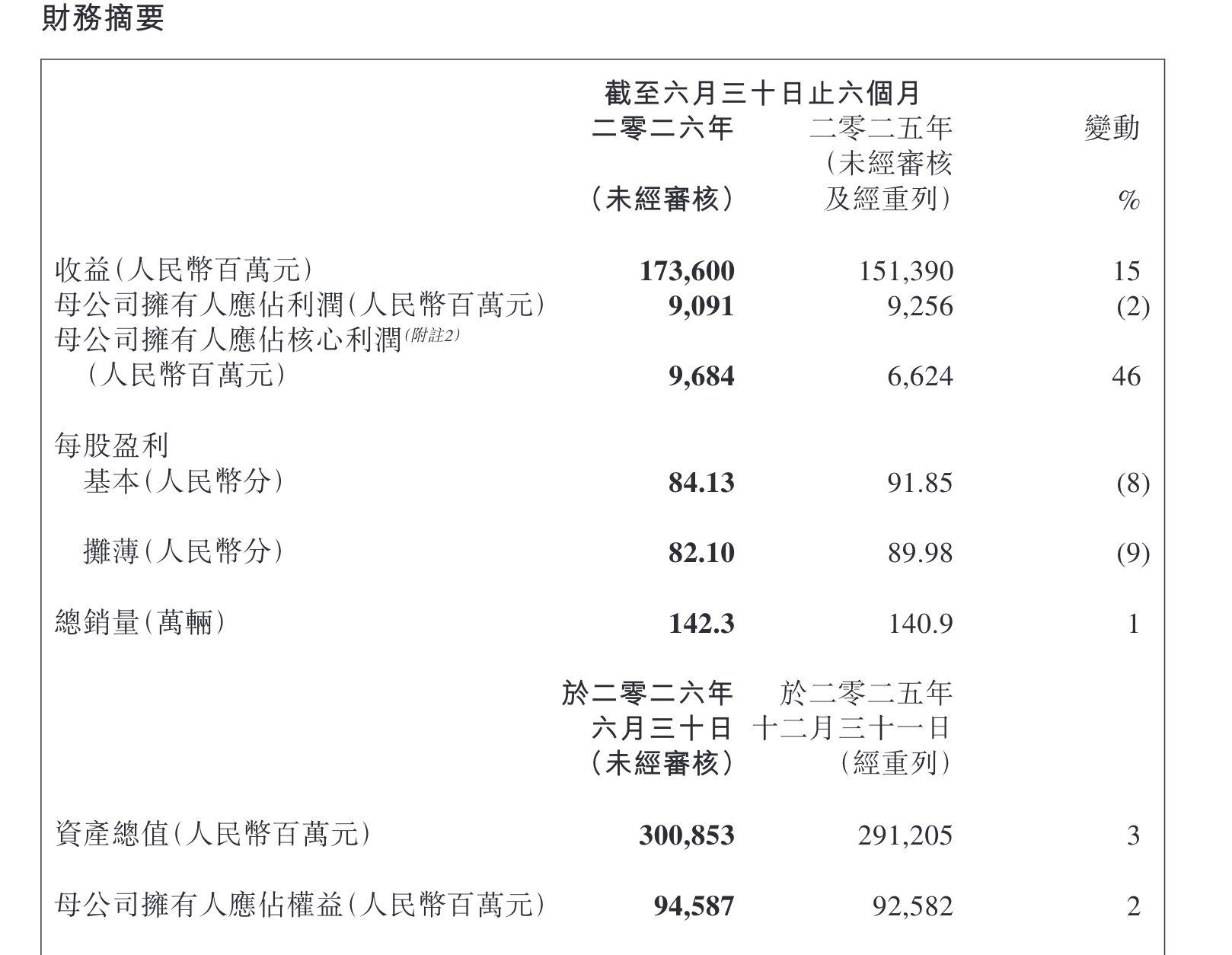
Geely Auto (0175.HK) has released its highly anticipated H1 2026 interim financial results, revealing a powerhouse performance that sets a new benchmark for the global automotive industry. With total revenue scaling to a record-breaking 173.6 billion RMB—representing a 15% year-on-year increase—and a spectacular 46% surge in core profit, the company's performance highlights how a highly integrated, multi-brand platform can build immense resilience. As Western markets monitor these shifts, analyzing the underlying Geely global EV strategy reveals why their approach to cross-border collaboration and platform sharing is successfully mitigating global market headwinds.
Decoding Geely's H1 2026 Financial Triumph
Geely's growth trajectory in the first half of 2026 demonstrates that the automaker has matured past high-volume, low-margin dynamics. By consolidating premium architecture platforms and leveraging shared manufacturing, Geely has dramatically optimized its cost structure. The 46% surge in core profit indicates that its high-end brands, including Zeekr, Lynk & Co, and Volvo, are achieving significant economies of scale.
Below is a breakdown of Geely's key financial indicators for H1 2026 compared to the same period in 2025:
| Key Financial Metric | H1 2025 Performance | H1 2026 Performance | Year-on-Year Change (%) |
|---|---|---|---|
| Total Revenue (RMB) | 151.0 Billion | 173.6 Billion | +15% |
| Core Profit Growth | Baseline | - | +46% |
| NEV (New Energy Vehicle) Share | Steady Growth | Record High | Strong Upward Trajectory |
This success is largely driven by the premium EV segment, particularly Zeekr, which has capitalized on Geely's proprietary Sustainable Experience Architecture (SEA). By sharing this highly modular platform across Volvo, Polestar, Zeekr, and even external partners like Jidu, Geely has lowered per-unit development costs, allowing for aggressive pricing without sacrificing margin health.
Strategic Localization: Navigating International Trade Realities
As import barriers shift in the United States and the European Union, the Geely global EV strategy has evolved from standard export dynamics toward advanced supply chain compliance and localized regional footprints. Instead of operating purely as a Chinese exporter, Geely is increasingly acting as a global holding group that embeds itself inside regional industrial ecosystems.
- Multi-Hub Manufacturing: Leveraging Volvo's established manufacturing footprints in Europe (Sweden and Belgium) allows Geely to adapt to localized manufacturing requirements seamlessly. This flexible capacity planning mitigates the impact of fluctuating import tariffs.
- Asset-Light Partnerships: By employing strategic sourcing alliances and joint ventures, Geely is localizing its vehicle assembly processes, offering job creation and direct economic value to host regions.
- Regulatory & ESG Alignment: Geely has strategically prioritized deep supply chain transparency and ESG-compliant battery sourcing, making its fleet highly attractive to institutional Western investors who demand strict compliance with regional labor and carbon footprint standards.
How Geely's Synergy Model Redefines Competitive Moats
For Western automotive strategy directors and portfolio managers, Geely's H1 2026 results offer a vital lesson in technology integration and cross-border collaboration. Traditional OEMs often struggle with legacy manufacturing overheads and slow software cycles. In contrast, Geely has structured its brands to operate like an agile tech ecosystem:
"Geely is demonstrating that a unified hardware foundation coupled with highly customized, brand-specific software layers is the most capital-efficient way to scale global EVs," says a Shanghai-based automotive supply chain expert. "Their ability to absorb geopolitical friction through decentralized corporate structures makes them a formidable player in the global EV market."
By treating Western legacy brands like Volvo as equal technology-sharing partners rather than acquisitions to be stripped, Geely has fostered a unique culture of mutual technical integration. The result is a highly adaptable corporate structure that can reallocate production, alter sourcing agreements, and maintain high margin levels, even in a volatile macroeconomic environment.