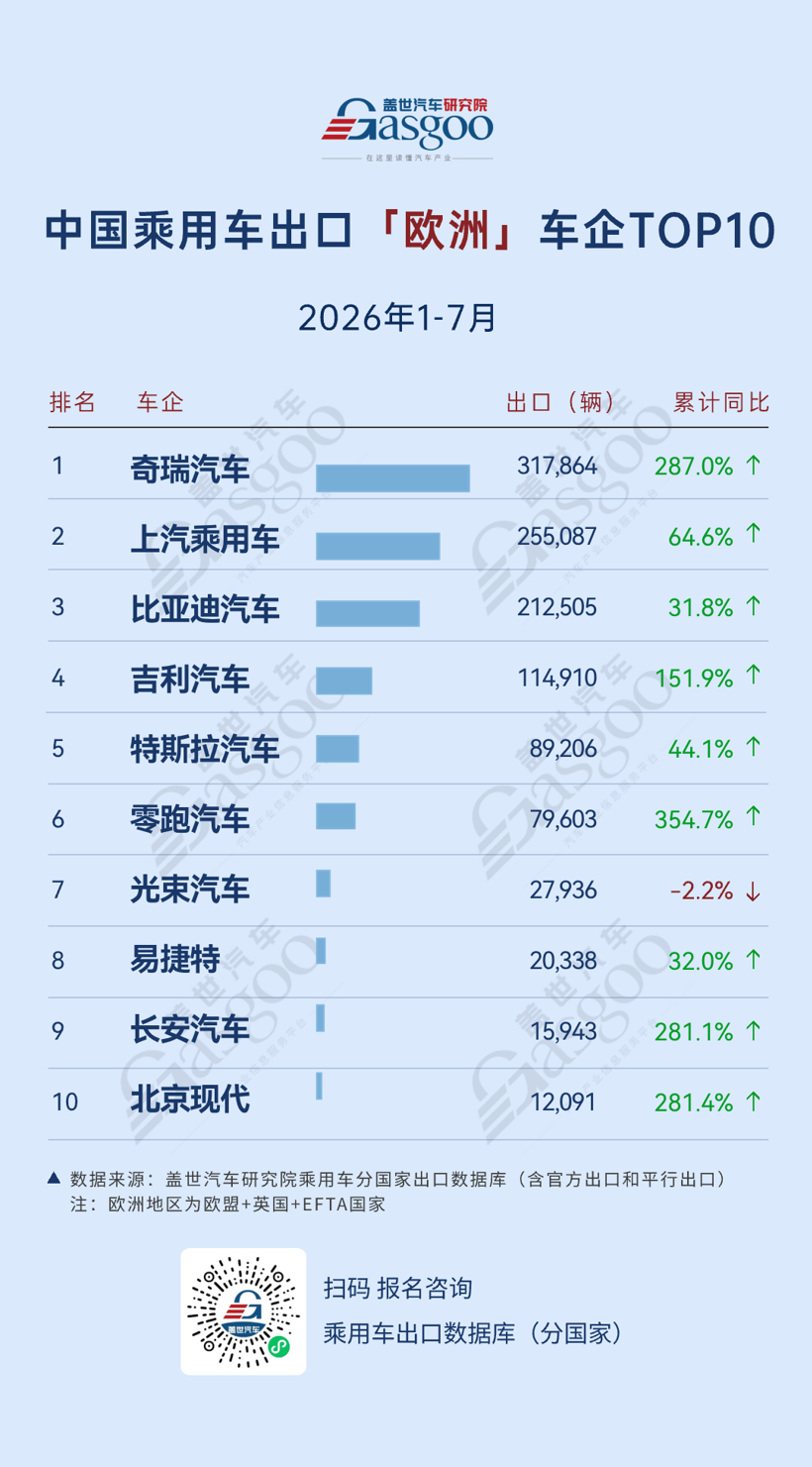
As the global automotive industry navigates a complex macroeconomic landscape, Chinese passenger vehicle exports are undergoing a significant structural transformation. Data from the Gasgoo Research Institute for January to July 2026 reveals a stark divergence in performance across major global markets. While certain regions are emerging as massive growth engines, others are experiencing rapid consolidation, forcing Chinese automakers to shift from broad volume-push tactics to highly nuanced regional strategies.
Geely's Latin American Surge: A Case of Strategic Localization
The standout highlight of the first seven months of 2026 is Geely's extraordinary performance in Central and South America, where the brand recorded a 410.7% year-on-year surge in export volumes. This explosive growth is not a random spike; it is the direct result of a deliberate, long-term commitment to a localized regional footprint.
Historically, Latin American markets have been highly receptive to cost-efficient, high-technology vehicles. Geely has successfully leveraged this demand by introducing a balanced portfolio of internal combustion engine (ICE) models, plug-in hybrids (PHEVs), and battery electric vehicles (BEVs). Rather than treating the region as a dumping ground for excess inventory, Geely has invested heavily in localized dealer networks, regional parts distribution centers, and tailored marketing campaigns that resonate with middle-class buyers in Brazil, Chile, and Mexico.
Furthermore, this regional push aligns with proactive supply chain compliance. By solidifying partnerships with local assembly firms and exploring regional manufacturing opportunities, Geely and other Chinese OEMs are ensuring they can withstand shifting trade environments while building sustainable, long-term brand equity.
The Middle East Slowdown: Decompressing the Market
In contrast to the Latin American boom, Chinese passenger vehicle exports to the Middle East experienced a severe contraction, dropping 44.5% over the same period. This represents the sharpest regional decline in recent years and serves as a vital case study in market saturation.
During the 2023–2025 export surge, many Chinese brands rushed into the Gulf Cooperation Council (GCC) nations, drawn by high purchasing power and low import barriers. However, this rapid entry led to high local inventories and intense competition. The 44.5% decline in 2026 indicates a necessary decompression phase. Forward-thinking OEMs are transitioning away from high-volume shipments to focus on strategic pricing, infrastructure development (such as localized charging networks for premium EVs), and high-value brand positioning.
Strategic Realignment: Geographic Export Shifts
The table below outlines the divergent performance of Chinese passenger vehicle exports during the first seven months of 2026:
| Region / Brand | Jan-Jul 2026 Trend | Key Driver / Dynamic |
|---|---|---|
| Central & South America (Geely) | +410.7% | High demand for tech-forward vehicles; proactive localized investment. |
| Middle East (Overall) | -44.5% | Inventory correction; shift from volume push to brand-building. |
| Europe (Overall) | Moderate Growth | Focus on high-value premium sub-brands and strategic supply chain alliances. |
What This Means for Western OEMs and Global Investors
For Western legacy automakers and global financial analysts, these export patterns offer critical insights into the competitive landscape:
- Geographic Agility: Chinese OEMs possess the agility to rapidly pivot their supply chains. When one regional market cools (like the Middle East), they can quickly reallocate resources and marketing power to high-potential regions (like Latin America).
- The Shift to Localized Sourcing: To safeguard against geopolitical headwinds, Chinese brands are moving away from direct exporting toward strategic localization. This includes establishing local manufacturing hubs in South America and Eastern Europe, raising the competitive stakes for local incumbents.
- A Balanced Portfolio Strategy: The success of Geely highlights the importance of offering a flexible powertrain mix. While Western OEMs have sometimes struggled with rigid transition timelines, Chinese players are capturing market share by offering highly competitive hybrid options alongside battery-electric models.
As the rest of 2026 unfolds, the ability to adapt to regional market demands and maintain strict supply chain compliance will separate the market leaders from the followers. Western competitors must monitor these geographic shifts closely, as the battle for automotive leadership is increasingly being fought in these highly dynamic emerging markets.