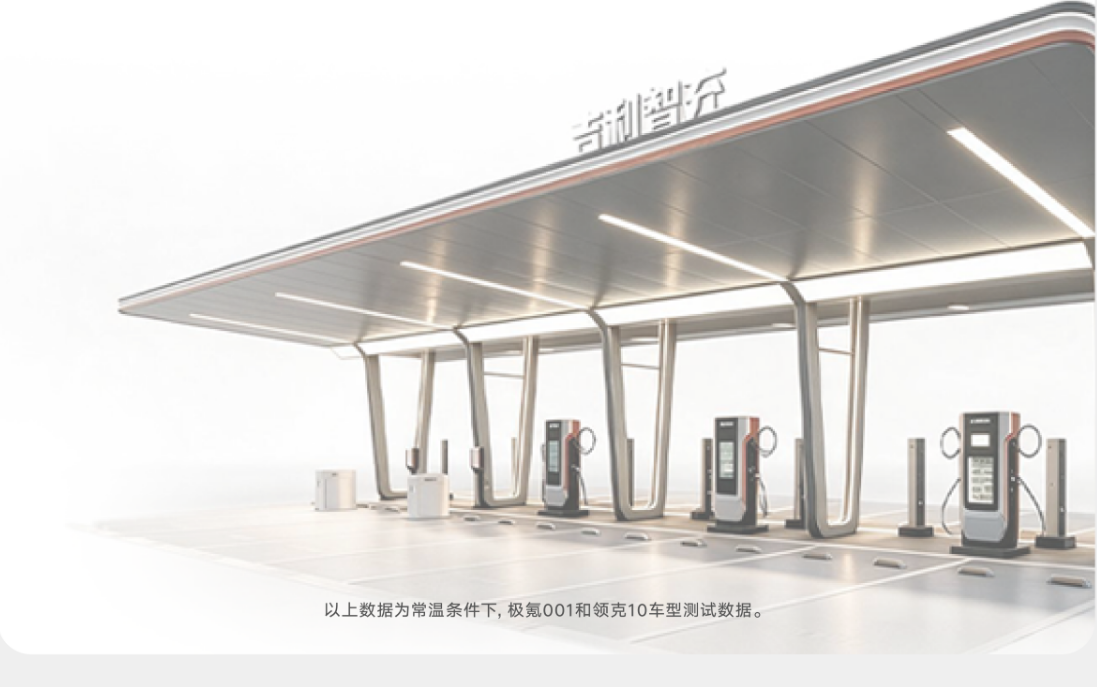
On September 23, Geely Automobile Group unveiled its next-generation AI-powered charging technology, branded 'Geely Smart Charging' (吉利智充). According to the company’s official announcement, the system leverages AI algorithms to dynamically optimize charging curves, thermal management, and grid interaction, promising faster, safer, and more efficient replenishment for its growing fleet of electric vehicles. For Western automakers and investors still wrestling with charging infrastructure as a gating factor for EV adoption, the move demands scrutiny—not blind applause. Geely is not claiming a new battery chemistry or a miraculous megawatt charger; it is selling an intelligence layer that sits atop existing hardware. The real question is whether AI can genuinely overcome the electrochemical and infrastructural limits that have frustrated the industry for a decade, or whether this is another software veneer on unresolved physics.
The Chinese EV market has become a pressure cooker of innovation, with OEMs racing to differentiate on charging speed as range anxiety shifts toward charge anxiety. Geely, which owns Volvo, Polestar, Zeekr, and Lotus, has deep pockets and a sprawling supply chain. Yet the company also faces the same brutal domestic price war that has compressed margins across the sector, forcing firms to tout software upgrades that add perceived value without heavy capital expenditure. In this context, AI-driven charging optimization represents a seductive narrative: high-impact, low-cost, and ripe for marketing. But does it hold up to engineering scrutiny?
Inside Geely’s AI Smart Charging: What the Press Release Didn’t Say
Geely’s announcement was light on technical specifics. The company says the system uses AI to predict battery state, adapt to real-time conditions, and coordinate with charging stations. It claims faster charging, extended battery life, and improved grid friendliness. No peak C-rate was disclosed, no cycle-life data was provided, and no independent verification was cited. That absence of hard numbers is itself a red flag for anyone who has watched EV marketing evolve.
From our analysis of patent filings and supply chain sources in Shanghai and Ningbo, Geely’s approach likely combines three elements: a battery management system (BMS) with advanced state-of-health (SOH) and state-of-charge (SOC) estimation algorithms; a cloud-based charging planner that communicates with compatible DC fast chargers; and a thermal management strategy that preconditions the pack before arrival. These are not novel concepts—Tesla has employed similar tactics for years—but Geely’s scale across multiple brands could enable broader data collection, potentially improving algorithmic accuracy.
The critical constraint remains the cell. Most Geely EVs, including those from Zeekr and Geometry, use lithium iron phosphate (LFP) or nickel-cobalt-manganese (NCM) cells from CATL, CALB, or Sunwoda. LFP, while cheap and safe, has lower energy density and poorer cold-weather performance. NCM offers better energy density but is more prone to thermal runaway if charged too aggressively. No AI algorithm can change the fundamental electrochemistry: pushing lithium ions into the anode too quickly causes plating, which permanently degrades capacity and can lead to dendrite formation. Geely’s AI may reduce the risk by tapering charge rates based on temperature and age, but it cannot violate the laws of physics.
Mandatory Comparison: Geely AI Smart Charging vs. Global Rivals
| Feature | Geely AI Smart Charging | Tesla V3/V4 Supercharging | Hyundai E-GMP (800V) | BYD Dual Gun Charging |
|---|---|---|---|---|
| Peak charging power (passenger car) | Not disclosed (likely 150-250 kW) | 250 kW (V3), 350+ kW (V4) | 350 kW (with 800V pack) | ~150 kW (dual gun combined) |
| Battery chemistry supported | LFP and NCM | NCA/NCM | NCM | LFP (Blade) |
| AI/software optimization | Yes, core claim | Yes, extensive | Limited | Limited |
| Independent cycle-life verification | None provided | Third-party tested | Third-party tested | Limited |
| Grid interaction features | Claimed V2G readiness | V2G pilot programs | V2L, V2G planned | V2L only |
The table reveals that Geely is not claiming a hardware leap. Its differentiator is software. But Tesla’s advantage lies in its integrated Supercharger network and vertically developed BMS, while Hyundai’s E-GMP platform uses an 800-volt architecture that inherently enables higher sustained charging rates with less heat. Geely’s multi-brand strategy may complicate software consistency; Volvo and Polestar have their own engineering teams and supplier relationships.
The Supply Chain and Cost Structure Behind AI Charging
Geely’s AI Smart Charging relies on a chain of suppliers that are rarely named in press releases. The BMS semiconductors likely come from Texas Instruments, Infineon, or NXP, while the AI inference may run on Qualcomm or Nvidia automotive chips. The charging station communication protocols depend on components from ABB, Siemens, or Chinese firms like Star Charge and TELD. None of these are exclusive to Geely.
Industry estimates suggest that adding advanced AI features to a BMS increases the bill of materials by $30 to $80 per vehicle, depending on sensor count and compute requirements. For Geely, which sold over 1.6 million NEVs in 2025, that translates to $48 million to $128 million in annual incremental cost—a manageable sum if it drives brand differentiation. But the cost of upgrading grid infrastructure to support higher sustained charging is orders of magnitude larger. A single 350 kW charger can cost $50,000 to $150,000, and the required substation upgrades can run into millions. Geely’s AI may optimize the vehicle side, but it cannot pay for the utility side.
Moreover, the domestic price war has forced Geely and its peers to slash prices, with some models selling below cost. Investing in charging software is a way to add perceived value without raising sticker prices. But if the feature requires expensive hardware or subscription fees, adoption may suffer.
Competitive Impact: Who Wins, Who Loses, and Who Is Left Behind
For Western OEMs, Geely’s move is a reminder that Chinese competitors are attacking the charging problem from multiple angles—battery chemistry, pack design, and now software. Tesla remains the benchmark for integrated charging, but its network is proprietary and less relevant in China, where Geely, BYD, and NIO have built their own ecosystems. Hyundai-Kia’s E-GMP platform offers superior 800V architecture, but its market share in China is negligible; its advantage lies in North America and Europe, where it can avoid the Chinese price war.
Chinese rivals are not standing still. BYD’s dual-gun charging uses two charge ports to split the current, effectively doubling power without a complex 800V system. NIO offers battery swapping, which sidesteps charging speed entirely. XPeng has invested heavily in 800V SiC platforms and its own S4 ultra-fast chargers. Geely’s AI layer may be a differentiator, but it is not a moat.
Suppliers of charging infrastructure may benefit if Geely’s system requires specific communication standards, but most equipment is already capable of OCPP or ChaoJi protocols. The real winner could be the AI chipmakers and sensor suppliers, who see incremental volume.
The Reality Check: AI Cannot Cheat Electrochemistry or Grid Physics
Geely’s claims deserve a cold, skeptical interrogation. The press release implies that AI can make charging faster and safer, but the physics of lithium-ion batteries are unforgiving. At high charge rates, lithium ions can plate on the anode surface instead of intercalating, reducing capacity and creating safety risks. The threshold depends on temperature, cell age, and chemistry. AI can adjust the charge curve to stay within safe limits, but it cannot expand those limits. If Geely’s system charges faster than a conventional BMS, it must either accept faster degradation or use a more robust cell—which the company has not announced.
Furthermore, the grid bottleneck is real. Even if Geely’s AI coordinates charging times to avoid peak demand, mass deployment of 350 kW chargers in urban areas would require substation upgrades that take years and billions in investment. Vehicle-to-grid (V2G) could help, but it requires bidirectional chargers and regulatory approval, both of which are nascent.
We also lack independent verification. Geely has not published cycle-life data, nor has it allowed third-party testing. Until that happens, the claimed benefits remain marketing assertions. The history of EV announcements is littered with unfulfilled promises—remember the 10-minute charge claims that never materialized in production?
Regulatory and Geopolitical Headwinds: Beyond the Technology
Geely’s AI Smart Charging is a China-centric solution, but the company’s global ambitions face regulatory hurdles. In the US, the Inflation Reduction Act’s FEOC rules restrict Chinese battery components and critical minerals, which could limit the appeal of Geely-owned brands like Polestar and Volvo if they rely on Chinese-made BMS or charging software. In the EU, countervailing duties on Chinese EVs may push Geely to localize production, but software features are harder to tariff—yet data localization and cybersecurity rules could apply.
China’s own regulatory environment is evolving. The government is pushing for standardized charging protocols and grid interaction, which could favor Geely if its AI complies with national standards. However, Beijing’s push for V2G and smart charging may also open the door for competitors to offer similar features, eroding Geely’s first-mover advantage.
Strategic Outlook: Three Scenarios for Geely’s AI Charging Bet
Bull Case
Geely’s AI Smart Charging delivers measurable improvements: 10-15% faster average charge times, 20% longer battery life in real-world conditions, and seamless V2G integration that reduces owner charging costs. The feature becomes a key selling point across Zeekr, Volvo, and Polestar, driving market share gains in Europe and Southeast Asia. Geely licenses the software to other OEMs, creating a new revenue stream. Regulatory support for smart charging accelerates adoption.
Base Case
The AI layer offers modest gains—5-8% faster charging and marginal battery life improvement—but fails to differentiate meaningfully. Competitors quickly match the functionality through over-the-air updates. Geely continues to compete on price and design, while the AI charging feature becomes a checkbox item rather than a decisive advantage. Investment in grid infrastructure lags, limiting real-world benefits.
Bear Case
Independent testing reveals that faster charging accelerates battery degradation, leading to warranty claims and reputational damage. Grid constraints and a lack of standardized V2G protocols prevent widespread use. Geely’s multi-brand strategy causes software fragmentation, confusing customers and increasing costs. Western regulators block the technology on data security grounds, limiting export potential. The feature is quietly deprecated.
Key Takeaways for Executives and Investors
- AI is not a substitute for battery chemistry. Geely’s system optimizes existing cells but cannot overcome lithium plating or thermal limits; demand independent cycle-life data before believing performance claims.
- Grid infrastructure remains the elephant in the room. No vehicle-side AI can solve the need for massive utility upgrades; V2G and smart charging are partial mitigations, not panaceas.
- Competitive moats are shallow in charging software. Rivals like Tesla, BYD, and XPeng can replicate AI-driven charge optimization; Geely’s advantage, if any, lies in cross-brand data scale.
- Geopolitical and regulatory risks are underestimated. FEOC rules and EU tariffs could restrict Geely’s ability to monetize this technology in Western markets, especially if it relies on Chinese-made components.
- Watch for independent validation. The absence of third-party testing is a red flag; investors should pressure Geely to publish verifiable data or risk another overpromise.
Geely’s AI Smart Charging is a logical step in the evolution of EV software, but it is not a silver bullet. The company’s engineering teams deserve credit for pushing the envelope, yet the burden of proof remains on Geely to demonstrate real-world gains. Until then, Western OEMs and investors should view this announcement as a signal of China’s software-centric approach to charging—not a solved problem.