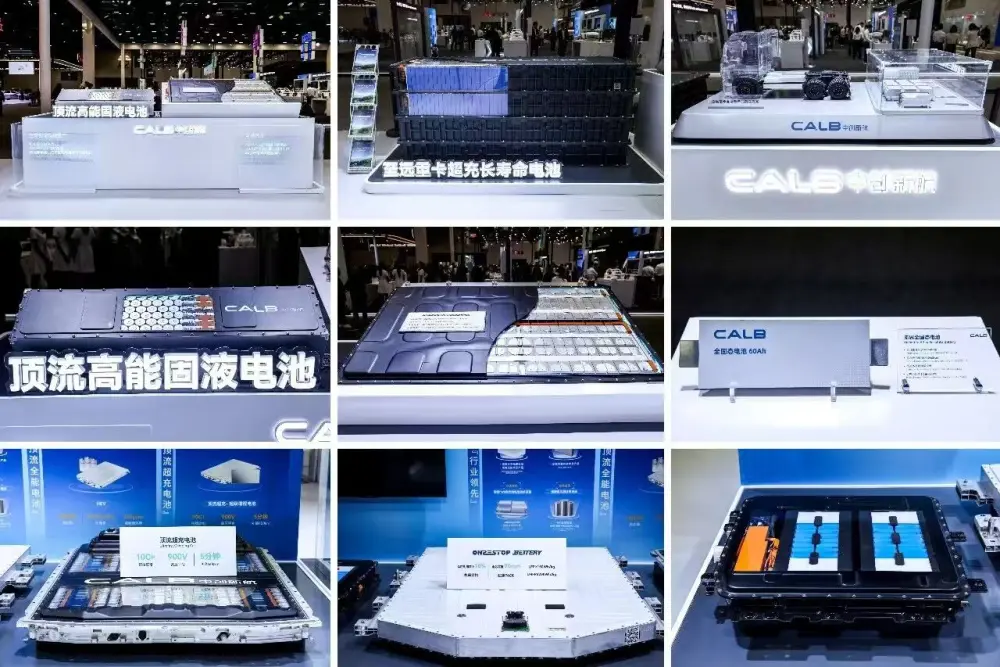
When the Global Battery Alliance (GBA) published the results of its 2026 battery passport operational pilot trials, involving 40 organizations across 13 countries, the announcement appeared on its surface to be a standard multilateral sustainability milestone. Yet behind the institutional terminology lies an escalating industrial contest. Chinese cell manufacturer CALB (China Aviation Lithium Battery) unveiled two public data dashboards for its pilot packs, marking one of the clearest demonstrations yet of how Chinese battery manufacturers intend to navigate the European Union's impending regulatory wall. With the EU Battery Regulation (Regulation 2023/1542) mandating verifiable digital battery passports by early 2027, the battleground for electric vehicle battery supremacy is rapidly shifting from pure cell-level energy density and cost per kilowatt-hour toward auditable carbon footprints and verifiable supply chain provenance.
For Western automotive executives and institutional supply chain strategists, CALB's pilot is not merely an environmental exercise. It represents a preemptive defensive maneuver. Chinese battery makers, which currently command more than 70% of global lithium-ion manufacturing capacity, face mounting legislative scrutiny in both Brussels and Washington. In Europe, the battery passport will become a legal prerequisite for market access, demanding granular disclosure of greenhouse gas footprints, recycled material ratios, and human rights due diligence across every tier of the raw material pipeline. By stepping forward in the GBA 2026 pilot alongside global automakers and standards bodies, CALB is attempting to establish that Chinese supply chains can withstand international forensic accounting—or at least define the digital parameters before Western regulators enforce them unilaterally.
Deciphering the Digital Battery Passport Architecture
The digital battery passport is fundamentally a standardized, tamper-evident digital twin linked to a physical traction battery pack via unique QR codes, RFID identifiers, or serial numbers. Established under the framework of the Global Battery Alliance and codified by European legislators, the system aggregates dozens of disparate data fields spanning three primary domains: technical lifecycle tracking, environmental impact metrics, and upstream supply chain due diligence.
Under CALB's published trial dashboards, the architecture addresses both high-performance ternary lithium (NCM) chemistries and mass-market lithium iron phosphate (LFP) platforms. The operational data model captures cell chemistry profiles, rated capacity, thermal operating thresholds, state of health (SoH) degradation curves, and dismantlability indices. Crucially, the passport logs lifecycle carbon intensity measured in kilograms of carbon dioxide equivalent per kilowatt-hour of usable capacity (kg CO2e/kWh), tracing emissions from raw material extraction through precursor synthesis, cathode and anode fabrication, cell assembly, and module integration.
| Metric / Feature | CALB (GBA Pilot 2026) | CATL (GBA Pilot / Catena-X) | LG Energy Solution | Northvolt (Northvolt Cert.) |
|---|---|---|---|---|
| Chemistry Tracked | NCM & LFP Variants | Shenxing LFP & Qilin NCM | High-Nickel NCMA | NCM 811 |
| Claimed Cell Carbon Footprint | 58–72 kg CO2e/kWh (est.) | 50–65 kg CO2e/kWh (est.) | 62–78 kg CO2e/kWh (est.) | 33–45 kg CO2e/kWh (verified hydro) |
| Supply Chain Traceability Platform | GBA Public Dashboard API | Internal Credit System / GBA | Dedicated Blockchain (Baobab) | In-House Traceability Engine |
| Recycled Content Verification | Pre-consumer scrap tracked | Brunp Recycling closed-loop | Li-Cycle alliance tracing | Revolt pilot integration |
| Compliance Target Status | EU 2027 Pilot Operational | EU 2027 Full Scale Ready | EU & US IRA Compliant Path | EU Benchmark / Commercial Pause |
From an engineering perspective, establishing an operational digital battery passport requires a complex software and hardware handshake. The battery management system (BMS) must record throughput energy, dynamic cycle counts, and thermal stress histories, securely writing these parameters to an authenticated digital registry. While laboratory prototypes can easily simulate this integration, mass-producing millions of packs across highly diversified OEM vehicle architectures introduces profound technical friction in sensor calibration, secure cryptographic storage, and standardized API interoperability.
Supply Chain Lineage and Upstream Carbon Accounting
The core battleground of the digital battery passport is not software design; it is the raw, unvarnished economics of the upstream supply chain. A traction battery's carbon intensity and ESG footprint are overwhelmingly concentrated before the cell assembly plant ever receives its constituent materials. Precursor cathode active materials (pCAM) and synthetic graphite anodes account for roughly 60% to 75% of a cell's total cradle-to-gate carbon debt.
CALB's supply chain integration reflects the typical architecture of top-tier Chinese cell producers. Cathode supply relies heavily on domestic specialized refiners, including companies such as Ningbo Shanshan, BTR New Material Group, and Ronbay Technology. Upstream lithium carbonate and hydroxide originate from spodumene conversion in Sichuan and Jiangxi, or brine extraction in Qinghai. Cobalt sourcing traces through Chinese refining hubs that process intermediate cobalt hydroxide originating largely from the Democratic Republic of Congo (DRC), while nickel intermediates flow through high-pressure acid leaching (HPAL) facilities in Indonesia.
Quantifying this supply chain under EU-approved methodologies reveals a sharp structural division between Scope 1, Scope 2, and Scope 3 greenhouse gas emissions:
- Scope 1 (Direct Operations): Emissions from CALB's own automated cell production lines, drying rooms, and formation chambers. These represent less than 10% of total lifecycle emissions.
- Scope 2 (Indirect Electricity): The power grid powering gigafactories. In China, facilities operating in coal-heavy regions (such as northern or central provinces) inherit an average grid emissions factor of 0.53 to 0.58 kg CO2/kWh, creating an immediate mathematical disadvantage against European facilities powered by Scandinavian hydro or French nuclear energy.
- Scope 3 (Upstream Supply Chain): The energy-intensive calcination of nickel-cobalt-manganese precursors, synthetic graphite graphitization operating at 3,000°C, and trans-continental mineral logistics. Graphitization alone can consume up to 3.5–4.5 kWh per kilogram of finished anode material.
Without radical shifts toward dedicated zero-carbon industrial parks and verified Power Purchase Agreements (PPAs) tied to renewable assets, Chinese manufacturers will find that their cost advantage in cell production is partially offset by higher calculated carbon deficits under European carbon border adjustment mechanisms and battery passport thresholds.
Competitive Impact on Global Automakers and Tier-1 Suppliers
The operationalization of the digital battery passport will reshape tier-1 supplier dynamics across Europe, China, and North America. Far from being a neutral regulatory instrument, verifiable passport compliance functions as a formidable economic moat that will bifurcate the global battery sector.
For European legacy original equipment manufacturers (OEMs)—including the Volkswagen Group, BMW, Mercedes-Benz, and Stellantis—the deployment of compliant battery passports is an existential regulatory requirement. Failure to produce a verified passport for vehicles sold within the European single market after 2027 will result in heavy administrative fines or outright market bans. These OEMs cannot simply discard Chinese suppliers, whose scale, pricing, and chemical iteration speed remain unmatched. Consequently, Western OEMs will favor Tier-1 cell producers like CALB and CATL that proactively shoulder the capital and organizational burden of providing pre-cleared, audit-ready data packages.
Conversely, the impact on smaller, second- and third-tier Chinese battery producers will be severe. Establishing an end-to-end digital battery passport system requires millions of dollars in enterprise software deployment, third-party certification audits, and forensic supply chain mapping. Smaller battery companies operating on razor-thin operating margins of 2% to 4% will find the compliance overhead prohibitive. This will accelerate domestic industry consolidation within China, channeling European export volumes into the hands of the top four or five domestic champions.
Meanwhile, decoupled players—most notably South Korean conglomerates LG Energy Solution, Samsung SDI, and SK On—are leveraging their non-Chinese supply chain footprints as a competitive wedge. Having aggressively localized processing hubs in North America and Europe to capture US Inflation Reduction Act (IRA) manufacturing tax credits, these Korean players present Western automakers with an alternative: potentially higher upfront cell prices, but accompanied by streamlined ESG auditing and diminished exposure to Chinese geopolitical and regulatory friction.
The Reality Check: Greenwashing Risks and Forensic Verification Limits
While CALB and the Global Battery Alliance deserve credit for establishing a functional technical proof-of-concept, industry observers must maintain a healthy skepticism toward digital battery passport public dashboards. A dashboard is only as reliable as the physical reality of the data ingested into it, and severe verification gaps persist across the entire pipeline.
The first structural flaw lies in the verification of upstream human rights and environmental due diligence. The GBA pilot relies on documented certifications and self-reported audit logs. However, independent forensic auditing of artisanal mining inputs in central Africa, or environmental compliance in Indonesian nickel smelters, remains notoriously difficult. Intermediary trading houses frequently commingle raw ores before shipment, diluting origin tracking. A digital passport that displays a clean green checkmark on an end-user dashboard does not physically guarantee that the underlying supply chain was free of labor abuses or illegal tailings disposal; it merely confirms that the electronic documentation meets the procedural standard of the auditing agency.
The second vulnerability centers on carbon accounting methodologies and the use of green power certificates. In mainland China, gigafactories frequently claim low-carbon production status by purchasing Green Electricity Certificates (GECs) or local renewable offsets. However, international standards bodies and European environmental agencies (including the European Commission's Joint Research Centre) are debating the temporal and geographic correlation of these certificates. If an assembly plant operates 24/7 on a coal-fired base-load grid while buying disconnected solar certificates from a separate province, does that reflect genuine decarbonization? European regulators are tightening the definition of acceptable renewable accounting, threatening to invalidate corporate carbon claims based on paper offsets rather than direct physical renewable contracts.
Finally, there is an immense gap between an orchestrated pilot trial and automated, high-velocity mass manufacturing. Uploading static datasets for two bespoke battery lines into a GBA pilot portal is vastly different from autonomously tracking millions of unique battery packs rolling off high-speed lines at 40 PPM (parts per minute), with dynamic, tamper-proof tracking of every individual pouch, prismatic, or cylindrical cell throughout its 15-year operational lifecycle.
The Engineering Gap Between Pilot Dashboards and Mass Production
While CALB’s pilot demonstrates a functional proof-of-concept, scaling this architecture from two static test packs to millions of dynamic units presents a formidable engineering bottleneck. The transition requires seamless integration between the Battery Management System (BMS) and secure cryptographic registries at high line speeds (40 PPM). Current mass-production environments prioritize throughput over telemetry fidelity; ensuring sensor calibration accuracy, tamper-proof storage, and standardized API interoperability across diverse OEM vehicle architectures without introducing latency or data corruption remains an unproven challenge that separates a prototype from a viable industrial standard.
Furthermore, the claimed carbon footprint metrics face scrutiny regarding their physical verifiability versus digital estimation. The dashboard aggregates lifecycle emissions (Scope 3) based on upstream supply chain assumptions that are often opaque under Chinese Data Security Law. European regulators demand granular, auditable data on raw material extraction and refining energy intensity; if CALB relies on Green Electricity Certificates (GECs) or paper offsets rather than verified Power Purchase Agreements (PPAs), the passport may fail forensic audits. The engineering prerequisite for genuine compliance is not just software design but physical decarbonization of gigafactories in coal-heavy regions.
If independently validated, this would represent a milestone that rewrites conventional electrochemistry/engineering limits regarding digital supply chain transparency. However, without third-party automotive test standards confirming the system's resilience against data tampering and cross-border legal friction, institutional investors must treat these dashboards as marketing assets rather than regulatory guarantees. The true breakthrough depends on resolving the geopolitical impasse between EU data sovereignty requirements and Chinese national security statutes.
Strategic Outlook and Executive Scenarios
As the European Union moves inexorably toward mandatory battery passport enforcement, automotive strategists and institutional investors must model the operational trajectories of battery tracking over the next three to five years.
Bull Case: Seamless Compliance and Global Market Expansion
Under this scenario, CALB and its top-tier domestic peers successfully operationalize automated passport generation directly within their manufacturing execution systems (MES). European regulators formally validate Chinese green electricity frameworks, accepting standardized digital audits without imposing prohibitive data transfer barriers. Chinese cell makers preserve their 15% to 25% cost advantage over Western domestic production, leveraging verifiable passport compliance as an additional marketing asset to solidify long-term, high-margin supply contracts with major European automotive conglomerates.
Base Case: Fragmented Data Portals and Regulatory Friction
The base case envisions a messy, bifurcated transition. While technical compliance is nominally achieved by the 2027 deadline, European regulators reject generalized green certificates, forcing Chinese cell manufacturers to establish dedicated, capital-intensive zero-carbon microgrids in provinces with abundant direct hydropower (such as Sichuan or Yunnan). Cross-border data compliance remains cumbersome, requiring specialized joint ventures and intermediary Western auditing firms to manually verify supply chain data. Operational compliance costs escalate, eroding export margins by 3% to 5%, but top-tier Chinese manufacturers maintain their dominant European market share due to the lack of viable domestic European cell volume alternatives.
Bear Case: Protectionist Impasse and Exclusionary Certification
In the bear scenario, escalating geopolitical trade tensions trigger a regulatory standoff. European authorities reject Chinese data sanitation protocols, determining that third-party independent auditors cannot adequately verify upstream labor and environmental standards within Xinjiang, the DRC, or Indonesian nickel operations. Concurrently, Beijing restricts raw supply chain disclosures under amended national security directives. The digital battery passport becomes a de facto non-tariff trade barrier, compelling European OEMs to abruptly shift long-term contracts toward Korean, Japanese, or nascent domestic European cell suppliers at significant cost premiums.
Strategic Takeaways for Automotive Leadership
- Auditing Over PR Declarations: Automotive procurement officers must immediately discount supplier claims of battery passport readiness unless validated by accredited European third-party audit firms and tested against cross-border data transfer legal hurdles.
- Focus on Direct Scope 2 Decarbonization: Investors evaluating Chinese cell makers must scrutinize the physical location of gigafactories; facilities operating on genuine renewable hydro or on-site solar will avoid massive future carbon penalties compared to facilities relying on paper green certificates.
- Anticipate Tier-2 Supply Chain Shakeouts: The compliance costs associated with verifiable ESG traceability will accelerate consolidation among Chinese upstream cathode, anode, and refining suppliers, favoring well-capitalized industry leaders.
- Formulate Sovereign Data Buffer Strategies: OEMs entering multi-year supply pacts with Chinese cell manufacturers must contractually define data-escrow protocols that satisfy both Chinese CAC transfer requirements and European regulatory visibility demands.