Inside the Chinese EV Market Consolidation: H1 2026 Data Signals a Major Industry Shakeup
The first half of 2026 has brought a stark reality check to the automotive world, highlighting a rapid phase of Chinese EV market consolidation. As domestic price wars reach an unsustainable fever pitch, industry profit margins have bottomed out, triggering a historic realignment. For global investors and automotive executives, understanding who survives this consolidation wave is critical to anticipating the next phase of global clean mobility.
The Hard Numbers: NEV Dominance Amid Market Contraction
According to recent industry data, the broader Chinese automotive market is experiencing a significant structural shift. While traditional internal combustion engine (ICE) sales continue to contract, New Energy Vehicles (NEVs)—encompassing plug-in hybrids and battery electric vehicles—now hold the majority share of the market.
| Metric (H1 2026) | Volume / Share | Year-over-Year (YoY) Change |
|---|---|---|
| Total Passenger Cars | 12.71 Million | -6.2% |
| New Energy Vehicles (NEVs) | 6.87 Million | +5.3% |
| NEV Penetration Rate | 54.0% | +4.5 percentage points |
This data reveals a market that is simultaneously shrinking in volume and shifting rapidly in technology. The fact that NEV penetration has firmly crossed the 50% threshold means that electric propulsion is no longer a sub-segment; it is the baseline of the Chinese automotive industry.
The Bottoming of Profit Margins: Why Consolidation is Accelerating
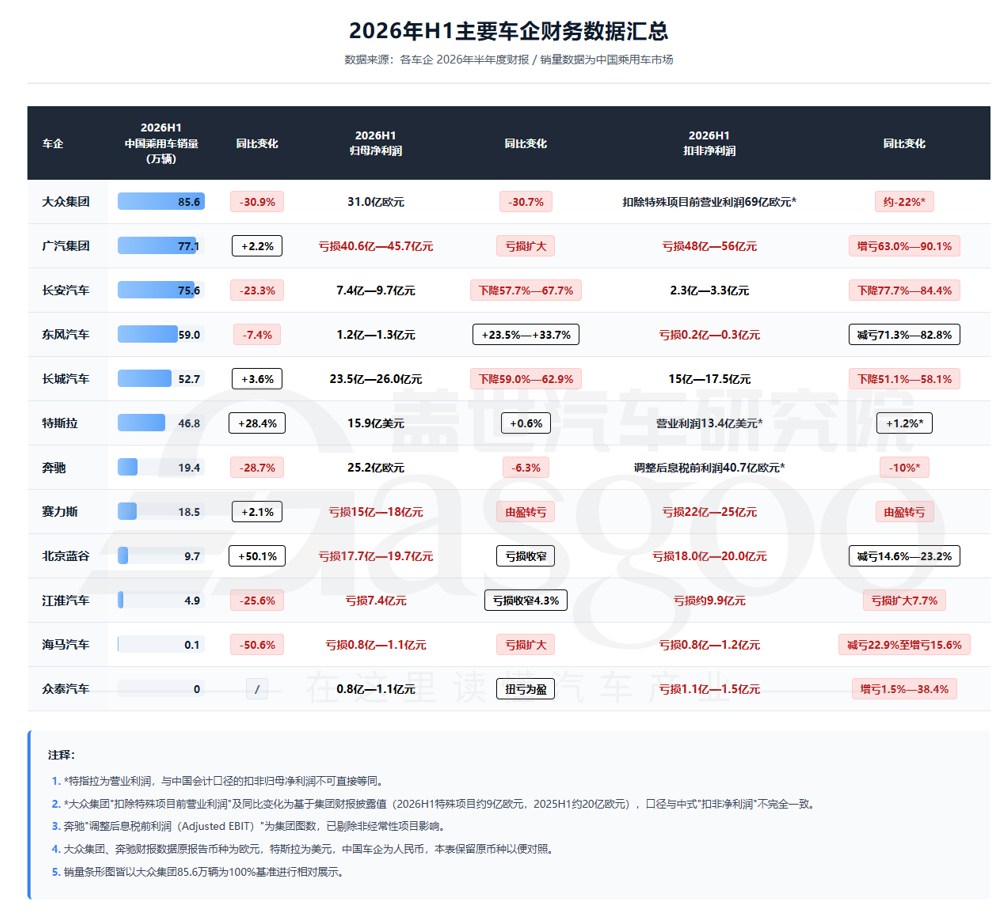
For the past three years, Chinese OEMs have engaged in intense pricing strategies to capture market share. However, H1 2026 data shows that this race to the bottom has reached its economic limit. Average industry profit margins have hit historic lows, rendering smaller, less vertically integrated players unsustainable.
- Squeezed Cash Flows: Tier-2 and Tier-3 EV startups are burning through capital as pricing pressures prevent them from reaching manufacturing economies of scale.
- Supply Chain Dominance: Highly integrated giants, such as BYD and Geely, are leveraging their internal battery manufacturing and software capabilities to maintain razor-thin margins that their competitors simply cannot match.
- Technological Convergence: As Advanced Driver Assistance Systems (ADAS) and advanced LFP battery chemistries become standard, the R&D costs required to stay competitive are escalating, favoring massive conglomerates.
Strategic Alignment and Global Supply Chain Integration
This domestic shakeup has significant implications for global automotive ecosystems. Rather than isolating the Chinese market, this intense pressure is forcing leading Chinese OEMs and global legacy automakers into deeper forms of strategic cooperation.
Western OEMs are increasingly engaging in strategic sourcing alliances and joint technology integration. By leveraging the fast-paced development cycles and cost-efficient components of surviving Chinese suppliers, global players can accelerate their own transition to electrification. Simultaneously, leading Chinese firms are pursuing localized regional footprints in Europe and North America to achieve long-term supply chain compliance and trade adaptability.
An Analyst's Perspective: Surviving the 'China-Speed' Crucible
As an industry analyst tracking these developments from the ground, it is clear that the current phase of Chinese EV market consolidation is not a sign of failure, but of maturity. The 'China-speed' product cycle has weeded out speculative entrants. What remains is a highly resilient, hyper-efficient group of global-ready manufacturing powerhouses. For Western automotive firms, the strategic mandate is clear: identify the long-term survivors of this consolidation and build robust, mutually beneficial partnerships that leverage their technological scale.