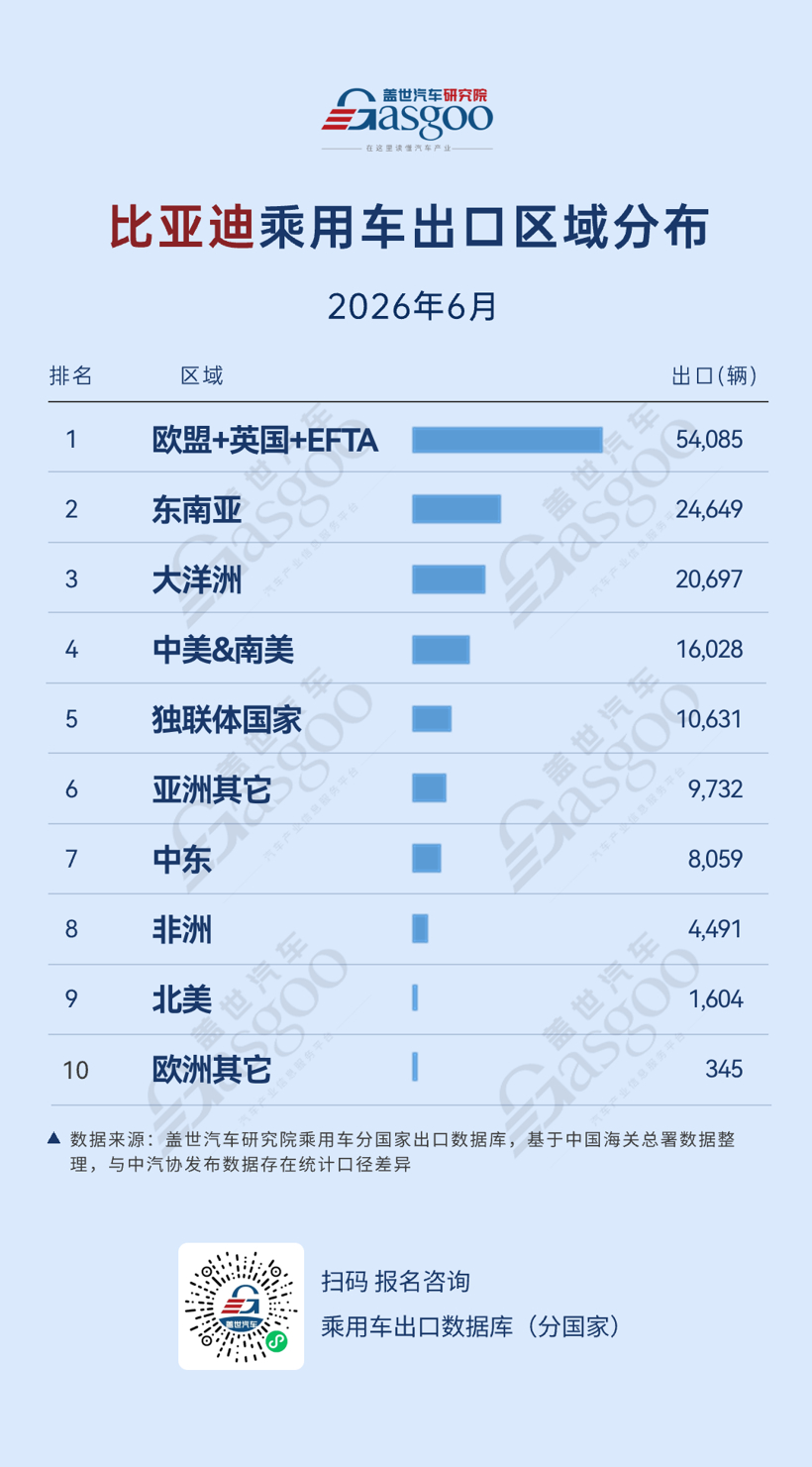
In June 2026, global trade flows witnessed another historic shift in the automotive sector. Despite ongoing regulatory shifts and geopolitical headwinds, the latest data from the Gasgoo Research Institute reveals a highly resilient trend: Europe has solidified its position as the core growth market for Chinese automakers. Far from retreating under trade pressures, Chinese original equipment manufacturers (OEMs) are doubling down on international expansion through advanced supply chain compliance and localized market integration.
The June 2026 Export Breakdown: Europe Leads the Charge
According to Gasgoo Research Institute’s newly released monthly analysis, Chinese passenger vehicle exports reached record-breaking figures in June 2026. While traditional markets in Southeast Asia and South America remained stable, European countries represented the fastest-growing destination for these shipments. This resilience points to a highly deliberate shift in export strategies, transitioning from raw volume exports to high-value electric vehicles (EVs) and plug-in hybrid electric vehicles (PHEVs).
The strategic focus on Europe highlights the region's strong consumer appetite for high-tech, battery-electric platforms and advanced driver-assistance systems (ADAS). As premium Chinese brands elevate their European distribution networks, consumers are responding positively to competitive vehicle specs, particularly in Western and Northern Europe.
Export Volume Regional Share (June 2026 Estimates)
The table below provides a structural overview of the geographic distribution of Chinese passenger vehicle exports based on June 2026 data:
| Export Region | Estimated Share (%) | Year-on-Year Growth (YoY) | Primary Vehicle Segment |
|---|---|---|---|
| Europe | 29.5% | +18.4% | BEV / PHEV (Mid-to-Premium) |
| Southeast Asia | 24.1% | +8.2% | Compact BEVs / ICE Vehicles |
| South America | 18.3% | +12.1% | Affordable ICE / Flex-Fuel |
| Middle East & Africa | 15.2% | +5.5% | ICE SUVs / Hybrid Pickups |
| Others | 12.9% | +3.0% | Mixed Segments |
Strategic Localization: The Evolution Beyond Simple Exporting
Industry analysts emphasize that the continued rise of Chinese automotive exports to Europe is underpinned by a transition from standard export pipelines to robust 'strategic localization.' Rather than relying solely on shipping completed units from domestic Chinese ports, OEMs are investing deeply in localized regional footprints within the European continent.
Key strategic shifts driving this export evolution include:
- Joint Ventures & Manufacturing Alliances: Establishing deep industrial partnerships with established European entities to co-develop, assemble, and manufacture vehicles locally. This cooperative approach utilizes local assembly capacity and creates European jobs.
- Localized Supply Chain Compliance: Adapting sourcing strategies to leverage European suppliers for critical components, thereby meeting regional localization standards and contributing to local economies.
- Tailored Product Design: Designing models specifically for European tastes, integrating local safety preferences, and optimizing charging software for European grid infrastructures.
This localized regional footprint ensures long-term operational resilience and fosters collaborative, mutually beneficial economic relationships between international OEMs and European manufacturing hubs.
Technology Integration: Collaborative Strengths
As a professional market analyst tracking global automotive supply chains, I find that the relationship between Chinese and European automotive industries is becoming highly complementary. European legacy brands are increasingly leveraging cross-border collaboration and strategic sourcing alliances to accelerate their own electrification pipelines.
By integrating cutting-edge lithium iron phosphate (LFP) battery technologies and high-efficiency electric powertrains pioneered by Chinese tier-1 suppliers, European manufacturers are optimizing production costs and offering competitive, zero-emission vehicles. This collaborative dynamic shows that global trade in the automotive space is no longer a zero-sum game, but rather an ecosystem driven by technology integration and shared engineering expertise.
Looking Ahead: The Outlook for 2026-2027
As we progress through the latter half of 2026, the volume of Chinese automotive exports to Europe is expected to maintain its upward trajectory. The key to sustained success will lie in how effectively Chinese OEMs navigate complex regional regulatory landscapes. Companies that invest in local R&D centers, partner with local dealer networks, and align their operations with ESG (environmental, social, and governance) frameworks will build the deepest consumer trust and secure a permanent seat at the global automotive table.