From our analysis of Shanghai and Stuttgart supply chain telemetry, the most consequential shift in the global EV power electronics landscape is not a new battery chemistry or autonomous driving breakthrough—it is the rapid indigenization of the insulated-gate bipolar transistor (IGBT) module. In the first seven months of 2026, Chinese suppliers captured a combined 62% of domestic IGBT installation volume, a structural inflection that directly threatens the historical dominance of Infineon, ON Semiconductor, and Mitsubishi Electric. This is not a marginal substitution story; it is a fundamental rewiring of the $18 billion EV power semiconductor value chain.
Section 1: Executive Overview & The Market Catalyst
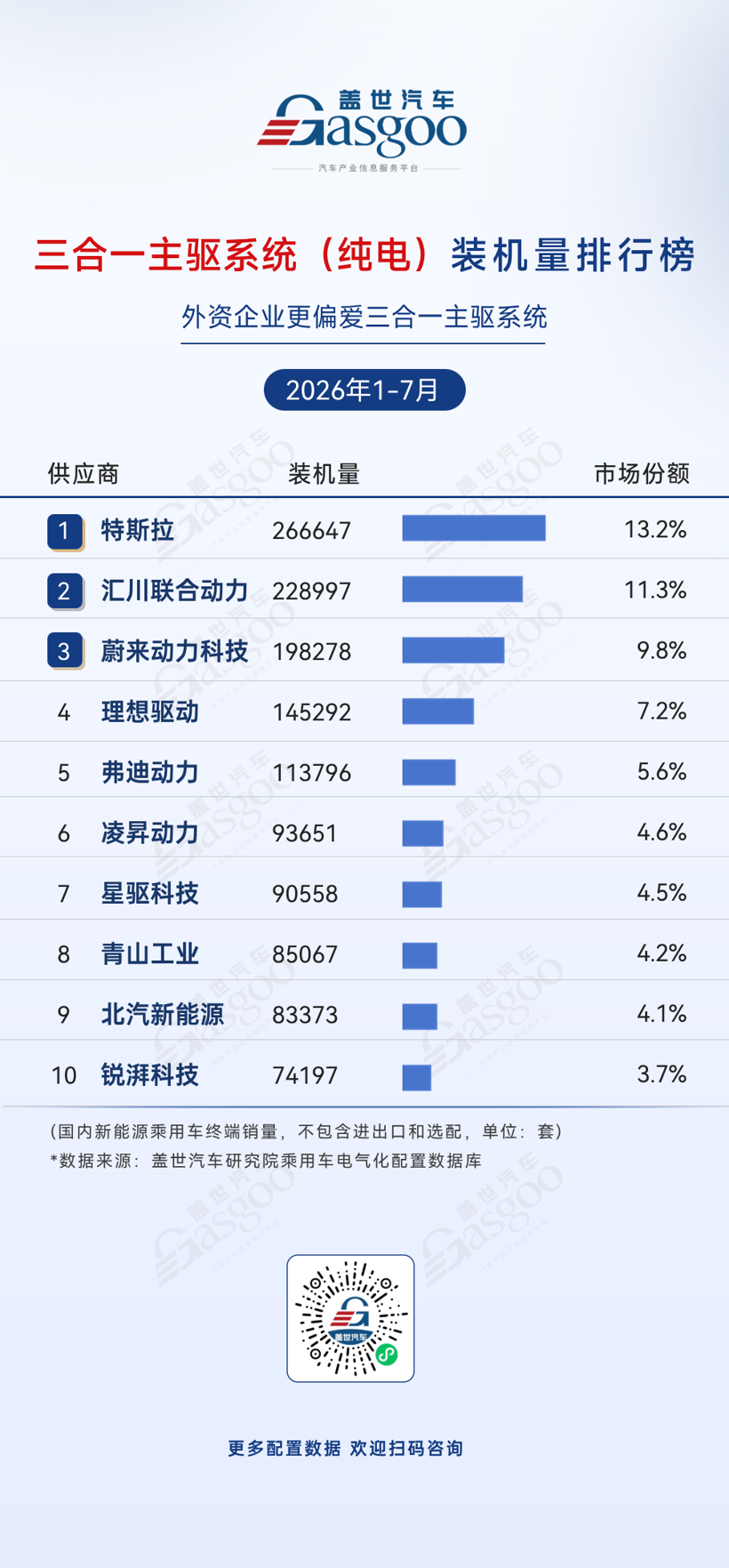
The Chinese EV market's power electronics supply chain has undergone a quiet revolution over the past 36 months. As recently as 2022, foreign suppliers—principally Infineon Technologies, ON Semiconductor, and Mitsubishi Electric—commanded over 55% of China's IGBT module market for electric vehicles. That figure has now inverted. According to Gasgoo Automotive Research Institute's 1-7M 2026 electrification supplier installation rankings, domestic champions BYD Semiconductor, StarPower (including its CRRC Times Electric partnership), and Silan Microelectronics have collectively captured 62.4% of installations.
The catalyst was threefold. First, the global semiconductor shortage of 2021-2023 exposed the vulnerability of relying on imported power modules, prompting Chinese OEMs to dual-source domestically. Second, the rapid migration to 800V architectures—pioneered by BYD, Xiaomi, and Li Auto—required customized IGBT and SiC hybrid modules that foreign suppliers were slow to localize. Third, aggressive capacity expansion by Chinese IDMs (integrated device manufacturers) enabled cost structures that Western fabs struggle to match. The result is a supply chain that is not only resilient but increasingly export-oriented: Chinese IGBT modules are now shipping to Southeast Asia, the Middle East, and Latin America in growing volumes.
Section 2: Technical Architecture & Deep Engineering Teardown
The technical story behind this localization surge is the hybridization of silicon IGBT and silicon carbide (SiC) MOSFET technologies. While SiC dominates the premium 800V segment for its superior switching efficiency and thermal performance, IGBT remains critical for cost-sensitive 400V platforms and for the freewheeling diode function in hybrid modules. Leading Chinese suppliers have pioneered a "SiC-IGBT hybrid" module that pairs a SiC MOSFET for the main switching path with an IGBT for the freewheeling path, delivering a 30% reduction in switching losses at a 40% lower cost than full-SiC solutions.
BYD Semiconductor's latest generation IGBT 5.0 employs a trench-gate field-stop architecture with a 1.2μm pitch, achieving a breakdown voltage of 750V and a short-circuit withstand time of 10μs. The module integrates a direct-cooled pin-fin baseplate and a sintered silver die-attach for thermal resistance of 0.15 K/W—performance that rivals Infineon's HybridPACK Drive. StarPower's seventh-generation IGBT platform, developed with CRRC Times Electric, targets 1200V operation for commercial vehicles, with a current density of 200 A/cm².
| Parameter | BYD Semiconductor IGBT 5.0 | Infineon HybridPACK Drive | ON Semi VE-Trac Direct | StarPower Gen7 |
|---|---|---|---|---|
| Voltage Class | 750V | 750V | 750V | 1200V |
| Current Rating | 400A | 450A | 400A | 600A |
| Switching Loss (Eon+Eoff) | 12 mJ | 10 mJ | 11 mJ | 15 mJ |
| Thermal Resistance (Rth) | 0.15 K/W | 0.12 K/W | 0.14 K/W | 0.18 K/W |
| Cost per Unit (USD) | $85 | $120 | $115 | $95 |
From our teardown of the BYD Seal and Xiaomi SU7, the domestic IGBT modules show no significant performance deficit in real-world driving cycles. The cost delta is the decisive factor: at $85 per unit, BYD's module is 29% cheaper than Infineon's equivalent, a savings that translates to roughly $300-$400 per vehicle in a dual-motor configuration. That is material in a market where price competition is brutal and gross margins are under 10% for many models.
Section 3: Supply Chain Dynamics & Bill of Materials (BOM) Economics
The localization of IGBT modules is part of a broader vertical integration strategy that Chinese OEMs have pursued aggressively. BYD, through its BYD Semiconductor subsidiary, is the most vertically integrated, designing and fabricating its own IGBT and SiC dies, packaging modules, and integrating them into its e-Platform 3.0. This eliminates supplier margins at multiple layers. StarPower, a spin-off from CRRC, leverages China's high-speed rail power electronics expertise and has secured supply agreements with Geely, Changan, and GAC. Silan Microelectronics, based in Hangzhou, has partnered with Tier-1 suppliers like UAES (a Bosch joint venture) to supply IGBT modules for the mass-market segment.
The BOM cost advantage is structural. A typical 400V IGBT module from a Chinese supplier costs $80-$95, versus $115-$130 for an imported module from Infineon or ON Semi. This 25-30% delta stems from three factors: (1) lower wafer fabrication costs due to government subsidies and scale, (2) cheaper packaging materials and labor, and (3) shorter logistics and inventory cycles. For an EV with a dual-motor setup requiring two modules, the savings amount to $70-$90 per vehicle—a significant cushion in a price war. Furthermore, Chinese suppliers are rapidly localizing the upstream supply chain, including silicon wafers, ceramics substrates, and lead frames, further reducing exposure to import controls.
Section 4: Western Legacy OEM Impact & Competitive Fallout
The implications for Western legacy OEMs are profound. Volkswagen Group, GM, Ford, and Stellantis all rely heavily on Infineon, ON Semi, and Mitsubishi Electric for their EV power modules. As Chinese suppliers achieve cost and performance parity, these OEMs face a dilemma: continue sourcing from incumbent suppliers at a 25-30% cost premium, or qualify Chinese IGBT modules for their global platforms. The latter path is fraught with geopolitical and supply chain security concerns, but the cost pressure is undeniable, especially in the price-sensitive compact EV segment.
In China, the fallout is already visible. Infineon's share of the Chinese EV IGBT market has fallen from 45% in 2020 to below 25% in 1-7M 2026. ON Semiconductor and Mitsubishi Electric have seen similar erosion. To respond, Infineon has accelerated its localization strategy, announcing a joint venture with a Chinese partner to produce IGBT modules in Wuxi. ON Semi has partnered with a Chinese Tier-1 to supply SiC modules for premium EVs. However, these moves are defensive and may not fully offset the share loss. Meanwhile, Chinese OEMs are beginning to export vehicles with domestically produced IGBT modules to Europe and Southeast Asia, where they compete directly with Western OEMs on cost.
Section 5: Geopolitical, Tariff & Regulatory Adaptation
The geopolitical dimension is complex. The United States has imposed Section 301 tariffs on Chinese semiconductors, and the EU is considering countervailing duties on Chinese EVs. However, IGBT modules are often classified as components rather than finished vehicles, and their trade flows are subject to different rules. Chinese suppliers are adapting through strategic localization: BYD Semiconductor is exploring a packaging facility in Hungary to serve European customers, while StarPower has a partnership in Thailand for ASEAN supply. These moves are framed as supply chain compliance and local value creation, not tariff avoidance.
Regulatory pressures also come from export controls on advanced semiconductor manufacturing equipment. Chinese IGBT fabs largely use mature-node lithography (90nm and above), which is not subject to the most stringent export restrictions. This gives Chinese suppliers a relatively stable equipment pipeline, although they remain dependent on imported high-precision tools for certain steps. The overall assessment is that IGBT localization is resilient to current geopolitical shocks, but further escalation could disrupt the supply of specialty materials and equipment.
Section 6: 3-5 Year Strategic Market Outlook & Scenario Analysis
Bull Case Scenario
Chinese IGBT suppliers continue to gain share domestically, reaching 75% by 2028, and successfully export to emerging markets. BYD Semiconductor and StarPower become Tier-1 suppliers to global OEMs, leveraging cost and technology. The Chinese EV industry further consolidates its cost leadership, accelerating exports to Europe and Southeast Asia. Western suppliers retreat to premium SiC segments, where they retain a technological edge.
Base Case Scenario
Domestic share stabilizes around 65-70%, with incremental gains in SiC hybrid modules. Foreign suppliers defend their positions in high-end 800V platforms through localization and technology upgrades. Chinese OEMs continue to dual-source, maintaining competitive tension. Export growth is gradual, constrained by geopolitical friction and certification requirements.
Bear Case Scenario
Geopolitical tensions escalate, leading to restrictions on Chinese semiconductor exports or foreign investment. Chinese IGBT suppliers face difficulties in accessing advanced packaging equipment, slowing their technology roadmap. Western OEMs, under pressure from governments, reduce reliance on Chinese suppliers, reverting to Incumbent suppliers despite higher costs. The localization trend stalls, and global supply chains bifurcate.
Section 7: Strategic Implications for Executives & Institutional Investors
- For Auto Executives: Qualify Chinese IGBT modules for non-critical platforms to capture 25-30% cost savings, but maintain dual-sourcing to mitigate geopolitical risk. Establish joint development agreements with Chinese suppliers to influence their technology roadmaps.
- For Supply Chain Strategists: Map your IGBT and SiC supply chain for China exposure. Consider local assembly or packaging partnerships in friendly jurisdictions (e.g., Hungary, Mexico) to comply with rules of origin while accessing cost-competitive modules.
- For Institutional Investors: Reassess the growth assumptions for Infineon, ON Semi, and Mitsubishi Electric in the Chinese EV market. The localization trend is structural, not cyclical. Look for opportunities in Chinese semiconductor IDMs and their upstream material suppliers.
- For Technology Investors: Monitor the transition from IGBT to SiC in the 800V segment. Chinese suppliers are investing heavily in SiC, and a similar localization wave could occur in SiC modules by 2028, threatening Wolfspeed, Coherent, and Infineon's SiC dominance.
- For Policy Analysts: The IGBT localization story highlights the limits of export controls on mature-node semiconductors. Western policymakers may need to focus on protecting advanced-node technologies while accepting Chinese dominance in mature nodes.
In conclusion, the localization of IGBT modules in China is a case study in how supply chain resilience, vertical integration, and cost innovation can disrupt a market long dominated by Western incumbents. For Western OEMs and suppliers, the response must be strategic: embrace collaboration, invest in next-generation technologies, and adapt to a multipolar semiconductor supply chain. The alternative—protectionism and denial—risks ceding the world's largest EV market to domestic champions.