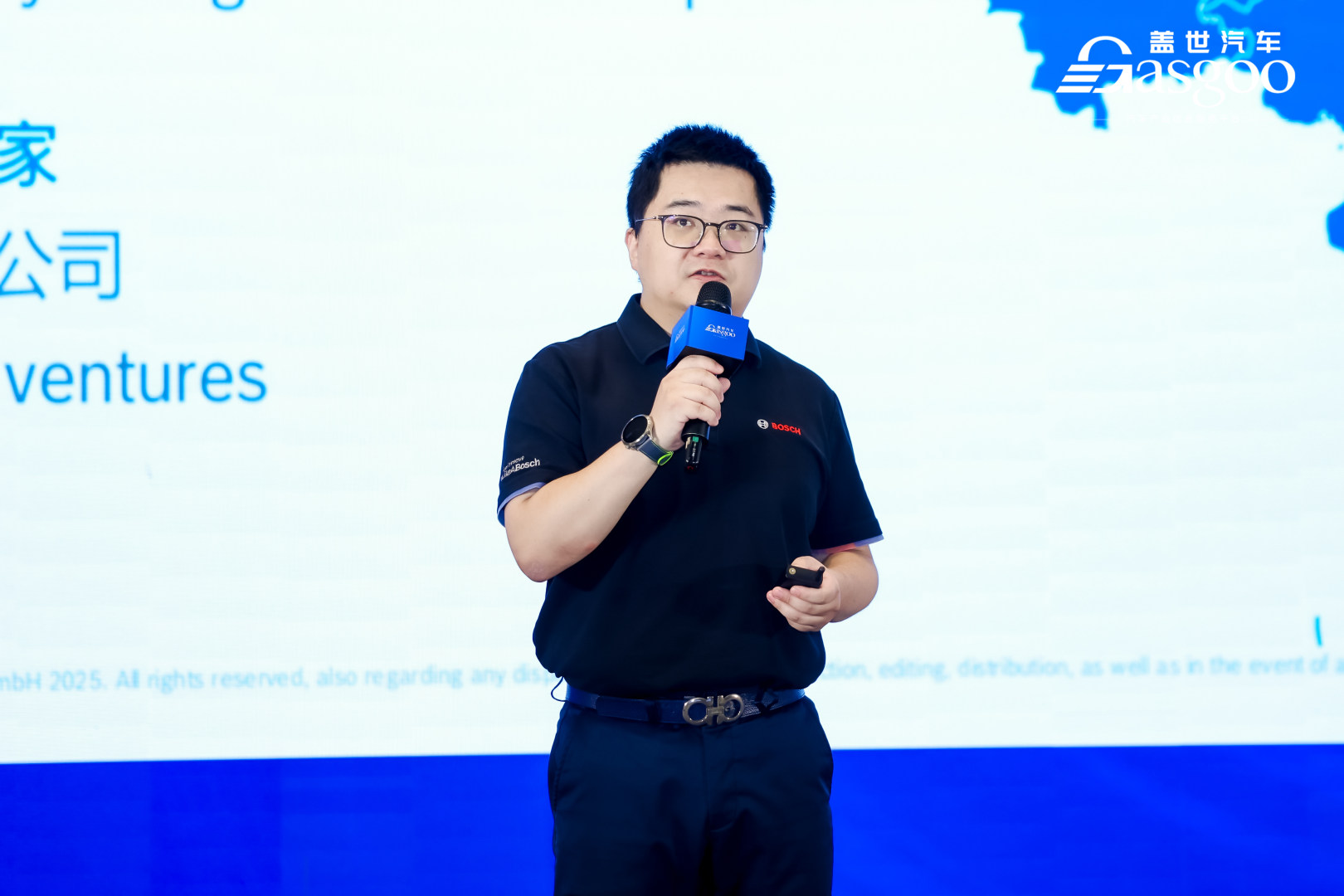
In the race to electrify global mobility, the silicon carbide (SiC) power semiconductor has emerged as the definitive bottleneck and margin driver. On September 16, 2026, at the 6th Intelligent Vehicle Chip Ecosystem Conference hosted by Gasgoo, Bosch’s Senior Manager of Power Semiconductor Products, Wang Junyue, dropped a bombshell that reverberated through the automotive and semiconductor supply chains: Bosch plans to expand its SiC capacity twentyfold over six years, simultaneously serving the automotive sector and the explosive AI data center market.
This is not a routine capacity announcement. It is a strategic pivot from a Tier-1 giant that signals the silicon carbide supply crunch is far from over—and that the battle for who controls this critical technology will define the next decade of electric vehicle (EV) efficiency, charging speeds, and cost structures. For Western investors tracking Wolfspeed, STMicroelectronics, and Infineon, Bosch’s move demands immediate attention.
Executive Overview & The Market Catalyst
Silicon carbide semiconductors are the unsung heroes of the electric vehicle revolution. By replacing traditional silicon in inverters and onboard chargers, SiC devices enable higher switching frequencies, reduced energy losses, and smaller, lighter power electronics. For an 800V EV architecture, SiC inverters can improve efficiency by 5–10%, translating to 5–10% more range from the same battery pack. At scale, that is billions of dollars in saved battery costs.
The catalyst for Bosch’s ambitious ramp is twofold. First, the automotive industry’s accelerating shift to 800V platforms—led by Hyundai’s E-GMP, Porsche’s J1, and a flood of Chinese models from BYD, NIO, XPeng, and Zeekr—has created unprecedented demand for SiC MOSFETs and modules. Second, the AI data center boom, driven by generative AI and large language models, requires ultra-efficient power delivery. SiC’s ability to handle high voltages with minimal losses makes it ideal for server power supplies and renewable energy infrastructure, creating a second demand pillar that de-risks Bosch’s investment.
Historically, the SiC market was dominated by vertically integrated players like Wolfspeed (formerly Cree) and STMicroelectronics, with Infineon and onsemi aggressively catching up. Bosch’s entry as a Tier-1 automotive supplier with deep system integration capabilities changes the competitive dynamics. The company already produces SiC chips at its own fab in Reutlingen, Germany, and has been expanding capacity through its semiconductor unit, Robert Bosch Semiconductor Manufacturing. The 20x expansion, likely spanning 2025–2031, will be executed across multiple sites, including its new 300mm wafer fab in Dresden and potential partnerships in Asia.
Technical Architecture & Deep Engineering Teardown
Bosch’s SiC strategy centers on its second-generation trench MOSFET technology, which offers lower specific on-resistance (Ron,sp) compared to planar designs. The trench structure allows for higher cell density and improved channel mobility, enabling a figure of merit (FOM) that is competitive with leading-edge devices from Infineon (CoolSiC) and Wolfspeed (C3M). While Bosch has not disclosed exact voltage ratings, industry expectations point to 750V and 1200V classes for automotive traction inverters, with 650V variants for onboard chargers and DC-DC converters.
In an 800V EV architecture, the SiC inverter’s efficiency gains are most pronounced at partial loads, which represent the majority of real-world driving. Bosch claims its SiC modules can achieve peak efficiency of 99.5% in the inverter, compared to ~98% for equivalent silicon IGBTs. This 1.5-percentage-point difference may seem small, but over a 100 kWh battery pack, it translates to roughly 1.5 kWh of recovered energy—about 6–8 km of additional range under WLTP. At scale, this reduces the required battery capacity and thus the single largest cost component of an EV.
Bosch’s power module packaging also deserves scrutiny. The company uses a silver-sintered die-attach process and copper clip interconnects to reduce parasitic inductance and thermal resistance, enabling higher current densities and longer lifetimes. The modules are designed for junction temperatures up to 175°C, providing thermal headroom for aggressive inverter control strategies. For AI data centers, Bosch is adapting its SiC technology to higher-power modules (e.g., 3.3kV and 6.5kV) for solid-state transformers and server power shelves, where efficiency gains of 2–3% can yield massive OPEX savings at gigawatt scale.
| Parameter | Bosch SiC (Gen 2) | Infineon CoolSiC | Wolfspeed C3M | STMicro SiC MOSFET |
|---|---|---|---|---|
| Voltage Class | 750V / 1200V | 650V / 1200V | 650V / 1200V | 650V / 1200V |
| On-Resistance (typical) | 15 mΩ (1200V) | 16 mΩ (1200V) | 15 mΩ (1200V) | 18 mΩ (1200V) |
| Packaging | Silver-sintered, Cu clip | .XT interconnection | Ag sintered | Cu clip, sintered |
| Max Junction Temp | 175°C | 175°C | 175°C | 175°C |
| Target Applications | EV inverter, OBC, AI data center | EV, industrial, solar | EV, industrial, RF | EV, industrial |
| Manufacturing Footprint | Germany, Malaysia, US | Germany, Malaysia, Austria | US, Germany | Italy, Singapore, China |
Supply Chain Dynamics & Bill of Materials (BOM) Economics
Bosch’s vertical integration is a key competitive advantage. Unlike fabless SiC designers, Bosch controls its own wafer fabs and packaging facilities, allowing for tighter quality control and faster time-to-market. The company sources silicon carbide substrates from external suppliers, including Wolfspeed, Coherent (II-VI), and Chinese firms like TankeBlue and SICC. However, Bosch is also investing in internal substrate growth to reduce dependency and cost. A 150mm SiC substrate currently costs $800–$1,200, but prices are falling as capacity expands; Bosch’s 20x scale-up will accelerate this deflation.
From a BOM perspective, SiC inverters add roughly $300–$500 to the cost of a vehicle compared to silicon IGBT-based inverters. However, the efficiency gains allow automakers to reduce battery capacity by 5–10%, saving $500–$1,000 per vehicle. The net BOM impact is therefore neutral to positive, but the real value lies in enabling 800V fast charging, which is a key marketing differentiator. Bosch’s scale will drive SiC die costs down by an estimated 30–40% by 2030, making the technology accessible to mass-market EVs priced below $30,000.
Key Tier-1 suppliers integrating Bosch SiC modules include Bosch’s own powertrain division, which supplies inverters to Volkswagen, Stellantis, and General Motors. Chinese OEMs like BYD and NIO have largely developed in-house SiC inverters, but they rely on Bosch for other power electronics. In the AI data center space, Bosch competes with Infineon, onsemi, and Vicor, supplying SiC power modules to server OEMs like Dell, HPE, and Inspur.
Western Legacy OEM Impact & Competitive Fallout
For Western legacy automakers, Bosch’s SiC ramp is a double-edged sword. On one hand, it promises a more secure and cost-effective supply of critical components for their 800V EV platforms, reducing reliance on single-source suppliers like Wolfspeed, whose financial troubles have raised concerns. On the other hand, it underscores the growing dominance of German Tier-1 suppliers in the power electronics value chain, potentially eroding OEMs’ bargaining power and margins.
Volkswagen Group, which has committed to 800V architectures for its PPE platform (Porsche Macan EV, Audi Q6 e-tron), is a major Bosch customer. Stellantis, Ford, and GM are also integrating SiC inverters into their next-generation EVs. However, these OEMs face intense pressure from Chinese rivals like BYD, which produces its own SiC chips through its semiconductor arm, BYD Semiconductor. BYD’s vertical integration allows it to offer 800V EVs at price points 20–30% below Western equivalents, forcing legacy OEMs to accelerate cost reduction.
In export markets, the competitive fallout is already visible. Chinese EVs equipped with SiC inverters are gaining share in Europe, Southeast Asia, and Latin America. Western OEMs are responding with localized production and technology partnerships. For example, Volkswagen’s partnership with XPeng in China and its investment in Rivian in the US are attempts to access advanced electrical/electronic architectures and software. Bosch’s SiC expansion supports these efforts by providing a reliable, high-performance power electronics backbone.
Geopolitical, Tariff & Regulatory Adaptation
The global SiC supply chain is increasingly shaped by geopolitical tensions. The United States has imposed tariffs on Chinese-made semiconductors, and the European Union is investigating Chinese EV subsidies. These measures have prompted Chinese SiC manufacturers like TankeBlue and SICC to accelerate domestic capacity, while Western suppliers like Wolfspeed and Infineon expand in the US and Europe.
Bosch’s strategy navigates this landscape through strategic localization. Its fabs in Germany, Malaysia, and the US serve regional markets, ensuring compliance with rules of origin and reducing exposure to trade barriers. The company also invests in R&D in multiple regions, fostering local value creation. For automakers, sourcing SiC from Bosch’s localized facilities can help meet local content requirements and avoid tariff penalties.
Regulatory adaptation is also driven by efficiency standards. The EU’s proposed Euro 7 emissions regulations, though focused on ICE vehicles, indirectly promote electrification and efficient power electronics. In China, the dual-credit policy and NEV mandates encourage SiC adoption. Bosch’s dual-use SiC technology for automotive and AI data centers aligns with broader ESG goals, as SiC-based power electronics reduce energy waste and support renewable energy integration.
3-5 Year Strategic Market Outlook & Scenario Analysis
Bull Case Scenario
Bosch successfully executes its 20x capacity expansion, achieving cost leadership in SiC. Automotive demand surges as 800V EVs become mainstream, and AI data center demand explodes. Bosch captures 25% of the global SiC market, driving revenues to €5 billion by 2030. Western OEMs benefit from stable supply, accelerating their EV transitions. SiC prices drop by 40%, enabling mass-market EV adoption.
Base Case Scenario
Bosch ramps capacity but faces intense competition from Infineon, STMicro, and Chinese players. SiC prices decline moderately (20–30%). Automotive demand grows steadily, but AI data center demand is volatile. Bosch maintains a 15% market share, with revenues of €3 billion by 2030. OEMs continue to dual-source, and Chinese OEMs increasingly use in-house SiC, limiting Bosch’s growth in that segment.
Bear Case Scenario
Overcapacity leads to a SiC price war, eroding margins. Western OEMs delay 800V adoption due to cost pressures, while Chinese OEMs accelerate in-house SiC production. Bosch’s investment yields lower returns, and its market share stagnates at 10%. Geopolitical tensions disrupt supply chains, forcing Bosch to duplicate capacity and increasing costs.
Strategic Implications for Executives & Institutional Investors
- Diversify SiC sourcing: Automakers should secure supply agreements with Bosch and other Tier-1s to mitigate risks from Wolfspeed’s financial instability and Chinese supply chain disruptions.
- Accelerate 800V platform adoption: The cost-performance curve for SiC is improving faster than expected. OEMs that delay 800V risk losing competitiveness in charging speed and range.
- Invest in SiC supply chain: Institutional investors should monitor Bosch’s capacity ramp and its impact on SiC substrate and epitaxy suppliers. Wolfspeed’s turnaround is critical, but Bosch’s expansion may compress margins for pure-play SiC firms.
- Leverage dual-use demand: The AI data center boom provides a hedge for SiC suppliers. Companies with exposure to both automotive and data center power electronics, like Bosch and Infineon, are better positioned for growth.
- Monitor geopolitical shifts: Trade policies and local content requirements will influence SiC sourcing strategies. Bosch’s localized fabs offer a template for compliance and resilience.
Bosch’s silicon carbide capacity ramp is a clarion call for the automotive and semiconductor industries. The company is betting big on a future where efficient power electronics are the backbone of both electric mobility and the AI-driven digital economy. For Western OEMs and investors, understanding the technical, economic, and strategic dimensions of this move is essential for navigating the coming decade of disruption.