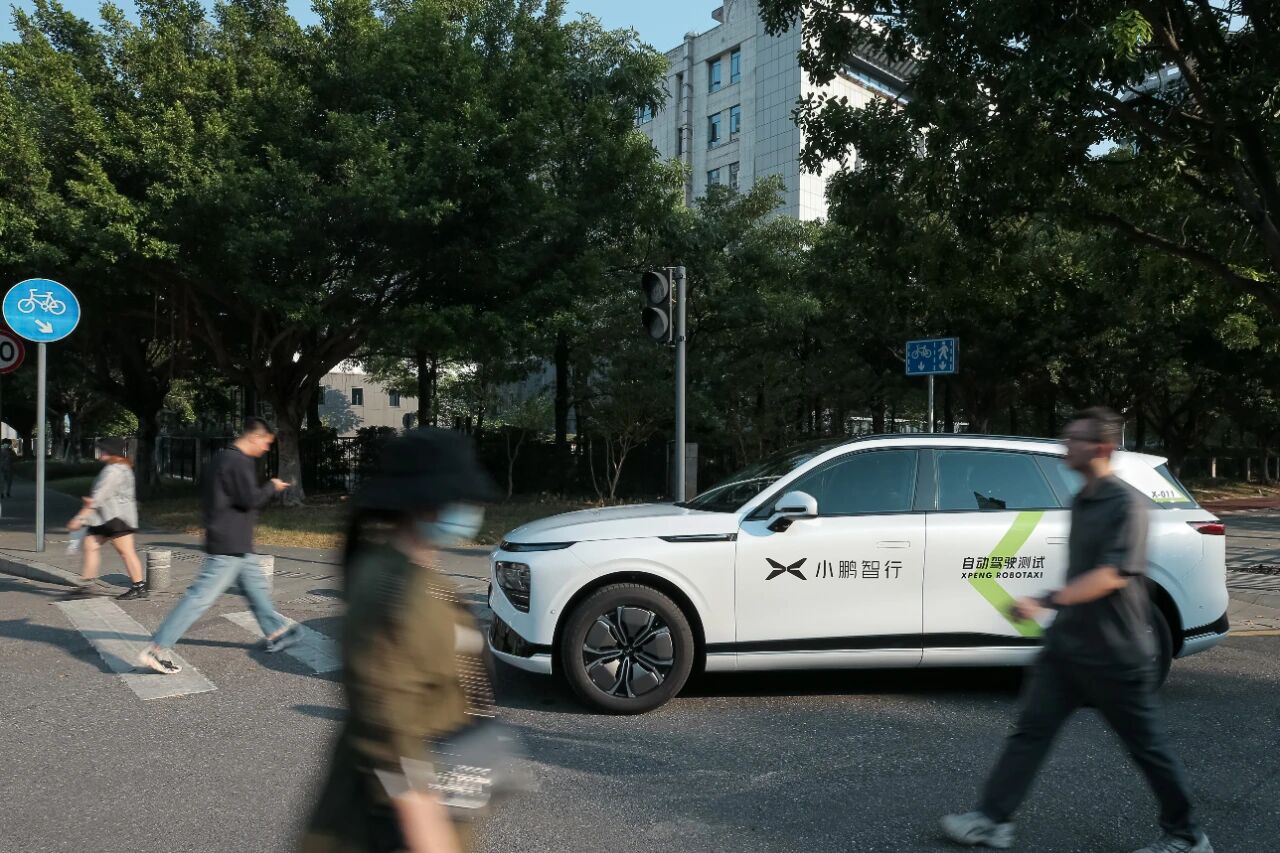
The race for global autonomous driving supremacy is entering a critical execution phase, and Guangzhou has become the latest testing ground for next-generation mobility. During its recent corporate briefing, XPeng Group announced that its internal Robotaxi fleet has successfully completed over 2,000 test runs in Guangzhou. This technical milestone underpins a highly anticipated strategic goal: full, commercial XPeng Robotaxi commercialization by 2027 without in-vehicle safety operators.
Decoding XPeng's Guangzhou Robotaxi Trials
As an automotive technology and mobility analyst specializing in East Asian autonomous vehicle deployment, I view these 2,000 test runs not just as a proof-of-concept, but as a validation of software scalability. Unlike traditional L4 developers that design highly specialized, low-volume vehicles, XPeng is utilizing its existing passenger vehicle platform. This allows the company to gather vast amounts of real-world driving data while minimizing hardware-related capital expenditure.
The Guangzhou trials focus on complex urban scenarios, testing the platform's ability to handle erratic pedestrian behavior, dense mixed-use traffic, and complex weather conditions. By utilizing its advanced end-to-end neural network models, XPeng is shifting from rule-based programming to a data-driven system that mimics human-like decision-making.
The 2027 Timeline: Fleet Scalability and Hardware Economics
To achieve fully driverless operations by 2027, XPeng must bridge the gap between high-level ADAS (Advanced Driver Assistance Systems) and true Level 4 autonomy. The critical differentiator for XPeng is cost-efficiency. While legacy players like Waymo rely on expensive sensor suites, XPeng is targeting a mass-production hardware model that brings the cost per vehicle down dramatically.
This aggressive cost reduction is central to its strategic timeline. By leveraging its volume manufacturing capabilities, XPeng aims to deploy fleet vehicles at a fraction of the cost of current L4 competitors, paving the way for sustainable profitability in the ride-hailing sector.
Strategic Comparison: How XPeng Compares to Tesla and Baidu
To understand the competitive dynamics of autonomous driving in China, we must look at how XPeng stacks up against key competitors like Baidu's Apollo Go and Tesla's upcoming Robotaxi initiative.
| Feature / Metric | XPeng Robotaxi | Baidu Apollo Go | Tesla Cybercab |
|---|---|---|---|
| Commercialization Target | 2027 (Fully Driverless) | Active (With / Without Safety Drivers) | 2026-2027 (Estimated) |
| Hardware Strategy | Mass-market EV integration (LiDAR + Vision) | Custom L4 hardware platforms | Vision-only (No LiDAR) |
| Current Testing Status | 2,000+ internal tests in Guangzhou | Millions of public rides across China | FSD testing, regulatory approvals pending |
| Regulatory Alignment | Guangzhou pilot zones | Multi-city commercial permits | Varying state-by-state US/EU approvals |
Key Considerations for Western Investors and Global Competitors
For Western investors monitoring the autonomous mobility space, XPeng's progress highlights two major trends:
- The Power of Scale: XPeng's ability to feed fleet-wide ADAS data directly into its Robotaxi development pipeline accelerates its neural network training cycle. This creates a powerful flywheel effect.
- Strategic Localization and Partnerships: Rather than fighting localized ride-hailing networks, XPeng is expected to collaborate with established domestic platforms to manage customer acquisition and operations, focusing purely on the autonomous driver technology stack.
As cross-border collaboration continues to redefine the global automotive supply chain, XPeng's transition from a passenger vehicle OEM to a mobility-as-a-service provider serves as a critical blueprint for the industry.