XPeng Motors is actively negotiating technology licensing deals with multiple overseas automakers beyond its existing partnership with Volkswagen Group. This strategic pivot marks a fundamental shift in the global automotive power balance: a Chinese EV startup is now becoming a core technology supplier to legacy Western OEMs. The implications for supply chains, competitive dynamics, and the future of software-defined vehicles are profound.
According to two people familiar with the matter, XPeng plans to offer its technology to more overseas car manufacturers, building on its partnership with Volkswagen. This move signals China's evolution from a vehicle exporter to a core technology supplier—a structural threat to legacy Western OEMs' software independence. The first collaboration with Volkswagen, announced in July 2023, involved a $700 million investment by the German giant for a 4.99% stake in XPeng and the co-development of two VW-branded EVs for the Chinese market, based on XPeng's Edward platform. Now XPeng is seeking to replicate this model with other global players. The company has held talks with several potential partners, though specific names have not been disclosed.
Section 1: Executive Overview & The Market Catalyst
The global automotive industry is witnessing a historic inversion of technology flows. For decades, Western automakers transferred know-how to China. Today, Chinese EV startups like XPeng are licensing their advanced platforms and software to Western giants. This reversal is driven by the breakneck speed of innovation in China's EV ecosystem, particularly in autonomous driving, battery integration, and software-defined vehicle architecture. Western OEMs, facing margin pressure and slow internal development, are increasingly turning to Chinese partners to stay competitive.
The catalyst for XPeng's expanded licensing strategy is its successful partnership with Volkswagen. In July 2023, VW invested $700 million in XPeng for a 4.99% stake and agreed to jointly develop two electric models for the Chinese market. The first vehicle, an SUV, is expected to launch in 2026. This deal served as a proof of concept, demonstrating that XPeng's technology could be integrated into a legacy OEM's product line efficiently. Now XPeng is in talks with multiple overseas automakers, according to sources cited by Bloomberg and Reuters. The move is reminiscent of a similar strategy by Chinese battery giant CATL, which licenses its technology to global automakers. The difference: XPeng is licensing the entire intelligent EV stack, including ADAS and vehicle platform.
Section 2: Technical Architecture & Deep Engineering Teardown
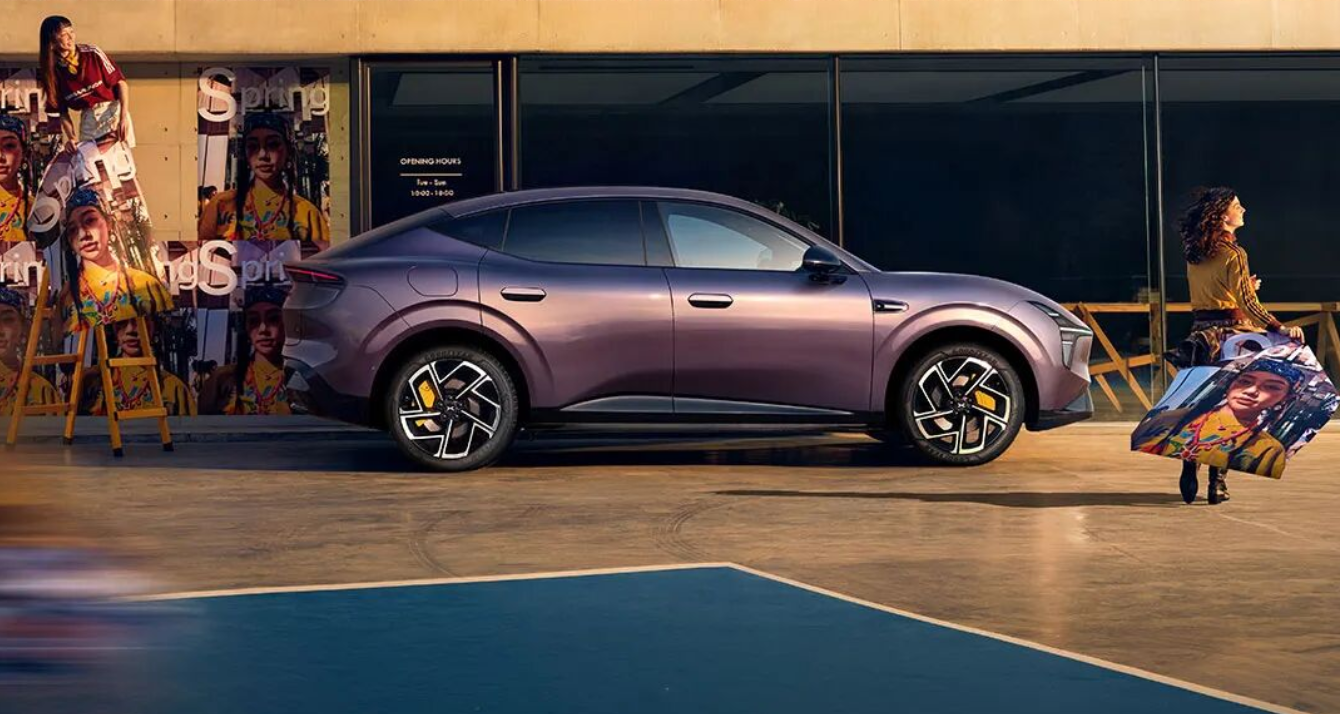
XPeng's technology offerings center on two core pillars: the Edward platform and the XNGP (XPeng Navigation Guided Pilot) autonomous driving system. The Edward platform is an 800V high-voltage architecture that supports ultra-fast charging (up to 480 kW), enabling a 10-80% charge in under 15 minutes. It accommodates battery packs ranging from 66 kWh to 101 kWh, using both LFP and NMC chemistries. The platform's powertrain features silicon carbide (SiC) inverters with a claimed efficiency of 95.5%, and permanent magnet synchronous motors (PMSM). Thermal management uses a multi-source heat pump system, improving cold-weather range by up to 15%. The electrical/electronic (E/E) architecture is a zone-based design with a central computing unit and three domain controllers, reducing wiring harness length by 30% compared to traditional architectures.
The XNGP system is XPeng's full-stack autonomous driving solution. It uses a combination of cameras, lidar, and radar, with a dual Nvidia Orin-X chip setup, delivering 508 TOPS of compute. The software is developed in-house, with a BEV (Bird's Eye View) + Transformer neural network architecture. XPeng claims XNGP can handle urban and highway scenarios without HD maps, relying on real-time perception. The system is continuously updated via OTA, with XPeng releasing major versions quarterly. In comparison, Tesla's FSD relies purely on vision and has faced regulatory hurdles in China. XPeng's use of lidar provides redundancy and is seen as more robust for complex Chinese traffic conditions.
Key global rivals in the mid-size electric SUV segment include the Tesla Model Y, Volkswagen ID.4, and BYD Han. Below is a comparison table highlighting key specifications.
| Feature | XPeng G6 (Edward Platform) | Tesla Model Y | Volkswagen ID.4 | BYD Han EV |
|---|---|---|---|---|
| Platform Voltage | 800V | 400V | 400V | 800V (Han L) |
| Max Charging Power | 480 kW | 250 kW | 135 kW | 500 kW |
| ADAS Compute (TOPS) | 508 (Dual Orin-X) | 144 (HW3) | ~10 (Mobileye EyeQ4) | ~128 (Horizon Journey 5) |
| Lidar | Yes (2x | No | No | No |
| Battery Options (kWh) | 66, 87.5 | 60, 78 | 52, 77 | 85 |
| Range (CLTC/WLTP) | 755 km (CLTC) | 688 km (CLTC) | 550 km (WLTP) | 701 km (CLTC) |
Section 3: Supply Chain Dynamics & Bill of Materials (BOM) Economics
XPeng's supply chain is deeply rooted in China, leveraging local suppliers to achieve cost advantages. Key Tier-1 suppliers include CATL and CALB for batteries, Bosch and Valeo for braking and steering systems, and Qualcomm for cockpit chips. For ADAS, XPeng uses Nvidia Orin-X chips, but has also begun developing its own custom silicon for future models. The company's vertical integration extends to software, with in-house development of the XNGP stack, reducing reliance on third-party vendors.
The BOM cost advantage of Chinese EVs is well documented. According to a 2024 report by AlixPartners, Chinese OEMs can produce EVs at a 20-35% lower cost than Western counterparts. This delta stems from several factors: lower battery costs (CATL's LFP cells are estimated at $60/kWh vs. $100/kWh for Western-made cells), economies of scale, and faster development cycles (Chinese OEMs bring new models to market in 18-24 months vs. 36-48 months for Western OEMs). For XPeng, licensing its platform to other automakers allows it to amortize development costs across multiple brands, further improving its own margins. It also generates high-margin revenue from software and IP, a business model that mirrors that of tech companies.
When XPeng licenses its technology to an overseas automaker, the partner gains access to this cost-efficient supply chain. For example, by using XPeng's platform, a Western OEM could source batteries from CATL or CALB at a lower cost than from North American or European suppliers. However, this also raises concerns about supply chain dependencies, which we will address in Section 5.
Section 4: Western Legacy OEM Impact & Competitive Fallout
The implications for Western legacy automakers are multifaceted. On one hand, licensing XPeng's technology offers a fast track to competitive EVs, especially in the Chinese market where local brands dominate. Volkswagen's partnership with XPeng is a case in point: VW's ID. series has struggled in China, with sales lagging behind BYD and Tesla. By leveraging XPeng's platform, VW aims to launch more competitive models by 2026. Other automakers, such as Stellantis and Ford, have also sought partnerships with Chinese EV makers to access their technology. Stellantis invested in Leapmotor and will distribute its EVs globally, while Ford is reportedly exploring a partnership with BYD for battery technology.
On the other hand, licensing Chinese technology could erode Western OEMs' long-term software independence. If they become reliant on Chinese platforms, they risk losing control over the user experience and data, which are critical for future revenue streams. Moreover, it could undermine their own R&D efforts, leading to a brain drain of software talent. However, the alternative—falling further behind in the EV race—is arguably worse. The strategic calculus is shifting: collaboration with Chinese tech leaders is becoming a necessity rather than a choice.
In export markets, Chinese EVs are gaining share rapidly. In Europe, Chinese brands accounted for 8.2% of EV sales in 2024, up from 5.5% in 2023, according to Transport & Environment. In Southeast Asia, Chinese EVs hold over 50% market share in Thailand and Indonesia. Western OEMs are under pressure to respond with competitive pricing and features. Licensing XPeng's technology could help them accelerate their EV plans, but it also means sharing profits with a Chinese partner.
Section 5: Geopolitical, Tariff & Regulatory Adaptation
The geopolitical landscape is a critical factor. The European Union has imposed countervailing duties on Chinese EVs, ranging from 7.8% to 35.3% on top of the standard 10% tariff, depending on the manufacturer. The United States has levied a 100% tariff on Chinese EVs, effectively blocking direct imports. In response, Chinese automakers are pursuing strategic localization: building factories in Europe, Southeast Asia, and Latin America. BYD is constructing a plant in Hungary, while XPeng has announced plans to establish a manufacturing presence in Europe. Licensing technology to local partners is another way to adapt: it creates local value and can be structured to comply with rules of origin.
For Western OEMs, partnerships with Chinese tech firms are subject to regulatory scrutiny. The EU is examining whether such collaborations could lead to technology transfers that undermine European competitiveness. However, the prevailing view is that collaboration is better than isolation, as it accelerates the transition to electric mobility and helps meet climate goals. XPeng's licensing model is likely to be structured as a technology supply agreement, with clear IP protections and compliance with local regulations. This approach aligns with the principles of fair competition and open trade.
Section 6: 3-5 Year Strategic Market Outlook & Scenario Analysis
Bull Case Scenario
XPeng successfully secures licensing deals with two or more major global automakers (e.g., Stellantis, Renault, or a Japanese OEM). These partnerships generate high-margin IP revenue, boosting XPeng's profitability and funding further R&D. The licensed vehicles achieve strong sales, validating the technology and creating a virtuous cycle. Western OEMs gain a competitive edge in China and other markets, while XPeng becomes a Tier-0.5 supplier, akin to a mobile chipset vendor. By 2027, XPeng's technology is powering over 500,000 vehicles globally, and its stock price doubles.
Base Case Scenario
XPeng finalizes one additional licensing deal, but adoption is slower due to integration challenges and regulatory hurdles. The company continues to grow its own vehicle sales, with the licensed technology providing a modest revenue stream. Western OEMs benefit but remain cautious, developing in-house capabilities in parallel. The global EV market grows steadily, and Chinese brands maintain their cost advantage. XPeng's shares trade sideways, with investors awaiting clearer monetization.
Bear Case Scenario
Geopolitical tensions escalate, leading to restrictions on technology exports or forced divestments. Potential partners hesitate, and XPeng's licensing ambitions stall. Meanwhile, Western OEMs accelerate their own software development, reducing the need for Chinese tech. XPeng faces margin pressure from a domestic price war and struggles to maintain its technological edge. The company's shares decline, and it becomes a takeover target.
Section 7: Strategic Implications for Executives & Institutional Investors
- For Western OEM Executives: Evaluate licensing XPeng's platform as a strategic shortcut to competitive EVs, but negotiate hard on IP ownership and data rights. Consider joint ventures for local production to comply with trade rules.
- For Supply Chain Strategists: Assess the risks of relying on Chinese tech suppliers, and develop dual-sourcing strategies. Explore partnerships with Chinese tier-1 suppliers like CATL and Horizon Robotics.
- For Institutional Investors: XPeng's licensing model could unlock significant value. Monitor announcements of new partnerships and track the success of the VW collaboration. Consider the geopolitical risks and potential for regulatory intervention.
- For Tech Investors: The trend of Chinese EV tech going global is unstoppable. Invest in companies that enable this shift, such as battery makers, chip designers, and software platforms.
- For Policymakers: Encourage collaboration while safeguarding national security interests. Promote fair competition and avoid protectionist measures that could slow EV adoption.
In conclusion, XPeng's technology licensing strategy represents a paradigm shift in the global auto industry. It underscores the rising influence of Chinese EV technology and the willingness of Western OEMs to embrace it. As the industry evolves, such cross-border collaborations will become more common, driving innovation and cost efficiency. The companies that adapt fastest will lead the next era of mobility.