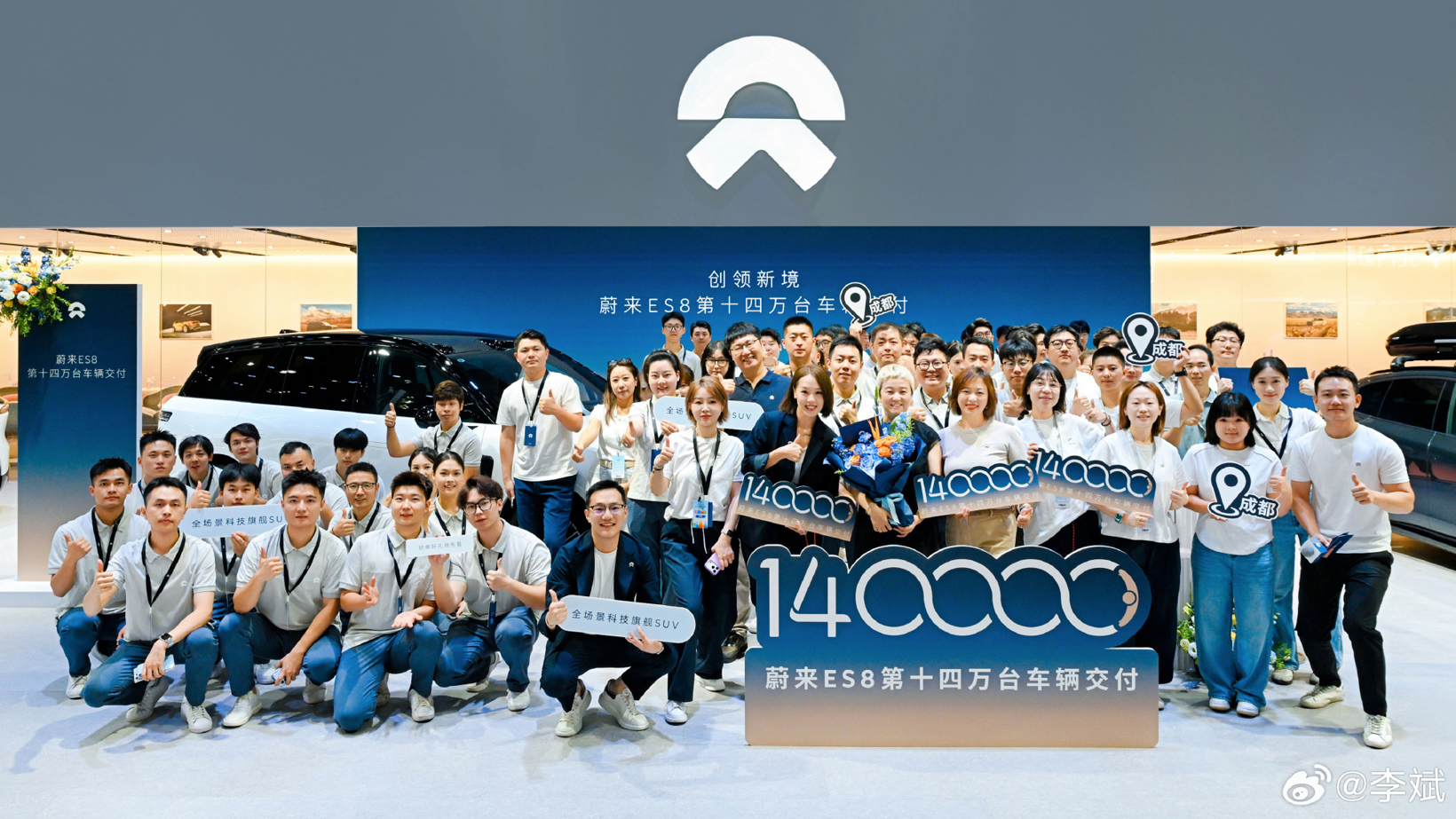
The global automotive landscape is witnessing an unprecedented paradigm shift as consumer technology giants successfully pivot to smart mobility. The latest financial disclosures highlight this transition, anchored by the remarkable Xiaomi EV Q2 earnings which reached a staggering 23.9 billion RMB ($3.3 billion USD). This milestone, combined with Nio delivering its 140,000th third-generation ES8, underscores the accelerating maturity of the Chinese electric vehicle ecosystem.
The Financial Velocity of Xiaomi EV Q2 Earnings
Achieving 23.9 billion RMB in automotive-related revenue within a single quarter is a feat that has caught global market analysts by surprise. For comparison, traditional legacy OEMs and even pure-play EV startups typically spend years, if not decades, scaling to this level of quarterly capital generation. Xiaomi's capability to accelerate production of its flagship SU7 sedan highlights the advantages of cross-industry technology integration.
Unlike Western tech firms that have scaled back their autonomous vehicle and smart car ambitions, Xiaomi has executed a highly coordinated capital deployment strategy. By leveraging its existing global brand equity, established retail footprint, and highly integrated IoT software ecosystem, the company has minimized traditional customer acquisition barriers.
Production Efficiency and Gross Margin Trajectory
In the smart EV sector, high revenues must eventually pair with healthy gross margins to ensure long-term viability. Xiaomi's manufacturing model relies heavily on high-degree automation and smart factory systems located in Beijing. This localized regional footprint minimizes logistics friction and optimizes assembly lines for rapid scaling.
Data suggests that Xiaomi is aiming for positive gross margins far earlier in its production cycle than traditional EV startups. By managing software integration internally (HyperOS) and utilizing strategic sourcing alliances for battery cells and power semiconductor components, Xiaomi has optimized its bill of materials (BOM) to sustain aggressive pricing while driving volume.
| Metric/KPI | Xiaomi Automotive Division (Q2) | Strategic Market Context |
|---|---|---|
| Quarterly Revenue | 23.9 Billion RMB | Unprecedented scale for first-year commercial deliveries |
| Key Model Focus | Xiaomi SU7 Series | Targeting premium smart sedan market segments |
| Core Advantage | HyperOS Integration | Seamless multi-device connectivity and ecosystem lock-in |
Nio's Premium Resilience: The 140,000th ES8 Delivery
While Xiaomi dominates the high-volume mass-to-premium-mid segment, Nio continues to consolidate its footprint in the high-end luxury tier. The delivery of the 140,000th third-generation ES8 flagship SUV highlights the sustained demand for premium Chinese EVs. Nio's market position is fortified not just by vehicle specs, but by its extensive battery-swapping infrastructure (Battery-as-a-Service, or BaaS).
This premium resilience shows that the Chinese EV market is diversifying. Customers are not just looking for cost-efficiency; they are buying into complete digital and physical ecosystems. For Western automakers, this highlights the necessity of viewing the vehicle as a service-oriented platform rather than a standalone hardware product.
Strategic Implications for Western OEMs and Investors
The rapid rise shown in the Xiaomi EV Q2 earnings serves as a vital case study for global automotive strategies. Rather than viewing this as direct geopolitical friction, proactive Western OEMs are exploring strategic sourcing alliances and technology integration to remain competitive.
Key takeaways for international stakeholders include:
- Ecosystem Synergy: The vehicle is no longer just an engine and chassis; it is an extension of the consumer's digital life. Companies with robust software ecosystems possess a distinct structural advantage.
- Supply Chain Agility: Embracing 'China-speed' development cycles requires agile engineering teams and localized co-development with leading tier-1 suppliers.
- Investment Allocation: Portfolio managers should closely monitor how traditional carmakers partner with tech leaders to close the software-defined vehicle (SDV) gap.
Ultimately, the latest quarterly performances confirm that the transition to smart mobility is accelerating. Through strategic localization, supply chain compliance, and cross-border tech collaborations, the industry is paving the way for a highly integrated, globally competitive transport future.