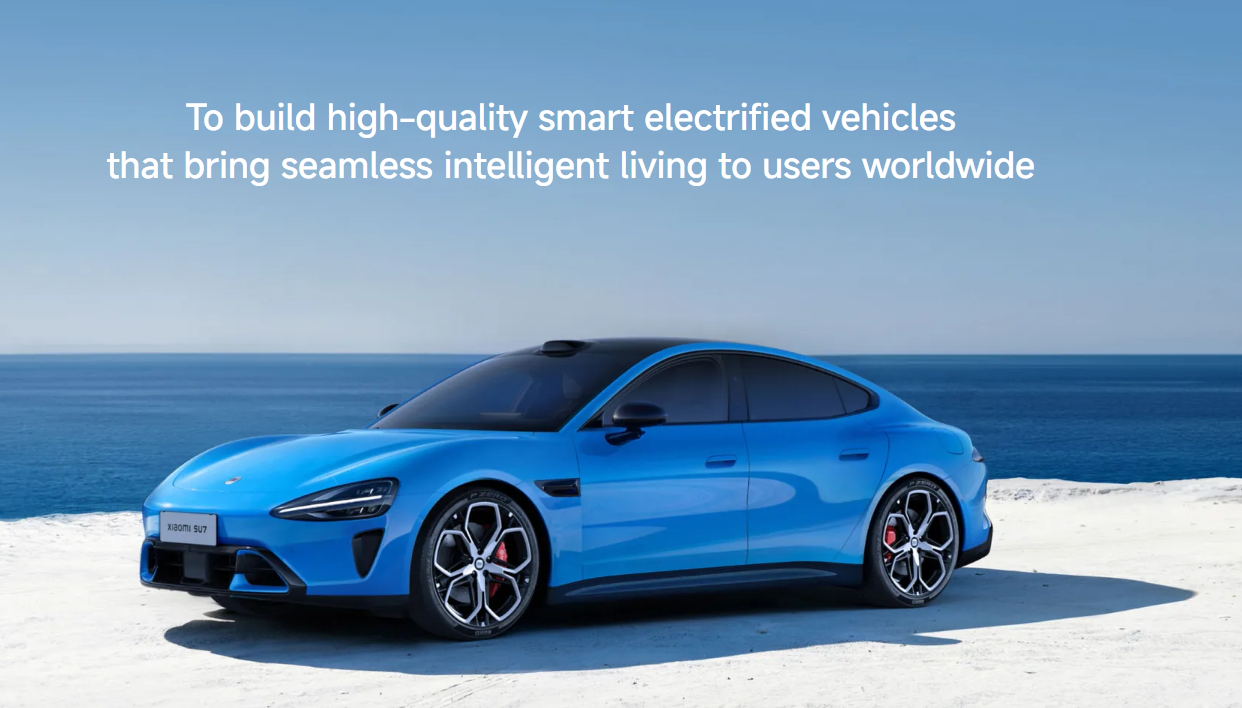
Xiaomi has officially marked its entry into the international automotive arena. On August 26, the tech giant debuted its official overseas social media channels under the handle 'Xiaomi Auto' alongside its dedicated global website. This milestone is a key indicator of how the smartphone titan plans to scale its highly disruptive automotive division beyond the Chinese domestic market.
The Digital-First Playbook of Xiaomi Auto's International Debut
By establishing its digital presence under the 'Xiaomi Auto' banner, Xiaomi is utilizing a strategy it perfected in the consumer electronics sector: building a robust global community before the physical product arrives. Unlike traditional automakers that rely heavily on physical dealership networks as their first touchpoint, Xiaomi's leverage lies in its existing global footprint of over 600 million active smartphone and smart device users.
This digital launch is not merely a public relations exercise. It represents the foundational step of extending the 'Human x Car x Home' smart ecosystem to Western and global consumers. By integrating the vehicle into its existing operating system, Xiaomi offers a unified digital experience that traditional OEMs struggle to replicate.
Strategic Localization and Trade Adaptability
As trade dynamics shift globally, Chinese OEMs are adjusting how they approach international expansion. Rather than pursuing rapid, unfiltered export volumes, forward-thinking players like Xiaomi are focusing on strategic localization. This involves understanding regional compliance, developing a localized regional footprint, and building brand equity long before logistics pipelines are finalized.
Establishing an active global communications hub allows Xiaomi to engage directly with international tech enthusiasts, analysts, and prospective partners. This approach helps the brand build a premium reputation, steering clear of competitive friction by presenting its vehicles as sophisticated, software-defined platforms rather than low-cost alternatives.
How Xiaomi's Ecosystem Redefines Smart Mobility
The core differentiator of the Xiaomi EV global strategy is its software maturity. While traditional automotive manufacturers often require strategic sourcing alliances or cross-border collaboration to develop advanced in-car software, Xiaomi leverages its proprietary operating system directly.
The table below highlights how Xiaomi's integration model compares to standard industry approaches:
| Feature | Traditional OEM Approach | Xiaomi Auto Approach |
|---|---|---|
| OS Integration | Third-party middleware or fragmented in-house software | Unified operating system across phone, tablet, home, and car |
| Ecosystem Synergy | Limited companion apps with basic lock/unlock functions | Seamless multi-device connectivity and smart home control |
| Go-to-Market Model | Heavy reliance on legacy dealer structures and localized PR | Digital-first global community building and direct engagement |
The Strategic Takeaway for Investors and Competitors
For Western investors and automotive strategists, Xiaomi's overseas digital launch is a clear signal that the company plans to play a major role in the global EV transition. It demonstrates trade adaptability, prioritizing brand presence and digital connection over hasty physical export models. The 'China-speed' of Xiaomi's development—from project announcement to digital global launch in just a few years—sets a new benchmark for software-defined vehicles worldwide.