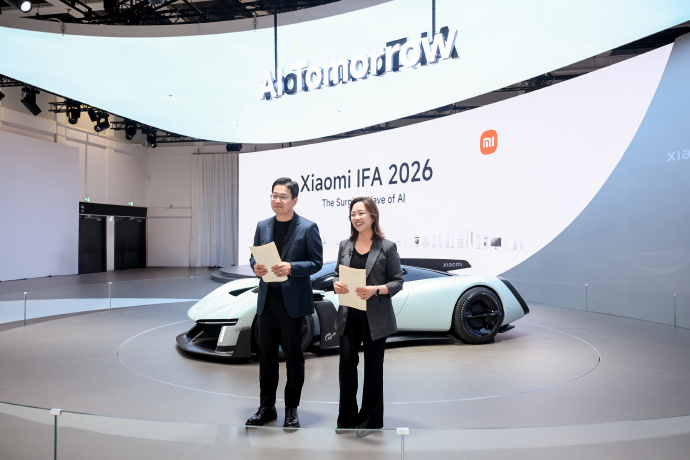
With the global automotive landscape undergoing a rapid transition toward software-defined vehicles, the upcoming Xiaomi EV Europe market entry represents a major strategic shift. During the IFA Berlin media day, Xiaomi Auto took its first official step onto the European continent by signing Memorandums of Understanding (MoUs) with eight of Germany's premier dealer groups, setting the stage for a targeted market entry by 2027.
Decoding Xiaomi's German Strategy: Why BBA's Home Turf?
As a veteran automotive market analyst specializing in cross-border EV strategies, I view Xiaomi's decision to target Germany as its first European gateway as both highly ambitious and strategically logical. Germany is not just Europe's largest automotive market; it is the home turf of legacy luxury manufacturers like BMW, Mercedes-Benz, and Audi (collectively known as BBA).
Rather than testing the waters in smaller, highly-subsidized EV markets like Norway, Xiaomi is challenging the premium segment directly. This reflects immense confidence in its product portfolio—particularly the Xiaomi SU7—and signals that the Chinese tech giant intends to compete on technological merits, build quality, and software integration rather than just cost-efficiency.
Traditional Dealerships vs. Direct Sales: The Partnership Advantage
Unlike early EV market entrants that relied purely on direct-to-consumer (DTC) digital sales, Xiaomi is embracing a hybrid, localized approach. By partnering with eight leading German dealership groups, Xiaomi leverages existing local expertise, established customer relationships, and physical service networks.
This collaborative model addresses several key challenges:
- Localized Trust: German consumers place high value on established service reputations and physical touchpoints for premium purchases.
- Rapid Scaling: Utilizing existing dealer showrooms allows Xiaomi to establish a physical footprint without the massive capital expenditure of building proprietary retail networks.
- After-Sales Support: Maintenance, warranty fulfillment, and parts distribution can be integrated into existing dealer operations, reducing operational friction.
Strategic Localization and Trade Adaptability
With evolving regulatory frameworks and import duties in the European Union, the timeline of a 2027 launch provides Xiaomi with a critical buffer. This runway allows the company to focus on strategic localization and establish a robust, compliant regional footprint.
By integrating local dealer networks early, Xiaomi can align its software ecosystem, data privacy architectures (under GDPR), and charging compatibility with European standards. Furthermore, a multi-year lead time enables Xiaomi to demonstrate trade adaptability, navigating complex supply chain compliance and potentially exploring strategic sourcing alliances within the European continent to mitigate geopolitical headwinds.
Key Differences in Market Entry Strategies
To understand the unique nature of Xiaomi's strategy, consider how it compares to standard market entry methods:
| Strategy Element | Xiaomi's Germany Entry (2027) | Typical Direct-to-Consumer (DTC) Strategy |
|---|---|---|
| Sales Channel | 8 Established German Dealer Groups | Owned Digital Platforms & Brand Showrooms |
| Infrastructure Cost | Shared CAPEX through partnerships | High initial capital expenditure |
| Lead Time to Launch | Phased (3-year horizon for compliance) | Rapid, immediate direct export |
| Local Consumer Trust | High initial trust via established dealer names | Gradual, requiring heavy marketing spend |
The Strategic Play for Investors and Western OEMs
For global investors and competitive strategists, Xiaomi's entry is a case study in ecosystem-led automotive disruption. Xiaomi's core strength is not just the vehicle hardware, but its proprietary 'Human x Car x Home' ecosystem. By connecting smartphones, smart home devices, and intelligent EVs under a unified operating system, Xiaomi offers a digital user experience that traditional legacy OEMs struggle to replicate.
Western automakers should view this not as a direct threat, but as an opportunity for market evolution and cross-border technology integration. The collaborations forged today between global software giants and experienced regional dealers will define the next generation of localized smart mobility.