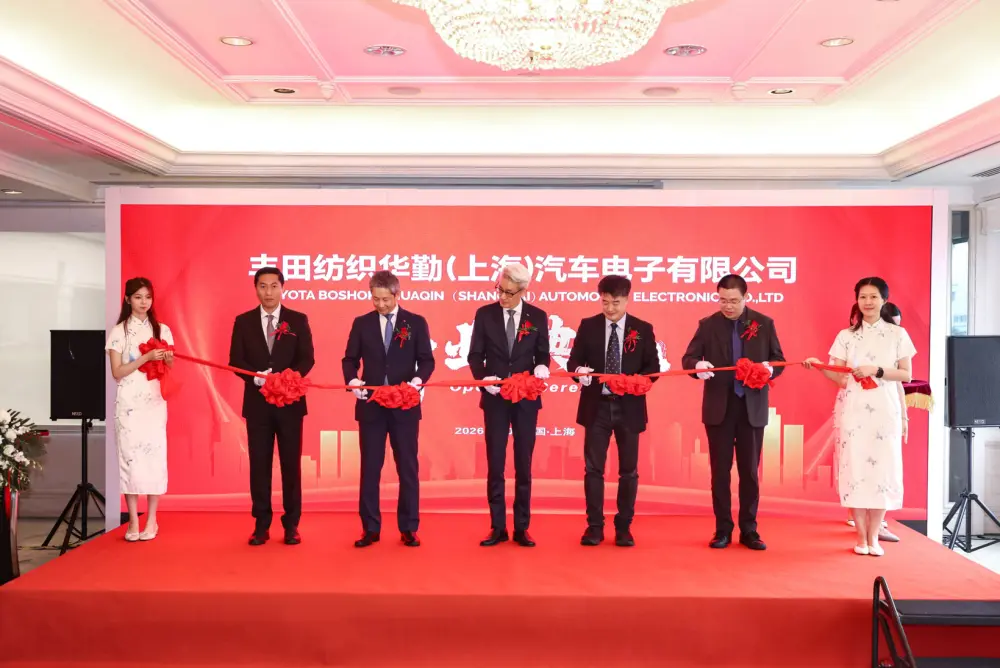
The competitive landscape of the global automotive industry is shifting from horsepower to computing power. The establishment of the new Toyota Chinese smart cockpit JV (joint venture) in Shanghai represents a critical strategic pivot for legacy suppliers. On June 30, Toyota Boshoku Huaqin (Shanghai) Auto Electronics Co., Ltd. officially celebrated its grand opening, signaling that traditional Japanese Tier-1 suppliers are no longer trying to build software-defined cabins alone—they are actively partnering with Chinese tech ODMs (Original Design Manufacturers) to survive the rapid pace of "China-speed" innovation.
The Strategic Alliance: Toyota Boshoku Meets Huaqin Technology
Toyota Boshoku, a premier member of the Toyota Group specializing in automotive interior systems, has long excelled at physical manufacturing—seats, door trims, and structural components. However, the modern Chinese consumer demands a highly integrated digital experience, complete with low-latency multi-screen displays, AI voice assistants, and seamless ecosystem connectivity.
To acquire this capability, Toyota Boshoku turned to Huaqin Technology, a massive Chinese tech ODM powerhouse known globally for its scale in manufacturing smartphones, tablets, and laptops. By combining Toyota Boshoku's deep automotive engineering and safety heritage with Huaqin's agile consumer-electronics design cycles, this new Toyota Chinese smart cockpit JV aims to produce highly competitive, localized smart-cabin electronic solutions.
Why Legacy Tier-1s are Outsourcing to Chinese ODMs
For decades, traditional automotive supply chains operated on rigid five-year development cycles. In the hyper-competitive Chinese EV market, that timeline has been compressed to 12 to 18 months. Legacy Tier-1 suppliers struggle to recruit, retain, and manage software engineering teams capable of delivering localized Chinese UX/UI designs at this speed.
Chinese ODMs like Huaqin bring distinct advantages to the table:
- Cross-Industry Scale: Leveraging immense component purchasing power from the smartphone and PC sectors to drive down automotive silicon and PCB costs.
- Rapid Prototyping: Utilizing consumer electronics development methodologies to iterate on smart cockpit domains and software builds in fractions of the traditional automotive timeframe.
- Ecosystem Integration: Deep, native familiarity with Chinese software ecosystems (Tencent, Baidu, Huawei, ByteDance) which are crucial for driver engagement.
Comparative Analysis: Hardware-Silo vs. ODM-Partnered Development
To understand why this joint venture is a necessary survival mechanism, we can look at how the traditional automotive development model compares to the modern, ODM-partnered fast-track approach.
| Dimension | Traditional Tier-1 Route | Chinese ODM JV Route (Toyota-Huaqin) |
|---|---|---|
| Development Cycle | 24 to 36 months | 12 to 18 months |
| Software Competency | Siloed, heavily reliant on external software subcontractors | Native smartphone-grade operating system & UI/UX engineering |
| Supply Chain Leverage | Limited to automotive-grade silicon volume pricing | Massive consumer electronics purchasing scale applied to automotive |
| System Integration | Discrete, fragmented ECUs | Centralized, high-compute Smart Cockpit Domain Controllers |
Strategic Implications for Western OEMs and Global Investors
For global auto executives and investment analysts, this joint venture is a loud signal. If Toyota—a brand historically famous for its conservative, vertically integrated, and insular supply chain philosophy—is willing to co-create a joint venture with a Chinese consumer electronics ODM, then the "China Information Gap" is closing in favor of Chinese tech hegemony in the cockpit.
Western OEMs operating in China (and those trying to defend their home turf in Europe and North America) must recognize that the consumer electronics supply chain is now permanently fused with the automotive supply chain. Relying on traditional Western Tier-1s to supply domestic-market smart cabins may result in products that are obsolete by the time they hit the showroom floor. Seeking partnerships with Chinese technology enablers is no longer a luxury; it is becoming the baseline standard for localized market survival.