What happens when China’s second-largest automaker achieves 100% semiconductor independence? On April 12, Guangzhou Automobile Group (GAC) unveiled a bombshell at its 2026 Tech Day: the industry’s first vehicle featuring a completely domestic-designed chip ecosystem. This milestone in China automotive chip localization isn’t just another tech showcase—it is a direct challenge to the Bosch and Continental empires that have dominated automotive electronics for decades.
The Guangzhou-based giant showcased five breakthrough technologies under its ‘Star’ brand umbrella, but one announcement overshadowed the rest: GAC has successfully localized its entire semiconductor supply chain, developing 51 distinct chips with 105 ecosystem partners. For Western investors tracking the $600 billion global auto semiconductor market, this represents the most concrete evidence yet of decoupling acceleration in the world’s largest EV market.
The Five-Pillar Tech Offensive: Beyond Assembly
GAC’s ‘Tech Towards the Center’ theme revealed a systematic vertical integration strategy extending from silicon to software:
Star Source Power: The Efficiency Race
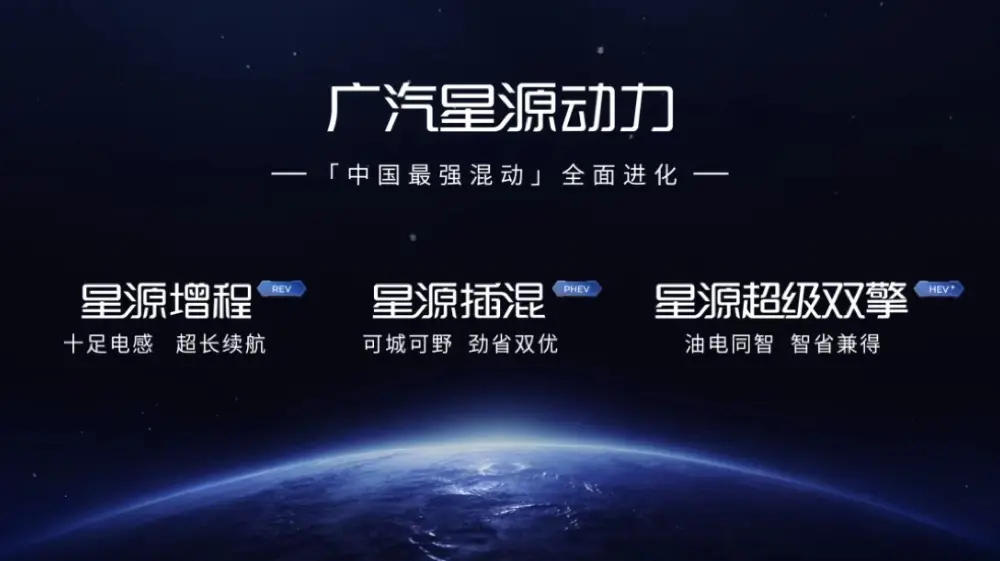
GAC launched three distinct powertrain paths covering extended-range, plug-in hybrid, and hybrid technologies. The PHEV system features a 1.5T engine delivering 125kW and 245N·m torque, with two transmission variants:
- Thunder Edition: Performance-focused, enabling 4-second 0-100km/h acceleration in mid-large SUVs with 10,000N·m total wheel torque
- Gale Edition: Efficiency-optimized at just 98.5kg—China’s first production dual-motor hybrid transmission under 100kg—delivering sub-3L/100km consumption in B-class MPVs
The Super Hybrid system targets traditional ICE converts, incorporating a 5.4kWh high-rate safety battery enabling 17km pure electric range and 2.2kW vehicle-to-load capability.
Starship Body: Structural Engineering Redefined
The ‘embedded frame + multi-ring cage’ architecture achieves 38,000N·m/° torsional rigidity—four times that of traditional hardcore off-road benchmarks—with 42,000N/mm bending stiffness. After 29 months of R&D including 600 simulation iterations and 1 million kilometers of testing, this platform signals GAC’s ambition to compete with Volvo and Mercedes on safety engineering.
Galaxy Cockpit: AI Agents Enter the Dashboard
ADiGO Intelligence leverages data from 375,000+ vehicles to deploy multi-modal perception and emotional AI. The system coordinates 15 AI skills simultaneously—handling route planning, restaurant reservations, and parking—while integrating Alibaba’s Qianwen large language model. With end-to-end latency under 1.6 seconds and 95%+ in-cabin recognition accuracy, GAC is leapfrogging Western infotainment systems.
Star Spirit Architecture 4.0: The Silicon Brain
The headline grabber: a 3nm flagship chip enabling six-domain fusion (ADAS, cockpit, powertrain, chassis, body, and connectivity). This integration reduces OTA update times to just 8 minutes—a 40% performance boost over previous generations. See our analysis on how 3nm chips are reshaping EV architectures.
The Chip Ecosystem: Breaking the Bosch Bottleneck
Here is where GAC diverges from merely assembling foreign components. The company has co-developed 51 automotive-grade chips with 105 domestic partners, completing verification for nearly 400 chip variants. The result: the Hyper GT Climbing Edition, featuring China’s first 100% domestically designed semiconductor suite.
This achievement comes as US export controls tighten on advanced semiconductors, forcing Chinese automakers to accelerate localization. While Western Tier-1 suppliers like Infineon and NXP currently dominate automotive silicon, GAC’s ecosystem represents a credible alternative that could trigger supply chain migration.
Strategic Implications: Why Detroit and Stuttgart Should Worry
GAC’s chip localization isn’t merely patriotic posturing—it is economic warfare. By controlling silicon design, GAC gains three strategic advantages that threaten Western incumbents:
- Cost Arbitrage: Domestic Chinese chip production costs 20-30% less than imported alternatives, allowing GAC to undercut global competitors while maintaining margins
- Supply Chain Security: With geopolitical tensions escalating, GAC’s semiconductor independence insulates it from potential Taiwan Strait disruptions that could paralyze competitors relying on TSMC
- Vertical Integration Margins: Capturing the Tier-1 value chain (currently dominated by Bosch, Continental, and Denso) adds an estimated $800-1,200 in retained value per vehicle
According to Bloomberg Intelligence, Chinese automakers are on track to source 40% of automotive semiconductors domestically by 2027, up from just 15% in 2023. GAC’s announcement suggests this timeline may accelerate dramatically.
Investor Takeaway: The New Automotive Order
For Western investors, GAC’s Tech Day signals a fundamental shift. The era of Chinese automakers as ‘assembly shops’ for Western technology is ending. With proprietary chip ecosystems, 3nm architectures, and AI-native cockpits, GAC is building technological moats that mirror Tesla’s early vertical integration—but at mass-market scale.
The question for portfolio managers isn’t whether China automotive chip localization will disrupt global supply chains—it is whether Western Tier-1 suppliers can pivot fast enough to remain relevant in a market that is increasingly designing them out.