The Composite Paradox: Why Automakers Are Stranded With Indestructible Materials
Automotive composite materials have long presented the industry with an uncomfortable truth: the same cross-linked polymer matrices that make carbon-fiber reinforced plastics (CFRP) and glass-fiber composites so valuable for lightweighting are also what make them virtually impossible to recycle economically. A thermoset composite propeller shaft or battery enclosure panel can outlast the vehicle by decades, yet at end-of-life it becomes hazardous waste destined for landfill or incineration.
A research collaboration between the University of Texas at Austin and Sandia National Laboratories may have finally cracked the code for at least one critical material class: polydicyclopentadiene (pDCPD). Their newly announced low-energy depolymerization method reportedly enables complete recovery of reinforcing fibers from pDCPD composites while regenerating the polymer matrix. If validated at scale, this could represent a genuine circular-economy unlock for automotive structural composites — a sector that has struggled to reconcile lightweighting mandates with sustainability goals.
The development arrives at a critical inflection point. The European Union's End-of-Life Vehicles Regulation, currently working through the legislative process, proposes mandatory recycled content thresholds for new vehicles. Simultaneously, China's own circular economy directives are pressuring domestic OEMs to account for material recovery. For an industry racing toward lightweight electric vehicles — where every kilogram of mass savings translates to range improvement — the ability to reclaim high-value fibers without downcycling represents both an environmental and economic opportunity.
Inside the Chemistry: How pDCPD Depolymerization Actually Works
Understanding the significance of this breakthrough requires grappling with the fundamental chemistry of thermoset polymers. Unlike thermoplastics — which can be repeatedly melted and reshaped — thermosets are cross-linked networks that cannot flow once cured. This permanence is precisely why pDCPD has found favor in automotive applications: it resists deformation, chemical attack, and thermal degradation.
pDCPD is produced via ring-opening metathesis polymerization (ROMP) of dicyclopentadiene monomer, typically using a Grubbs-type ruthenium catalyst. The resulting polymer offers an attractive property suite: high impact strength, excellent chemical resistance, and a density of approximately 1.03 g/cm³. These characteristics have made it a candidate material for Class A body panels, battery trays, and structural underbody components.
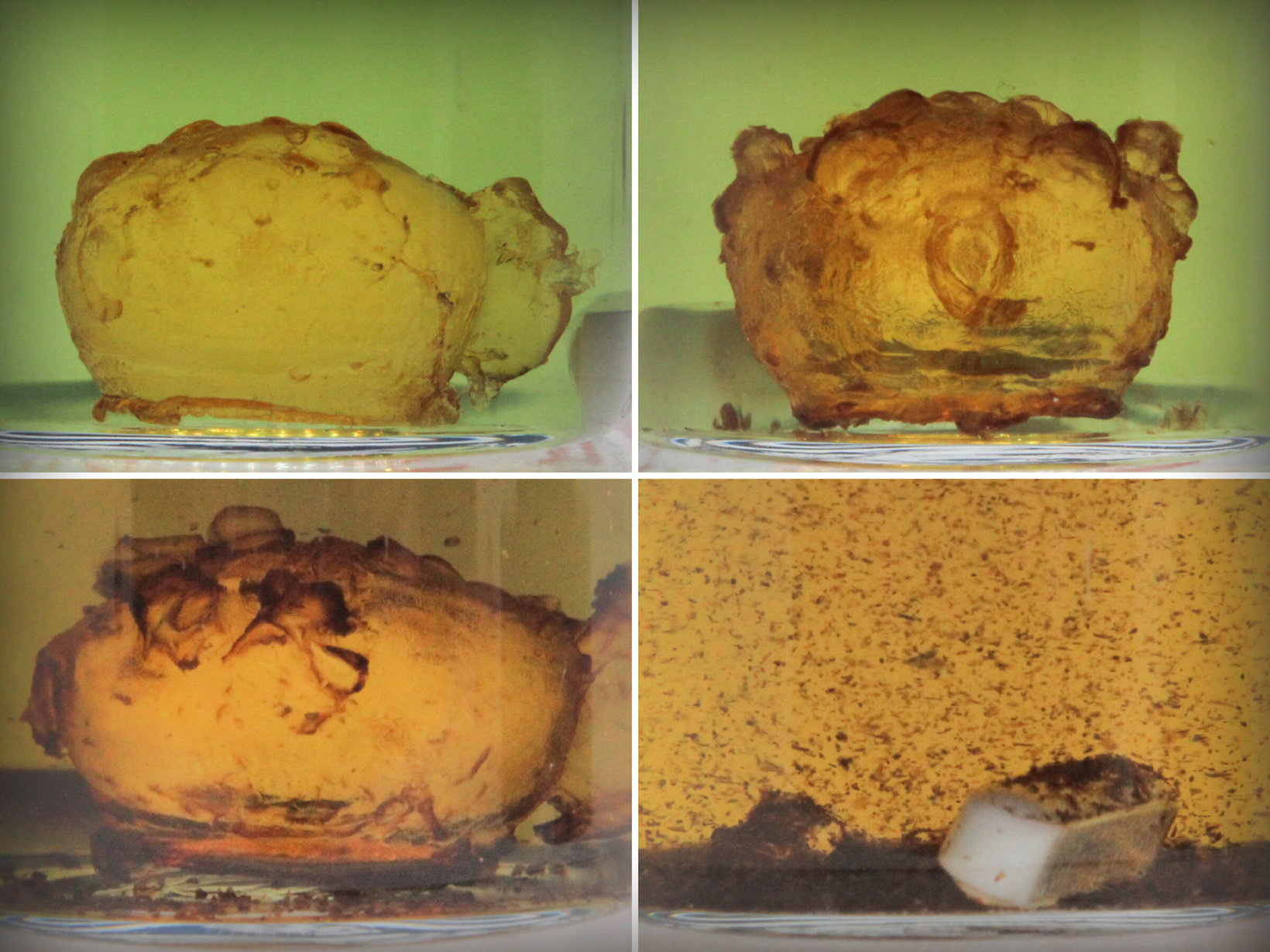
The UT Austin/Sandia approach reportedly exploits the reversibility of the ROMP chemistry. By introducing specific depolymerization conditions — the exact temperature, solvent system, and catalyst details remain partly undisclosed in the initial summary — the researchers claim to reverse the polymerization, breaking the cross-linked network back into recoverable monomer or oligomeric species.
Critical Technical Parameters
- Energy Input: Described as 'low-energy' relative to conventional thermoset processing, though quantitative energy-per-kilogram figures are not publicly disclosed in the source summary.
- Fiber Recovery: The process reportedly yields intact reinforcing fibers suitable for reuse, a significant advantage over pyrolysis or solvolysis methods that typically degrade fiber surface sizing and mechanical properties.
- Polymer Recovery: Regeneration of pDCPD monomer or precursors is claimed, though cyclic efficiency and yield percentages await peer-reviewed publication.
From an engineering first-principles perspective, the claims are scientifically plausible. ROMP is a reversible equilibrium reaction; shifting conditions can favor depolymerization. However, the practical challenge lies in doing so selectively without damaging embedded fibers or introducing contaminants that would degrade regenerated polymer performance.
| Parameter | pDCPD Depolymerization (New Method) | Conventional Pyrolysis | Solvolysis (Chemical Recycling) | Landfill/Incineration |
|---|---|---|---|---|
| Fiber Recovery Quality | Claimed intact, reusable | Degraded surface, reduced length | Partial recovery, sizing damage | None |
| Polymer Recovery | Claimed monomer/precursor regeneration | Oil/gas byproducts only | Partial oligomer recovery | None |
| Energy Intensity | Described as low-energy; unverified at scale | High (500-1000°C typical) | Moderate to high (solvent recovery) | Minimal processing |
| Commercial Readiness | Laboratory scale | Industrial scale (limited composite adoption) | Pilot scale | Current default |
| Applicable Materials | pDCPD-based composites only | Broad thermoset range | Epoxy, polyester composites | All |
The table above highlights a critical limitation: this breakthrough addresses pDCPD specifically, not the broader universe of automotive thermosets. Epoxy-based CFRP — the dominant material in high-performance structural applications — remains outside the scope of this particular chemistry.
Supply Chain Reality: Who Supplies pDCPD and What Does Recycling Mean for Tier-1 Margins?
pDCPD is not a commodity polymer. Its supply chain is concentrated among specialty chemical producers. The primary global suppliers include Materia Inc. (now part of the ExxonMobil chemical portfolio via acquisition), Telene SAS (a joint venture between Arkema and a Japanese partner), and a limited number of licensees operating under Metton and Telene technology platforms.
In automotive applications, pDCPD has been most notably used by:
• Materia/Telene licensees for body panels and structural components.
• Tier-1 suppliers exploring pDCPD for battery enclosures due to its dielectric properties and impact resistance.
• Commercial vehicle manufacturers for exterior panels where corrosion resistance is valued.
If pDCPD recycling becomes economically viable, the supply chain implications are nuanced:
- Monomer producers could face reduced primary demand if recycled monomer displaces virgin material — though this would be partially offset by increased overall composite adoption driven by sustainability credentials.
- Compounders and molders would need to qualify recycled fiber and regenerated polymer streams, adding cost and complexity.
- OEMs could potentially claim higher recycled content percentages, aiding compliance with emerging regulations.
Regarding cost structure, industry estimates suggest that automotive-grade CFRP components currently cost $20-40 per kilogram for structural parts, with the fiber itself representing 40-60% of material cost. Recovery of intact fiber could theoretically reduce effective material cost by 15-25% if recycling costs remain below virgin fiber pricing — a significant 'if' that depends on scale, logistics, and processing efficiency.
However, the sobering reality is that composite recycling economics have historically failed to close. Pyrolysis-based fiber recovery produces fibers at 70-80% of virgin mechanical properties, limiting them to non-structural applications and thereby destroying value. If this new method genuinely preserves fiber properties, it could shift the calculus — but only if the depolymerization process itself is scalable and the recovered monomer can be re-polymerized to virgin-equivalent specifications.
Competitive Impact: Recycling Breakthroughs Reshape Lightweighting Strategies
The strategic implications of viable pDCPD recycling extend across the automotive value chain, but the beneficiaries are not uniformly distributed.
Who Gains
- European OEMs facing regulatory pressure: BMW, Mercedes-Benz, and Volkswagen Group have invested heavily in composite lightweighting but face EU recycled content mandates. A credible recycling pathway for pDCPD-components strengthens their compliance position.
- Specialty chemical suppliers with pDCPD portfolios: Arkema, ExxonMobil Chemical, and their licensees could benefit from increased adoption if end-of-life concerns are mitigated.
- Composite molders with closed-loop ambitions: Companies positioned to offer 'cradle-to-cradle' composite solutions could command premium pricing.
Who Loses
- Landfill operators and incineration facilities: Reduced composite waste volumes, though this is a marginal effect given current low composite penetration.
- Virgin fiber producers (partially): If recycled fiber displaces a meaningful share of virgin demand, producers like Toray, Teijin, and Mitsubishi Chemical could see volume pressure in automotive segments — though overall market growth may offset this.
Who Is Unaffected
- Aluminum and high-strength steel suppliers: These materials have established recycling infrastructures and compete with composites on cost. A composite recycling breakthrough improves composites' lifecycle position but does not fundamentally alter the cost gap for most applications.
- Chinese OEMs focused on LFP battery chemistry: The pDCPD recycling development is orthogonal to battery chemistry debates.
Notably, Chinese automakers have shown less enthusiasm for thermoset composites than their Western counterparts, favoring aluminum and advanced high-strength steel for body structures. This suggests that the primary beneficiaries of a pDCPD recycling breakthrough would be Western OEMs and their Tier-1 partners — a rare instance where a materials innovation aligns more closely with Western regulatory priorities than Chinese manufacturing paradigms.
The Reality Check: Separating Laboratory Promise From Industrial Reality
The UT Austin/Sandia announcement warrants enthusiasm, but also demands the skeptical scrutiny that any laboratory-scale materials breakthrough requires before it can be considered a commercial solution.
Unverified Claims Requiring Independent Validation
- Energy Input: 'Low-energy' is a qualitative descriptor. Without kilowatt-hour-per-kilogram figures, comparing to pyrolysis (which consumes approximately 5-10 kWh/kg of composite processed) is speculative. The depolymerization may require specialized solvents, catalysts, or pressure conditions that offset energy savings.
- Fiber Integrity: 'Intact' fibers require quantification. Tensile strength retention, surface chemistry preservation, and sizing compatibility with new matrix resins must be independently verified.
- Monomer Recovery Yield: The percentage of polymer mass recovered as reusable monomer is critical to economic viability. Yields below 80% would likely render the process economically uncompetitive.
- Cycle Life: Can recycled monomer produce polymer with equivalent properties to virgin material? If properties degrade after multiple cycles, the 'circular' claim weakens substantially.
Infrastructure and Scale Constraints
Even if the chemistry proves robust, industrial deployment faces formidable obstacles. pDCPD composite waste streams are currently small and geographically dispersed. Establishing collection, sorting, and processing infrastructure requires capital investment that may not be justified by current volumes. Unlike PET bottle recycling — where billions of units create centralized feedstock — automotive composite waste is measured in thousands of tonnes annually, scattered across end-of-life vehicle processing facilities.
Furthermore, pDCPD competes with other thermosets (epoxy, polyurethane, vinyl ester) that would require separate recycling pathways. A fragmented approach to thermoset recycling may struggle to achieve the economies of scale necessary for cost competitiveness.
The realistic timeline for commercial deployment, assuming successful scale-up, is likely 5-8 years — not the 2-3 years that press releases from research institutions sometimes imply.
Regulatory Tailwinds and Trade Barriers: The Policy Context for Composite Recycling
The pDCPD recycling breakthrough intersects with a complex regulatory landscape that varies significantly by jurisdiction.
European Union
The proposed End-of-Life Vehicles Regulation would mandate that new vehicles contain at least 25% recycled plastic by weight, with specific targets for different material classes. While composites represent a small fraction of vehicle mass (typically 5-10% in premium vehicles), they are disproportionately difficult to recycle. A viable pDCPD pathway helps OEMs demonstrate progress. The EU's Circular Economy Action Plan also emphasizes 'design for recycling' — which could favor composites with demonstrated end-of-life pathways.
United States
US regulations are less prescriptive at the federal level, but California's Advanced Clean Cars II and emerging state-level circular economy rules create incentives. The Inflation Reduction Act's focus on domestic supply chains could favor recycling infrastructure located in North America — a potential advantage for the UT Austin-developed technology.
China
China's Circular Economy Promotion Law and its 'dual carbon' goals create pressure for material efficiency, but enforcement has been inconsistent. Chinese OEMs have shown limited interest in thermoset composites, reducing the regulatory pull for recycling solutions. However, if Chinese suppliers enter the pDCPD production market — which is currently dominated by Western chemical companies — they may also develop recycling capabilities, potentially creating a low-cost competitive dynamic.
Trade Policy Considerations
Under US Section 301 tariffs and IRA FEOC rules, Chinese-origin composite materials face restricted access to US incentive programs. Recycled materials derived from Chinese sources may face similar scrutiny, creating a complex compliance landscape for globally sourced composite components. Companies pursuing pDCPD recycling should ensure feedstock traceability to access regulated markets.
Strategic Outlook: Scenarios for pDCPD Recycling Adoption
Based on our analysis of the technology readiness, supply chain dynamics, and regulatory environment, we present three scenarios for the commercialization of pDCPD depolymerization.
Bull Case
The technology scales efficiently, demonstrating energy consumption below 2 kWh/kg and fiber property retention above 95%. Major Tier-1 suppliers (e.g., Magna, Constellium, or specialty composite molders) partner with chemical producers to establish regional recycling hubs. EU recycled content mandates drive premium pricing for 'circular composites,' and pDCPD adoption increases as end-of-life concerns diminish. By 2032, 30% of pDCPD automotive components are recycled at end-of-life, and OEMs market 'closed-loop composite' vehicles. The technology is extended to related ROMP-based polymers, broadening the addressable market.
Base Case
The chemistry proves sound but scale-up reveals economic challenges. Energy and solvent recovery costs limit adoption to high-value applications (e.g., carbon-fiber pDCPD composites where fiber value justifies processing). A handful of pilot plants operate in Europe and North America, processing 500-1,000 tonnes annually. Recycled fiber finds use in non-structural applications, and monomer recovery rates stabilize at 70-80%. Regulatory compliance is achieved through a mix of recycling and design-for-disassembly strategies. Market penetration remains modest, but the technology establishes a foundation for future improvements.
Bear Case
Independent validation reveals that fiber degradation or monomer yield issues undermine economic viability. The specialized catalysts and solvents required prove costly and difficult to recover at scale. pDCPD volumes remain too small to justify dedicated infrastructure. OEMs continue to favor landfill or incineration for thermoset composites, and regulatory focus shifts to thermoplastics and metals where recycling is more straightforward. The technology remains a laboratory curiosity, and pDCPD composite adoption plateaus as its end-of-life liabilities remain unresolved.
Strategic Takeaways for Executives and Investors
- Monitor independent validation: The credibility of the 'low-energy' and 'intact fiber' claims will be established through peer-reviewed publications and pilot-scale demonstrations. Engage with the research team or their technology transfer office to assess licensing opportunities.
- Evaluate supply chain positioning: Tier-1 suppliers and material distributors should assess whether pDCPD recycling capabilities could become a competitive differentiator in European and North American markets subject to recycled content mandates.
- Recognize the limits of scope: This breakthrough applies to pDCPD, not the broader thermoset composite market. A portfolio approach to composite recycling — including epoxy and polyurethane pathways — remains necessary for comprehensive sustainability strategies.
- Anticipate regulatory divergence: EU recycled content mandates will likely drive adoption faster than US or Chinese regulations in this specific material category. Companies serving the European market should prioritize pDCPD recycling readiness.
- Consider the competitive dynamics: If pDCPD recycling becomes viable, it could improve the lifecycle competitiveness of composites versus aluminum and steel, potentially influencing material selection for next-generation lightweighting programs.
The pDCPD depolymerization breakthrough represents a meaningful scientific advance with plausible industrial potential. However, as with all laboratory-to-factory transitions, the gap between promise and production is measured in years, capital, and engineering persistence. The automotive industry would be wise to track this development closely — but not to bet its composite strategy on unproven scalability.