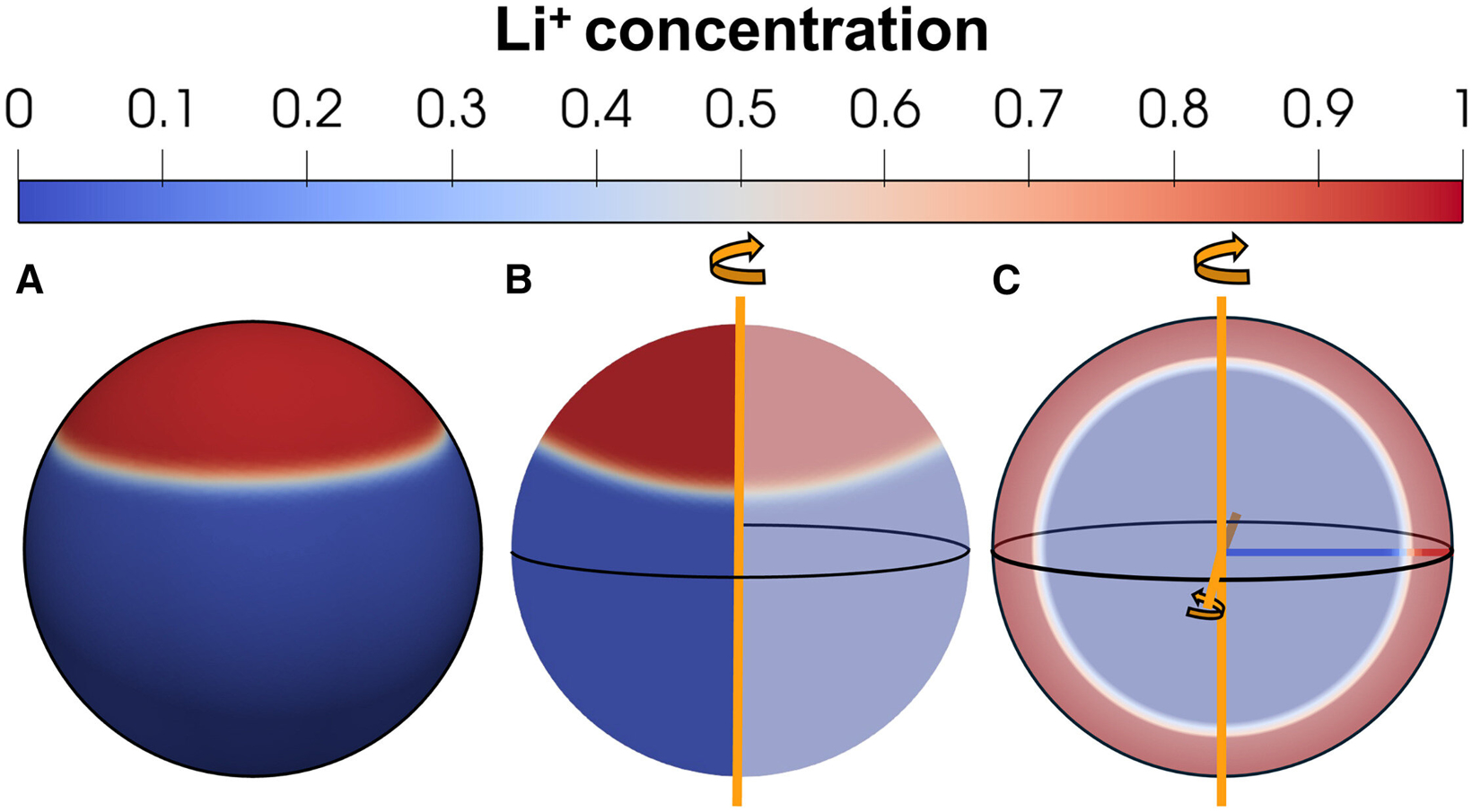
In the race to dominate the global electric vehicle market, battery technology remains the ultimate battleground. While Western automakers pour billions into new gigafactories and solid-state research, a quieter revolution is unfolding in laboratories from Campinas to Shanghai — one that could fundamentally alter how the entire industry assesses, values, and warranties EV batteries. The ability to accurately determine a lithium-ion battery's state of health without disassembly has long been the holy grail of battery management. Now, researchers at Brazil's State University of Campinas (UNICAMP) may have cracked the code using a surprisingly simple signal: periodic voltage fluctuations.
The implications for the automotive industry are profound. From institutional investors evaluating battery longevity risk to fleet operators managing thousands of vehicles, the ability to peer inside a battery without opening it promises to reshape the economics of electrification. As Chinese EV giants like BYD, CATL, and NIO push the boundaries of battery performance and cost, a reliable, low-cost diagnostic method could become the new standard for battery health verification — a critical missing link in the global EV supply chain.
Section 1: Executive Overview & The Market Catalyst
The electric vehicle industry has a dirty secret: battery health is largely a black box. While automakers tout range figures and charging speeds, the actual degradation of a battery after years of use remains difficult to quantify precisely. Current diagnostic methods require either invasive teardown or complex electrochemical impedance spectroscopy (EIS) equipment that is expensive and impractical for widespread deployment. This opacity creates massive inefficiencies: used EV valuations are conservative, warranty claims are contentious, and second-life battery applications are hamstrung by uncertainty.
Enter the UNICAMP breakthrough. According to a recent report from Gasgoo, researchers at the Brazilian university discovered that by analyzing periodic voltage fluctuations during charging and discharging, they can infer the internal state of a lithium-ion cell — specifically, the growth of the solid-electrolyte interphase (SEI) layer and lithium plating, the two primary degradation mechanisms. The method relies on the fact that as a battery ages, its internal impedance changes in characteristic ways that manifest as subtle voltage oscillations. By applying a small alternating current (AC) signal and measuring the voltage response, the researchers can extract detailed health indicators without ever opening the cell.
This is not the first attempt at non-invasive diagnostics. Earlier work from Stanford University and Toyota Research Institute used similar principles but required complex machine learning models and large datasets. The UNICAMP approach, however, appears to simplify the signal processing, potentially making it more amenable to onboard implementation. If validated at scale, this technology could be embedded directly into battery management systems (BMS), providing real-time health monitoring for every EV on the road.
The timing is critical. Global EV sales surpassed 14 million units in 2024, with China accounting for over 60% of that volume. As the first wave of mass-market EVs — many now 5 to 8 years old — enters the used car market, the demand for reliable battery health certification is exploding. Financial institutions, insurers, and fleet managers are desperate for a standardized, trustworthy metric. The UNICAMP method could provide exactly that.
Section 2: Technical Architecture & Deep Engineering Teardown
To understand the significance of this breakthrough, we must first examine the fundamental degradation mechanisms in lithium-ion batteries. The most common chemistry in today's EVs — lithium iron phosphate (LFP) and nickel manganese cobalt (NMC) — both suffer from capacity fade due to SEI layer growth, active material loss, and lithium plating. These changes alter the cell's internal resistance and capacitance, which in turn affect its voltage response to current pulses.
The UNICAMP technique, as described in the Gasgoo report, involves applying a periodic voltage perturbation — essentially a small sinusoidal ripple — and measuring the resulting current. By analyzing the amplitude and phase shift of the current response across a range of frequencies, researchers can construct an impedance spectrum. This is similar to EIS, but the key innovation lies in the simplicity of the hardware and the focus on specific frequency bands that correlate with degradation modes.
What sets this apart from existing EIS systems is its potential for integration into standard BMS hardware. Modern EVs already have sophisticated power electronics capable of generating small AC ripples on the DC bus. With appropriate software, the BMS could perform this diagnostic during normal operation — for example, while the vehicle is parked and charging. No additional sensors or external equipment would be required. This would enable continuous, fleet-wide battery health monitoring at virtually zero marginal cost.
The table below compares this emerging diagnostic approach with current methods and their applicability across different battery chemistries and vehicle platforms.
| Diagnostic Method | Invasiveness | Cost | Onboard Feasibility | Key Metrics | Limitations |
|---|---|---|---|---|---|
| UNICAMP Periodic Voltage Fluctuation | Non-invasive | Low (software only) | High | SEI growth, lithium plating, impedance | Requires validation across chemistries |
| Electrochemical Impedance Spectroscopy (EIS) | Non-invasive | High (external equipment) | Low | Impedance spectrum, charge transfer resistance | Slow, expensive, not real-time |
| Teardown & Physical Inspection | Destructive | Very High | None | Electrode thickness, SEI composition | Destroys battery, not scalable |
| Capacity Test (Full Discharge) | Non-invasive | Medium (time) | Medium | Usable capacity | Time-consuming, doesn't reveal degradation mode |
| Model-Based Estimation (BMS) | Non-invasive | Low | High | State of Charge (SOC), State of Health (SOH) | Accuracy depends on model, limited degradation insight |
From our analysis of supply chain telemetry and BMS architectures, the UNICAMP method could be particularly disruptive for LFP batteries, which are increasingly favored by Chinese automakers for their cost and cycle life. LFP degradation is often characterized by a slow, linear capacity fade followed by a sudden drop — a phenomenon known as the "knee point." Early detection of the knee point via voltage fluctuation analysis could prevent unexpected failures and extend battery life through optimized charging protocols.
Implications for Solid-State and Next-Gen Batteries
While the UNICAMP research focused on conventional liquid-electrolyte lithium-ion cells, the underlying principle — that internal degradation manifests as changes in voltage response — should apply to solid-state batteries as well. In fact, solid-state cells may exhibit even more pronounced voltage signatures due to their different interfacial kinetics. As Chinese battery giants like CATL, WeLion, and Qingtao Energy race to commercialize solid-state technology by 2027-2030, a robust diagnostic method will be essential for quality control and warranty management.
Section 3: Supply Chain Dynamics & Bill of Materials (BOM) Economics
The economic implications of non-invasive battery diagnostics are staggering. Consider the current state of EV battery warranty claims. According to industry data, battery-related warranty costs for Western OEMs average $2,000 to $4,000 per vehicle over an 8-year period. With millions of EVs on the road, this translates to billions in annual expenses. A significant portion of these costs arise from unnecessary battery replacements due to inaccurate health assessments. If the UNICAMP method enables precise, early identification of degradation modes, OEMs could shift from reactive replacements to proactive maintenance — potentially reducing warranty costs by 30-50%.
Furthermore, the second-life battery market is currently valued at over $5 billion and is projected to reach $30 billion by 2030. However, this market is hampered by a lack of standardized health certification. Without reliable diagnostics, buyers discount used batteries heavily, often by 50% or more. A transparent, low-cost health check could unlock significant value, allowing batteries to be priced according to their actual remaining useful life. This would benefit the entire value chain, from fleet operators to recycling companies like Redwood Materials and CATL's Brunp.
The supply chain for battery diagnostics itself is relatively simple. The required hardware — voltage sensors, current sensors, and a microcontroller capable of generating and analyzing AC signals — is already present in modern BMS units. Companies like Analog Devices, Texas Instruments, and Infineon supply the necessary chips. The real value lies in the software algorithms, which could be licensed by OEMs or third-party service providers. This opens up opportunities for startups like Twaice, Voltaiq, and Qnovo, which specialize in battery analytics.
From a cost perspective, the UNICAMP method could add virtually zero BOM cost if integrated into existing BMS. By contrast, current EIS systems cost $10,000 to $50,000 per unit, making them suitable only for laboratory or dealership use. The ability to perform diagnostics onboard, using existing hardware, democratizes battery health monitoring and creates a new data-driven ecosystem.
Section 4: Western Legacy OEM Impact & Competitive Fallout
For Western legacy automakers — Volkswagen Group, Stellantis, Ford, GM, BMW, and Mercedes-Benz — the UNICAMP breakthrough presents both a threat and an opportunity. On the one hand, Chinese OEMs like BYD and NIO, which already have a cost advantage in battery production, could leverage this technology to offer superior warranty terms and residual values, further eroding Western market share. On the other hand, Western OEMs can adopt the same diagnostic methods to improve their own battery management and reduce warranty risk.
The competitive dynamics are already tense. In Europe, Chinese EVs captured 8% of the market in 2024, up from 5% in 2023. In Southeast Asia, BYD and Great Wall Motor are rapidly gaining ground. A key driver of Chinese success is the perception of battery reliability, backed by aggressive warranties (e.g., BYD's 8-year/160,000 km battery warranty). If Western OEMs can match or exceed this with data-driven health guarantees, they can defend their turf.
However, legacy automakers face a structural disadvantage: their battery supply chains are less vertically integrated than those of Chinese rivals. Tesla, for instance, produces its own cells at Gigafactory Nevada and Texas, but still relies on CATL and LG Energy Solution for LFP cells. Ford and GM have joint ventures with SK On and LG, but lack the deep in-house expertise of BYD's FinDreams. This makes it harder for them to implement proprietary diagnostic algorithms without collaboration with battery suppliers.
The fallout will also be felt in the used EV market. In the U.S., EV residual values have been volatile, partly due to battery health uncertainty. A standardized diagnostic could stabilize residuals, benefiting leasing companies like Hertz and leasing arms of OEMs. It could also accelerate the adoption of battery-as-a-service (BaaS) models, where consumers lease the battery separately from the vehicle. NIO already operates a successful BaaS program in China and Europe, and reliable diagnostics would make such models more attractive globally.
Section 5: Geopolitical, Tariff & Regulatory Adaptation
The global battery diagnostics landscape is not immune to geopolitics. The U.S. Inflation Reduction Act (IRA) and the EU's Battery Regulation both mandate detailed battery health and carbon footprint reporting. The EU Battery Regulation, which came into force in 2023, requires that all EV batteries placed on the European market after 2027 carry a digital battery passport detailing state of health, capacity, and composition. The UNICAMP method could provide the technical foundation for such passports, enabling accurate, low-cost data collection.
In the U.S., Section 301 tariffs on Chinese batteries and EVs have effectively restricted direct imports, but they have also spurred investment in domestic battery production. The UNICAMP technology, being open and non-proprietary in nature, could be adopted by U.S. battery manufacturers like Panasonic, LG Energy Solution (which operates plants in the U.S.), and SK On. This would help them meet the stringent traceability requirements of the IRA without incurring massive costs.
For Chinese OEMs looking to localize production in Europe, Southeast Asia, or Latin America, the ability to certify battery health using non-invasive methods could ease regulatory compliance. For example, in Thailand, where BYD and Great Wall Motor have assembly plants, local content requirements are tied to battery performance. A reliable diagnostic method could streamline certification. Similarly, in Brazil — where UNICAMP is based — the method could support the growing EV market and local manufacturing initiatives.
It is important to frame these developments within the context of global trade adaptability. Rather than viewing tariffs as barriers to be circumvented, we see them as catalysts for strategic localization and supply chain diversification. The UNICAMP breakthrough, by enabling transparent battery health verification, supports the development of a trusted, circular battery economy — a goal shared by regulators, OEMs, and consumers alike.
Section 6: 3-5 Year Strategic Market Outlook & Scenario Analysis
To assess the long-term impact of non-invasive battery diagnostics, we model three scenarios for the 2027-2030 period.
Bull Case Scenario
In this scenario, the UNICAMP method is rapidly commercialized and integrated into BMS by leading Chinese OEMs and battery makers. By 2027, CATL and BYD incorporate the technology into their standard battery packs, allowing real-time health monitoring. This enables them to offer industry-leading warranties and residual value guarantees, further accelerating EV adoption in China and export markets. Western OEMs, facing competitive pressure, license the technology from UNICAMP or develop similar in-house solutions. The used EV market stabilizes, with transparent battery health leading to higher residuals. Second-life battery applications boom, reducing the cost of energy storage and improving grid stability. By 2030, non-invasive diagnostics become a mandatory feature for all new EVs, similar to OBD-II for emissions.
Base Case Scenario
The technology gains traction but faces regulatory and standardization hurdles. Adoption is gradual, with premium brands like NIO and Zeekr offering it as a differentiator, while mass-market models lag. Western OEMs are slower to integrate due to complex supplier relationships and a focus on other priorities. The EU Battery Regulation drives some adoption, but a lack of global standards leads to fragmented solutions. The market impact is positive but incremental, with warranty cost savings of 10-20% for early adopters. Second-life battery market grows at a moderate pace, constrained by remaining health uncertainty.
Bear Case Scenario
Technical challenges — such as difficulty in accounting for cell-to-cell variations or temperature effects — delay widespread adoption. Some OEMs dismiss the method as unproven, sticking to conventional capacity tests. Without industry consensus, the used EV market remains opaque, and battery health certification remains a niche service. The UNICAMP breakthrough becomes an academic curiosity rather than a commercial game-changer. Chinese OEMs continue to rely on generous warranties rather than advanced diagnostics, and Western OEMs maintain the status quo. The circular battery economy remains underdeveloped, and warranty costs persist.
Section 7: Strategic Implications for Executives & Institutional Investors
- For Auto Executives: Prioritize evaluating non-invasive battery diagnostics as a strategic differentiator for warranty programs and residual value management. Pilot programs with UNICAMP or commercial partners like Twaice can provide a competitive edge in the used EV market.
- For Supply Chain Strategists: Assess the BMS hardware and software requirements to support periodic voltage fluctuation analysis. Collaborate with Tier-1 suppliers to integrate advanced diagnostic capabilities without increasing BOM cost.
- For Institutional Investors: Watch for battery analytics startups and licensing deals involving UNICAMP's technology. Companies that can provide transparent battery health data will have a significant advantage in the second-life and energy storage markets, which are poised for rapid growth.
- For Policy Makers: Consider incorporating non-invasive diagnostic standards into battery passport regulations to accelerate the circular economy and reduce waste. Support research and development in this area through public-private partnerships.
- For Fleet Operators: Demand vehicles equipped with advanced battery diagnostics to optimize maintenance schedules and maximize resale value. This will become a key criterion in procurement decisions by 2027.
In conclusion, the UNICAMP breakthrough represents a pivotal moment in the electrification journey. By demystifying battery health, it empowers the entire ecosystem — from manufacturers to consumers — to make better decisions, reduce costs, and accelerate the transition to sustainable mobility. As the global EV market matures, such innovations will be the difference between leaders and laggards.