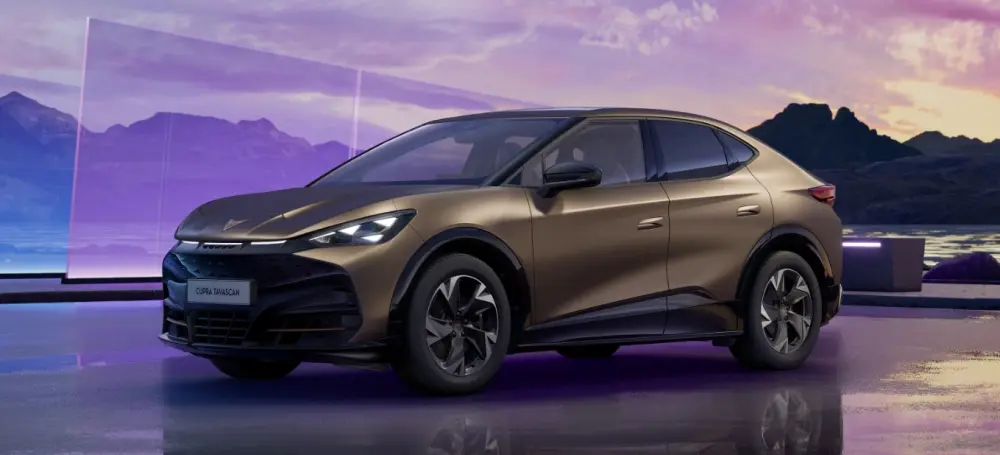
For decades, global automotive giants operated in China under a simple, highly profitable mandate: 'In China, for China.' But as domestic champions like BYD and Xiaomi redefine market dynamics at 'China-speed,' legacy automakers are pivoting. To survive local overcapacity and combat eroding market share, a silent revolution is underway: the rapid acceleration of legacy OEM EV exports from China through their local joint ventures (JVs).
The Shift: From Domestic Monopoly to Global Export Hubs
The Chinese automotive landscape has shifted permanently. Western OEMs who once dominated the market are facing an unprecedented strategic squeeze. Instead of retreating, clever legacy giants are capitalizing on China's massive manufacturing efficiencies. By utilizing their established joint ventures, companies like Volkswagen, BMW, and Ford are exporting high-tech vehicles to global markets directly from Chinese factories.
This is not merely about surviving a local market downturn; it is a calculated play for global alpha. By leveraging lower labor costs, integrated battery supply chains, and advanced local ADAS technologies, Western OEMs can export vehicles that are significantly cheaper to produce than their European or American counterparts.
A Comparative Look: Legacy OEM EV Exports From China
How are the major players executing this strategy? The table below outlines the core joint venture export strategies of leading global OEMs currently operating in China.
| OEM / JV Partner | Key Export Models | Target Export Markets | Strategic Objective |
|---|---|---|---|
| Volkswagen (Anhui) | Cupra Tavascan | Europe | Bypassing high European production costs using MEB platform scale in China. |
| BMW Brilliance | BMW iX3 | Europe, Asia-Pacific | Consolidating global production of a premium EV to maximize Shenyang's efficiency. |
| Ford (JMC JV) | Ford Territory, Equator | Latin America, Middle East | Leveraging low-cost architecture to dominate emerging market SUV segments. |
| Kia (Yueda Kia) | Kia EV5, Seltos | Southeast Asia, Middle East | Offsetting domestic market decline by converting Jiangsu plant into a massive export hub. |
Navigating Geopolitical Friction: Tariffs vs. Cost Advantage
For Western investors, the obvious elephant in the room is trade protectionism. With the EU implementing anti-subsidy duties and the US introducing 100% tariffs on Chinese-made EVs, how viable is a strategy relying on legacy OEM EV exports from China?
The answer lies in market diversification. While Europe and North America erect tariff walls, the 'Global South' (Southeast Asia, Latin America, the Middle East, and parts of Africa) remains highly receptive. In these regions, the battle is purely on price-to-performance ratio. By exporting highly competitive, China-made vehicles, legacy OEMs can directly compete against native Chinese export giants like BYD and Chery on their own terms.
Furthermore, even with European tariffs, the cost delta of producing a vehicle in China—often estimated at 20% to 30% lower than in Germany or France—helps absorb the duty impact, keeping Chinese-made JVs remarkably price-competitive.
The Strategic Outlook: Risk or Salvation?
This export shift is a double-edged sword. On one hand, it validates the dominance of the Chinese EV ecosystem; Western legacy brands must build in China to compete globally. On the other hand, it protects global OEMs from total irrelevance in the electrification race.
As strategy directors and market analysts monitor this evolution, the metrics of success have changed. The health of a legacy OEM's Chinese operation should no longer be measured purely by local market share, but by their capability to harness China's supply chain for global offensive strategies.