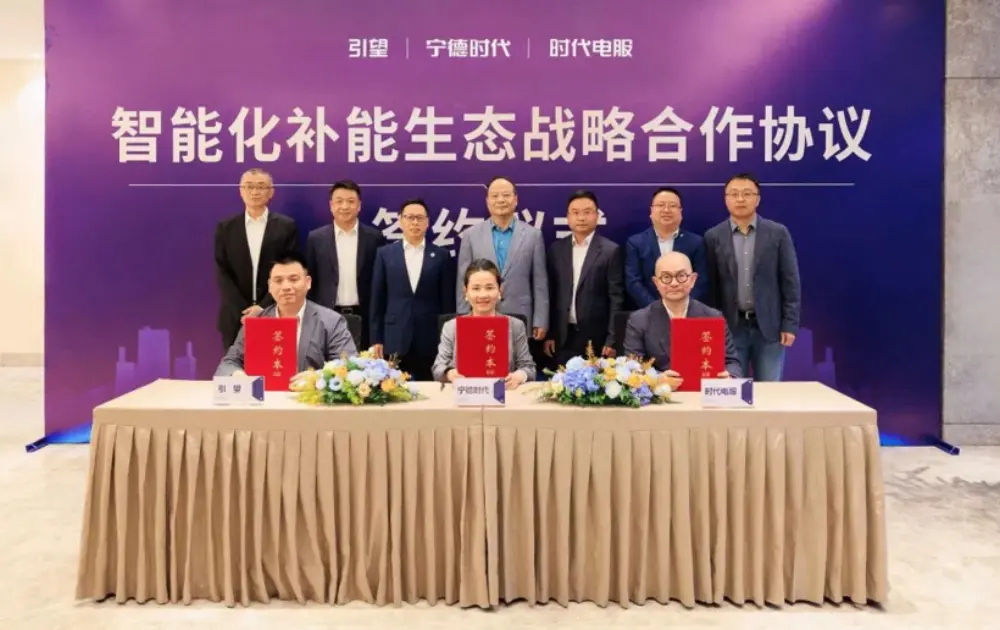
When Huawei’s automotive division, Shenzhen Yinwang Intelligent Technology, finalized a comprehensive cooperation pact with Contemporary Amperex Technology Co., Limited (CATL) and its dedicated battery-swap arm, Contemporary Amperex Energy Service Technology (CAES / EVOGO), in Ningde, the Chinese electric mobility ecosystem witnessed an undeniable heavyweight convergence. By joining forces, the world’s dominant power-battery supplier and China’s most assertive automotive software and intelligent systems architect intend to reshape charging infrastructure from proprietary DC fast-charging pedestals toward standardized, modular energy replenishment. Yet beneath the orchestrated PR narrative of a unified Chinese industrial standard lies a complex matrix of incompatible skateboard platforms, high-stakes balance sheet exposure, and an unresolved battle for software-defined powertrain sovereignty.
To grasp the true implications of this partnership, one must examine the shifting macroeconomics of China’s domestic EV market. Throughout 2024 and 2025, relentless price warfare stripped mainstream battery electric vehicles (BEVs) of their operating margins, leaving OEMs searching for mechanisms to slash retail sticker prices without absorbing crippling bill-of-materials (BOM) losses. The Battery-as-a-Service (BaaS) model—pioneered commercially by NIO and pursued in fleet operations by Aulton—promises to shave 60,000 to 100,000 RMB ($8,300 to $13,800) off initial purchase prices by unbundling the battery pack from the vehicle chassis. However, battery swapping has historically remained a capital-expenditure sinkhole, characterized by proprietary hardware lock-ins, low off-peak asset utilization, and massive municipal real estate footprints. Huawei and CATL are attempting to resolve this economic puzzle through sheer ecosystem leverage, but the engineering compromises required are far more severe than corporate releases acknowledge.
Architectural Teardown: EVOGO Choco-SEB vs. Monolithic Pack Design
At the center of this joint initiative is CATL’s proprietary 'Choco-SEB' (Swapping Electric Block) architecture, managed by its CAES subsidiary. Unlike NIO’s monolithic pack replacement—where an entire 70 kWh to 150 kWh liquid-cooled battery pack is mechanically disengaged and swapped in three to five minutes—CATL’s EVOGO standard relies on a modular, multi-block philosophy. Each Choco-SEB block is an individualized, cell-to-pack (CTP) unit delivering roughly 26.5 kWh of energy with a gravimetric energy density exceeding 160 Wh/kg at the pack level, leveraging high-efficiency lithium iron phosphate (LFP) chemistry or hybrid ternary blends.
Huawei’s Yinwang enters this hardware paradigm as the digital integrator. Spun out of Huawei’s Intelligent Automotive Solutions (IAS) business unit and heavily backed by capital injections from state-owned partners like Changan’s Avatr and Seres, Yinwang provides the centralized vehicle domain controllers (VDC), software-defined power management units (PMU), and high-voltage junction protocols necessary to orchestrate these modular packs. When a vehicle pulls into an EVOGO swapping station, Yinwang’s Qiankun ADAS sensors and edge algorithms handle micro-positioning, allowing the automated robotic sled to unscrew and exchange one, two, or three blocks in under 90 seconds depending on the driver’s immediate range requirements.
| Technical Parameter | CATL / Huawei EVOGO Standard | NIO 4th-Gen Swapping Network | Zeekr / Geely 800V DC Fast Charging |
|---|---|---|---|
| Pack Modularity | Modular (1 to 3 Choco-SEB blocks, ~26.5 kWh/block) | Monolithic (70, 75, 100, or 150 kWh whole-pack) | Non-modular fixed pack (75 kWh LFP to 100 kWh NMC) |
| Voltage Architecture | Native 400V per block, parallel/series 800V capable | 400V native legacy; migrating to 900V (NT3.0) | Native 800V Silicon Carbide (SiC) architecture |
| Swap Cycle Duration | ~90 to 120 seconds (single/dual block exchange) | ~144 seconds (fully automated pack unlock/relock) | N/A (10% to 80% SoC in 10.5 mins via 5.5C LFP) |
| Thermal Coupling | Individual blind-mate hydraulic couplings per block | Centralized single-manifold coolant quick-connects | Direct integrated pack refrigerant / liquid-cooling |
| Platform Compatibility | A00, A, B, and C-segment passenger & light commercial | Restricted to proprietary NIO/Onvo/Firefly wheelbases | Standard cross-brand CCS/GB/T high-power plug |
| Estimated Station CapEx | $380,000 – $520,000 (excluding grid interconnect & land) | $450,000 – $600,000 (with 23 reserve pack bays) | $180,000 – $250,000 (per 480kW liquid-cooled pedestal pair) |
While the modularity of the Choco-SEB design theoretically democratizes battery swapping across varying vehicle footprints—allowing an A-class commuter car to use a single 26.5 kWh block while an executive C-class sedan stacks three blocks for an 80 kWh total capacity—it introduces serious mechanical penalties. Every modular boundary mandates independent, blind-mate quick-disconnect hydraulic valves for thermal management, reinforced structural shear pins to withstand longitudinal collision loads, and dedicated high-voltage contactors. In total, accommodating three Choco-SEB blocks introduces between 35 and 50 kilograms of parasitic overhead compared to a structural, cell-to-body (CTB) integrated pack. Furthermore, the multi-block arrangement creates localized thermal resistance points, complicating high-ambient-temperature heat dissipation during continuous high-discharge highway driving.
Supply Chain Realignment and Bill of Materials Dynamics
The economic logic driving the Huawei CATL battery swap alliance is a direct response to margin exhaustion across the Chinese EV supply chain. By detaching the single most volatile and capital-intensive component—the traction battery—from the automotive bill of materials, OEMs utilizing Yinwang’s hardware-software ecosystem can significantly compress their factory invoice costs. In a typical C-segment smart sedan retailing for 220,000 RMB ($30,400), an 80 kWh ternary lithium battery accounts for approximately 64,000 to 75,000 RMB ($8,850 to $10,400), or roughly 30% to 35% of the total manufacturing BOM.
Under the Yinwang-CATL framework, the vehicle is manufactured and invoiced as an unpowered 'glider' chassis with digital intelligence, reducing the retail capital entry point for the consumer to approximately 145,000 RMB ($20,000). The battery pack is transferred to the balance sheet of an asset management company—often a consortium of CATL, state energy funds, and infrastructure leasing entities. The consumer then leases the Choco-SEB modules via a recurring monthly subscription model, estimated between 399 RMB and 899 RMB ($55 to $124) depending on the number of active blocks selected in the vehicle's infotainment system.
From a Tier-1 supplier perspective, this agreement deepens Yinwang’s control over Chinese sub-tier suppliers. Automakers adopting Yinwang's Qiankun intelligent chassis system—such as Changan’s Avatr, Dongfeng’s Voyah, BAIC’s Stelato, and JAC’s Maextro—will no longer need to commission custom battery pack packaging from independent Tier-1 pack manufacturers. CATL secures a captive, guaranteed supply pipeline for its cell production lines in Yibin and Ningde, effectively crowding out second-tier battery rivals like CALB, EVE Energy, and Sunwoda from high-volume Huawei-partner platforms. Meanwhile, Yinwang solidifies its position as the unassailable system architect, collecting licensing royalties on every vehicle communication gateway and domain controller engineered to interface with EVOGO swap stations.
Competitive Fallout: The Squeeze on Independent OEMs and Pure Fast-Charging
The creation of this unified battery swapping front sends immediate shockwaves through China's hyper-competitive original equipment landscape, establishing clear winners and defenseless casualties across several market segments:
- NIO’s Swapping Hegemony Under Direct Siege: For six years, NIO stood virtually uncontested as the champion of passenger EV battery swapping, amassing over 2,500 Power Swap Stations across China and gradually convincing rivals like Geely, Changan, Chery, and GAC to sign non-binding swap-standardization memoranda of understanding. The Huawei-CATL alliance threatens to hollow out NIO’s open alliance before it reaches operational scale. As CATL can deploy its mammoth $15+ billion cash reserves to subsidize station expansion and Huawei provides ready-made OEM clients through its Harmony Intelligent Mobility Alliance (HIMA) and HI (Huawei Inside) partner networks, NIO risks being outspent and out-standardized by an open rival with vastly superior industrial scale.
- The Margin Defense of Decoupled Competitors: Western and East Asian legacy OEMs that have intentionally maintained distance from Chinese domestic joint ventures find themselves insulated from this ecosystem war. Automakers like the Hyundai Motor Group have eschewed China’s brutal domestic price slashing entirely, refocusing engineering resources on dedicated native 800V architectures like E-GMP across North American, European, and Indian manufacturing hubs. By deploying ultra-fast 350 kW DC charging topologies capable of achieving 10% to 80% State of Charge (SoC) in under 18 minutes, decoupled legacy players avoid the multi-billion-dollar fixed-asset CapEx required to construct, service, and balance proprietary swapping station networks.
- Direct Pressure on Pure Ultra-Fast Charging Infrastructure: Brands relying solely on high-power megawatt-level charging networks—such as Li Auto (with its 5C Qilin-based MEGA infrastructure) and XPeng (with its S4/S5 supercharging hubs)—face intensified consumer scrutiny. If the Huawei CATL battery swap alliance can reliably demonstrate three-minute turnaround times without degrading cell health, consumers in dense, Tier-1 urban residential complexes lacking private Level-2 charging allocation will inevitably gravitate toward modular swap subscriptions over fighting for public 480 kW charging stalls.
The Reality Check: Thermal Fatigue, Grid Bottlenecks, and Fleet Utilization Risks
Corporate press releases routinely herald battery swapping as the ultimate panacea for EV range anxiety and charging grid congestion. However, rigorous engineering interrogation and empirical operating data reveal acute mechanical, thermodynamic, and financial bottlenecks that cast serious doubt on the commercial viability of mass-scale passenger swap rollouts.
First and foremost is the physical reality of continuous high-cycle mechanical coupling. Standard DC fast-charging ports are rated for several thousand insertions before mechanical pin wear requires receptacle maintenance. A battery swapping apparatus, by contrast, relies on high-pressure hydraulic quick-connects for the liquid cooling loop, alongside spring-loaded high-voltage copper terminals designed to carry upwards of 300 amperes. In CATL's modular three-block setup, each swap involves cycling six hydraulic valves and three distinct multi-pin busbar connections under varying environmental conditions—ranging from -30°C winter slushes in Harbin to humid, dust-laden summer conditions in Guangzhou. Over a five-year operating lifecycle, microscopic particulate ingress, O-ring elastomeric degradation, and thermal expansion cycling present an inevitable risk of dielectric fluid leakage or localized micro-arcing. While CATL claims their connectors have passed 10,000 endurance cycles in controlled laboratory chambers, real-world deployment across municipal fleet environments will expose these complex interfaces to mechanical vibration, chassis flexing, and unpredictable abrasive wear.
Secondly, the PR claim that battery swapping alleviates national electrical grid strain is an engineering half-truth. While an EVOGO station can theoretically recharge spent Choco-SEB packs at a gentle, off-peak 0.5C to 1C rate during overnight hours, this load-shifting benefit completely evaporates if station throughput reaches commercial profitability targets. To justify a typical $450,000 station CapEx, an EVOGO facility must complete a minimum of 60 to 80 swapping cycles daily. During peak commuter hours, when drivers arrive sequentially every three to five minutes, the station’s internal chargers must push packs from 10% back to 90% in under 45 minutes to maintain reserve inventory. This necessitates continuous, unbuffered power draw between 350 kW and 600 kW from the local distribution grid—precisely matching the peak instantaneous load profile of high-power DC fast chargers. Unless every swap hub is paired with a dedicated 1 MWh Battery Energy Storage System (BESS) at an added capital cost of $150,000 to $200,000, local municipal substations will suffer severe voltage sags.
Finally, there is the unresolved 'idle asset' economic penalty. A standard DC fast charger operates as a pure pass-through conductor, requiring zero dedicated battery inventory when no vehicle is plugged in. Battery swapping, conversely, requires a perpetual float of unmounted battery inventory sitting idle in storage racks. For an EVOGO station holding 30 Choco-SEB modules (equivalent to ~800 kWh of stationary energy), that station locks up roughly $65,000 in raw battery cell capital that is generating zero revenue while waiting for an incoming customer. Unless Yinwang and CATL can achieve exceptionally high fleet density across their partner brands, this locked-up inventory will severely depress return on invested capital (ROIC) compared to direct-charging topologies.
Regulatory Standards and Sovereign Data Enclaves
The geopolitical and regulatory framework governing this partnership is fundamentally bounded by national borderlines. In mainland China, the Ministry of Industry and Information Technology (MIIT) has spent three years aggressively subsidizing and testing battery-swap pilots across key cities like Hefei, Wuhan, and Chongqing. The primary motivation for Beijing is standard-setting: by forcing disparate vehicle manufacturers to conform to standardized battery dimensions, mounting points, and cloud telematics protocols, China seeks to eliminate fragmented proprietary architectures, consolidate critical lithium-ion supply chains, and build a unified national emergency energy reserve.
However, the prospect of exporting this Huawei-CATL swap standard to developed Western markets faces almost insurmountable regulatory and geopolitical firewalls:
- United States Regulatory Blockade: Under the Foreign Entity of Concern (FEOC) rules governing the Inflation Reduction Act (IRA), along with elevated Section 301 tariffs reaching 100% on Chinese EVs and 25% on critical battery minerals, any vehicle platform integrating CATL-manufactured battery blocks or Huawei-developed domain controllers is entirely excluded from domestic subsidies, public procurement, and consumer tax credits. Furthermore, Commerce Department restrictions on connected vehicle hardware and software actively prohibit Huawei's telematics and VDC systems from operating on US telecommunications infrastructure due to national security designations.
- European Union Data Sovereignty and Standardization: While CATL operates a multi-billion-euro cell manufacturing base in Erfurt, Germany, and is constructing a massive 100 GWh facility in Debrecen, Hungary, the European Commission shows zero appetite for adopting a proprietary Chinese battery swapping standard. Under the EU Battery Regulation (Regulation 2023/1542), rigorous 'Battery Passport' mandates impose exhaustive digital carbon footprint and supply-chain due diligence tracking. More critically, European OEMs like Volkswagen, BMW, and Stellantis are heavily committed to the Megawatt Charging System (MCS) for commercial transport and high-power CCS2 standards for passenger fleets. They will categorically refuse to surrender their chassis design freedom to a modular battery standard designed and controlled by their primary Chinese component adversaries.
Strategic Scenarios and Investor Implications
As the Huawei CATL battery swap alliance begins deploying pilot infrastructure and unveiling compatible production models, institutional analysts and automotive strategists should model three divergent trajectories over the 2026–2030 time horizon:
Bull Case
Yinwang leverages the unified manufacturing scale of Changan, Seres, Chery, and BAIC to generate over 600,000 compatible swap-ready vehicles annually by 2027. CATL rapidly builds out 5,000 EVOGO stations across China’s Tier-1 and Tier-2 metropolitan hubs, driving station utilization above 70 swaps per day per site. The unbundled BaaS pricing structure allows partner OEMs to undercut Tesla's Model 3 and Model Y by 20% to 30% in domestic showrooms while preserving positive vehicle gross margins. Western OEMs operating joint ventures in China (such as VW-FAW or Dongfeng-Nissan) concede defeat on proprietary platforms and formally license the EVOGO-Yinwang standard for their domestic-only nameplates, cementing CATL and Huawei as the undisputed standard-setters of global battery swapping.
Base Case
Adoption remains heavily polarized. While Yinwang’s high-tier sedans and targeted urban taxi fleets enthusiastically embrace Choco-SEB modularity, premium private retail buyers continue to express skepticism regarding battery degradation parity—resisting swapping their pristine, brand-new modules for unknown, heavily cycled community packs at automated stations. NIO defends its loyal premium subscriber base with its larger 100/150 kWh packs, while budget EV makers remain attached to cheap, structurally integrated LFP blade designs that avoid modular disconnect hardware costs. The Yinwang-CATL swapping network grows to roughly 2,000 stations nationwide, achieving modest operational break-even within high-density municipal corridors but failing to fully dislodge ultra-fast 800V DC charging as the mainstream retail replenishment path.
Bear Case
Persistent mechanical friction, localized seal failures in harsh climate operating conditions, and escalating station real estate lease costs strain the financial model. As next-generation 6C and 8C ultra-fast charging LFP batteries reach commercial maturity—providing 400 kilometers of real-world range addition in under seven minutes at standard plug-in pedestals—the foundational consumer value proposition of battery swapping collapses. Auto executives bristling at Huawei’s high software integration licensing fees quietly pivot their next-generation skateboard platforms toward unbundled third-party chassis and fixed SiC fast-charging architectures. CATL and Yinwang are forced to curtail future CapEx allocations, repurposing existing EVOGO infrastructure primarily as localized fleet depots for commercial ride-hailing services while writing off substantial early station capital expenditures.
Strategic Takeaways for Executive Leadership:
- Software Architecture is the Real Bottleneck: Battery swapping is no longer an isolated mechanical feat; it is fundamentally a telematics and software-integration play. Huawei’s involvement confirms that future energy replenishment standards will be dictated by domain controllers, edge telemetry, and dynamic battery health algorithms rather than mere physical connector geometry.
- BaaS Balance Sheet Separation is Mandatory: Automakers attempting to compete in margin-depleted markets must structurally evaluate the unbundling of battery asset ownership from the vehicle manufacturing income statement. OEMs without dedicated asset-management partners will struggle to match BaaS-discounted showroom prices.
- Fast Charging vs. Swapping is Not a Winner-Take-All Race: Western strategists must avoid viewing 800V/1000V DC fast-charging and battery swapping as mutually exclusive. Swapping will dominate dense Asian metropolitan corridors lacking dedicated residential charging bays, whereas ultra-fast plug-in architectures will retain unassailable structural supremacy across suburban markets and long-distance Western transit routes.
- Decoupled Resilience Demands Engineering Independence: Global OEMs navigating cross-border geopolitical fragmentation must retain modular vehicle skateboard architectures capable of supporting both localized Western standard-charge packs and Chinese sovereign modular swap blocks without undergoing prohibitive chassis re-engineering cycles.