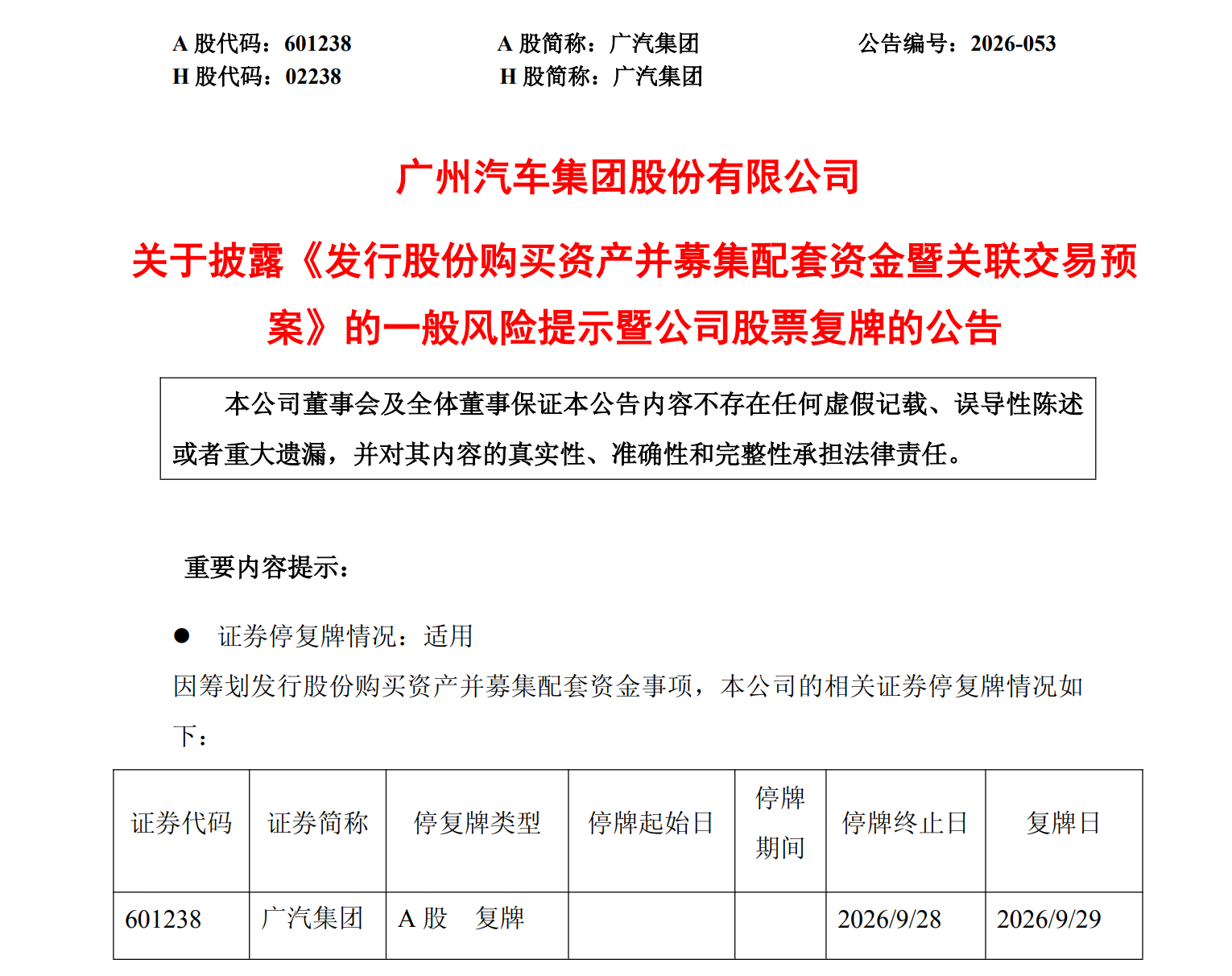
In a move that few analysts saw coming, Guangzhou Automobile Group (GAC) announced on September 28, 2025, a plan to acquire a 50% stake in FAW Toyota, the joint venture between FAW Group and Toyota Motor Corporation. The deal, executed through a share issuance and asset purchase, triggered an immediate 10% limit-up on GAC’s Shanghai-listed shares upon resumption of trading. For Western investors and auto executives, this is not merely another Chinese SOE consolidation story—it is a high-stakes bet on the enduring profitability of hybrid vehicles in a market that many assumed was racing toward full electrification.
Historically, China’s auto joint ventures were mandated by policy to trade market access for technology transfer. GAC already operates successful JVs with Toyota (GAC Toyota) and Honda, but this new entity would consolidate FAW Toyota’s plants and distribution into GAC’s sphere. The move comes as Beijing pushes for consolidation among state-owned automakers to reduce overcapacity and sharpen global competitiveness. For GAC, which has seen its own EV brand, Aion, struggle with profitability despite strong volume, the acquisition offers an immediate injection of Toyota’s renowned hybrid systems and a vast dealer network. But it also raises a critical question: Is doubling down on hybrids a savvy contrarian play or a dangerous misreading of the market’s trajectory?
Inside the Deal: What GAC Gains and What It Pays
The transaction, subject to shareholder and regulatory approvals, will see GAC issue new A-shares to FAW Group in exchange for the 50% equity in FAW Toyota. Based on FAW Toyota’s estimated valuation of RMB 120 billion (USD 16.5 billion), the 50% stake is worth roughly RMB 60 billion (USD 8.3 billion). GAC will also raise matching funds via a private placement, likely to shore up working capital and fund a planned ramp-up of hybrid production lines. The deal is expected to close by mid-2026.
FAW Toyota operates four assembly plants in Tianjin, Changchun, and Chengdu, with a combined annual capacity of 800,000 units. In 2024, it sold approximately 700,000 vehicles, of which 45% were hybrid electric vehicles (HEVs), primarily the Corolla Hybrid, RAV4 Hybrid, and Avalon Hybrid. These models command a price premium of 10–15% over their gasoline counterparts and deliver significantly higher margins. For GAC, which currently sells its own hybrids under the Trumpchi brand using licensed Toyota technology, full ownership of FAW Toyota’s hybrid-specific lines offers economies of scale and supply chain control.
Technical Snapshot: Toyota’s Hybrid vs. Chinese PHEV Rivals
Toyota’s fifth-generation hybrid system, known as THS II, uses a 1.8L or 2.0L Atkinson-cycle engine paired with an electric motor and a lithium-ion battery pack (typically 1.3–1.8 kWh). The system delivers a combined output of 140–190 hp and achieves fuel efficiency of 4.5–5.0 L/100km. By contrast, Chinese plug-in hybrid EVs (PHEVs) like the BYD Qin Plus DM-i use a larger battery (8.3–18.3 kWh) and can travel 50–120 km on electricity alone. This gives PHEVs a significant advantage in urban commuting where charging is available. However, Toyota’s hybrids require no external charging, a key selling point in regions with inadequate charging infrastructure.
| Specification | Toyota Hybrid (FAW Toyota) | BYD DM-i PHEV | Honda i-MMD Hybrid |
|---|---|---|---|
| System Type | Series-parallel HEV | Plug-in hybrid | Series-parallel HEV |
| Battery Capacity | 1.3–1.8 kWh | 8.3–18.3 kWh | 1.1–1.5 kWh |
| Electric-Only Range | None (0 km) | 50–120 km (CLTC) | None (0 km) |
| Fuel Efficiency | 4.5–5.0 L/100km | 4.0–4.5 L/100km (charge-depleted) | 4.8–5.2 L/100km |
| Price Premium vs. Gasoline | 10–15% | 5–10% (after subsidies) | 8–12% |
The table reveals a critical trade-off: Toyota’s hybrids are cheaper to manufacture due to smaller batteries, but they lack the electric-only range that increasingly appeals to Chinese consumers. BYD’s DM-i system, which uses a larger battery, has been a runaway success, capturing over 60% of the PHEV market. GAC’s bet is that consumers in lower-tier cities and fleet operators will remain loyal to non-plug-in hybrids due to their lower upfront cost and convenience. But as battery costs continue to fall—now below RMB 0.6/Wh—the price gap between HEVs and PHEVs is narrowing.
Supply Chain Realities: Who Makes the Parts and at What Cost?
FAW Toyota’s hybrid supply chain is deeply localized. The electric motors come from Toyota Industries Corporation’s plant in Changshu, while the power control units (PCUs) are manufactured by Denso in Tianjin. The battery cells are supplied by Primearth EV Energy (PEVE), a Toyota-Panasonic joint venture, with a new plant in Wuxi coming online in 2026. This localization has helped FAW Toyota achieve a Bill of Materials (BOM) cost for its hybrid system that is estimated at RMB 18,000–22,000 (USD 2,500–3,000)—significantly lower than the RMB 30,000–35,000 BOM for a typical PHEV system with a 15 kWh battery. However, these cost advantages are under pressure from Chinese competitors like BYD and Geely, which have vertically integrated battery production and achieve even lower costs.
GAC’s own supply chain, through its Aion brand, relies on CATL and CALB for batteries, and it has invested heavily in silicon carbide (SiC) inverter technology. By integrating FAW Toyota, GAC could potentially cross-pollinate some of these technologies, but Toyota has been historically reluctant to share core hybrid IP. The deal’s success hinges on whether GAC can truly absorb Toyota’s manufacturing expertise—particularly its legendary quality control and just-in-time logistics—rather than simply becoming a financial holding company.
Cost Structure and Margin Pressure
Industry estimates suggest that FAW Toyota’s hybrid models command a gross margin of 18–22%, compared to 8–12% for GAC’s own-brand EVs. This margin gap explains GAC’s motivation: its EV business, despite selling over 400,000 Aion vehicles in 2024, reported an operating loss of RMB 3.2 billion. The acquisition would immediately boost GAC’s consolidated profitability. But the long-term risk is that hybrid demand could peak as early as 2027, leaving GAC with stranded assets. The Chinese government’s dual-credit policy, which penalizes fuel consumption and rewards NEVs, further complicates the picture. Hybrids earn partial NEV credits, but full EVs earn more, creating a regulatory incentive to shift away from HEVs.
Competitive Impact: Who Wins, Who Loses, and Who Shrugs?
For Toyota, the deal is a strategic retreat from direct control in China. Toyota has struggled to gain traction in China’s EV market, with its bZ4X electric SUV selling fewer than 10,000 units in 2024. By selling its stake to GAC, Toyota can reduce its exposure to the hyper-competitive Chinese market while still earning royalties and supplying components. It also frees up capital for Toyota’s global EV push, including its planned solid-state battery production in Japan.
For Chinese rivals like BYD and Geely, the acquisition creates a stronger, more consolidated competitor. GAC-FAW Toyota would control roughly 12% of China’s passenger vehicle market, making it the third-largest automaker behind SAIC-Volkswagen and BYD. However, BYD’s cost leadership and battery technology give it a significant edge in the mass-market segment. Geely, with its own hybrid and PHEV lineup, will likely respond with price cuts. The biggest loser may be Honda, which operates a separate JV with GAC and FAW. GAC’s increased focus on Toyota could sideline Honda, which has also been slow to electrify.
Western OEMs like Volkswagen and GM, which have their own JVs, are largely unaffected directly. However, the deal signals a broader trend: Chinese SOEs are consolidating to survive, and foreign partners are increasingly becoming minority stakeholders. This could accelerate the shift of joint ventures from 50:50 partnerships to more lopsided arrangements, with Chinese firms taking control.
The Reality Check: Hybrid Hype vs. Electrification Trajectory
This section applies a skeptical lens. The press release touts the deal as a “win-win” that combines GAC’s market reach with Toyota’s technology. But the engineering and economic realities suggest a more nuanced picture.
- Is the hybrid technology future-proof? Toyota’s THS is a mature, reliable system, but it is not designed for the era of 800V architectures and ultra-fast charging. Its 1.8 kWh battery cannot support vehicle-to-load (V2L) functions that Chinese consumers increasingly expect. Moreover, the system’s reliance on nickel-metal hydride (NiMH) batteries in some models (though newer ones use Li-ion) raises questions about cold-weather performance and longevity compared to lithium iron phosphate (LFP) packs used by BYD. If the market shifts to PHEVs with 200+ km electric range, Toyota’s HEVs will become uncompetitive.
- What about the grid and charging infrastructure? Hybrids do not require charging infrastructure, which is their main advantage. But this advantage diminishes as China installs over 1 million public charging piles per year. By 2027, the charging desert will largely disappear in urban areas, eroding the convenience argument for HEVs.
- Has the deal been independently verified? The financial terms are based on GAC’s announcement and analyst estimates. The actual valuation of FAW Toyota’s assets, including its pension liabilities and dealer network, has not been disclosed in detail. The RMB 120 billion figure is a rough estimate; the final price could be higher or lower.
- What is the realistic timeline for commercialization? The deal is expected to close in mid-2026, but integration of two large SOE bureaucracies could take years. Synergies may not materialize until 2028, by which time the market could have shifted further toward EVs.
The press release says GAC is gaining a “cash cow.” The engineering reality suggests it may be buying a legacy asset that peaks within three years. This is not to say the deal is doomed—Toyota’s hybrids are still profitable and popular among conservative buyers. But GAC’s shareholders should question whether the capital could be better spent on accelerating its own EV platform, which currently lags behind BYD’s e-Platform 3.0 in efficiency and cost.
Regulatory and Geopolitical Landscape: The Invisible Hand
This deal is subject to approval by China’s State-owned Assets Supervision and Administration Commission (SASAC) and the Ministry of Commerce (MOFCOM). Antitrust review is likely, given the combined entity’s market share. But the bigger geopolitical factor is the US-China trade war. Under Section 301 tariffs, Chinese-made vehicles are effectively barred from the US market, and the EU is imposing countervailing duties on Chinese EVs. For GAC, this means the acquisition is purely a domestic play—it does not help export hybrids to Western markets. In fact, Toyota’s global brand might be reluctant to source vehicles from a GAC-controlled JV for export, given potential tariff and reputational risks.
The Chinese government’s “dual credit” policy will also shape the outcome. Hybrids earn 1.5 credits per vehicle, while full EVs earn 3–5 credits. If GAC increases hybrid production, it may need to buy credits from other automakers, adding costs. Conversely, if it shifts FAW Toyota’s plants to produce more PHEVs or EVs, it could improve its credit balance. The deal’s financial engineering may be less about manufacturing synergies and more about optimizing credit trading.
Strategic Outlook: Three Scenarios for GAC and Its Investors
Bull Case
Hybrid demand remains robust through 2030, especially in lower-tier cities and for fleet sales. GAC successfully integrates FAW Toyota’s operations, cutting costs by RMB 2 billion annually through shared purchasing and plant utilization. GAC’s consolidated net margin rises from 4% to 7%. The stock re-rates as a stable dividend play. Toyota deepens the partnership by sharing solid-state battery technology for future EVs, giving GAC a technological leap.
Base Case
Hybrid sales plateau in 2027 as PHEV prices fall below HEV prices. GAC’s margins improve modestly but are offset by losses in its EV division. The integration takes longer than expected, with cultural clashes between GAC and FAW Toyota management. The stock trades sideways, and GAC eventually spins off the hybrid business as a separate entity to unlock value.
Bear Case
A price war intensifies in 2026, forcing GAC to cut hybrid prices. FAW Toyota’s plants become underutilized as consumers shift to EVs faster than expected. GAC’s debt burden increases due to the share issuance, and credit rating agencies downgrade its bonds. The deal is seen as a bailout of FAW’s struggling operations, and GAC’s stock falls 30% from pre-announcement levels. Toyota reduces its technical support, and the JV becomes a shell.
Strategic Takeaways for Executives and Investors
- Monitor hybrid vs. PHEV price parity. As battery costs decline, the window for HEV profitability is closing. GAC’s bet is a race against time.
- Watch for regulatory credit trading. The dual-credit policy could make hybrids a net cost rather than a benefit if GAC cannot balance its portfolio.
- Assess integration risk. SOE mergers often fail to deliver synergies due to bureaucratic inertia. GAC’s track record with Aion suggests it can execute, but FAW Toyota is a different beast.
- Consider the export angle. This deal does nothing to help GAC penetrate Western markets. Investors seeking exposure to Chinese EV exports should look elsewhere.
- Play the contrarian. If hybrid demand proves more resilient than expected, GAC’s undervalued shares could offer upside. But the margin of safety is thin.
Ultimately, GAC’s acquisition of FAW Toyota is a calculated bet that the Chinese market will not abandon hybrids overnight. It is a bet on incrementalism in a country that has embraced leapfrog innovation. For Western observers, the deal is a reminder that China’s auto industry is not monolithic—it contains multiple strategic schools of thought, and not all of them are betting on full electrification. The coming years will reveal whether GAC’s hybrid hedge pays off or becomes a costly detour on the road to an electric future.