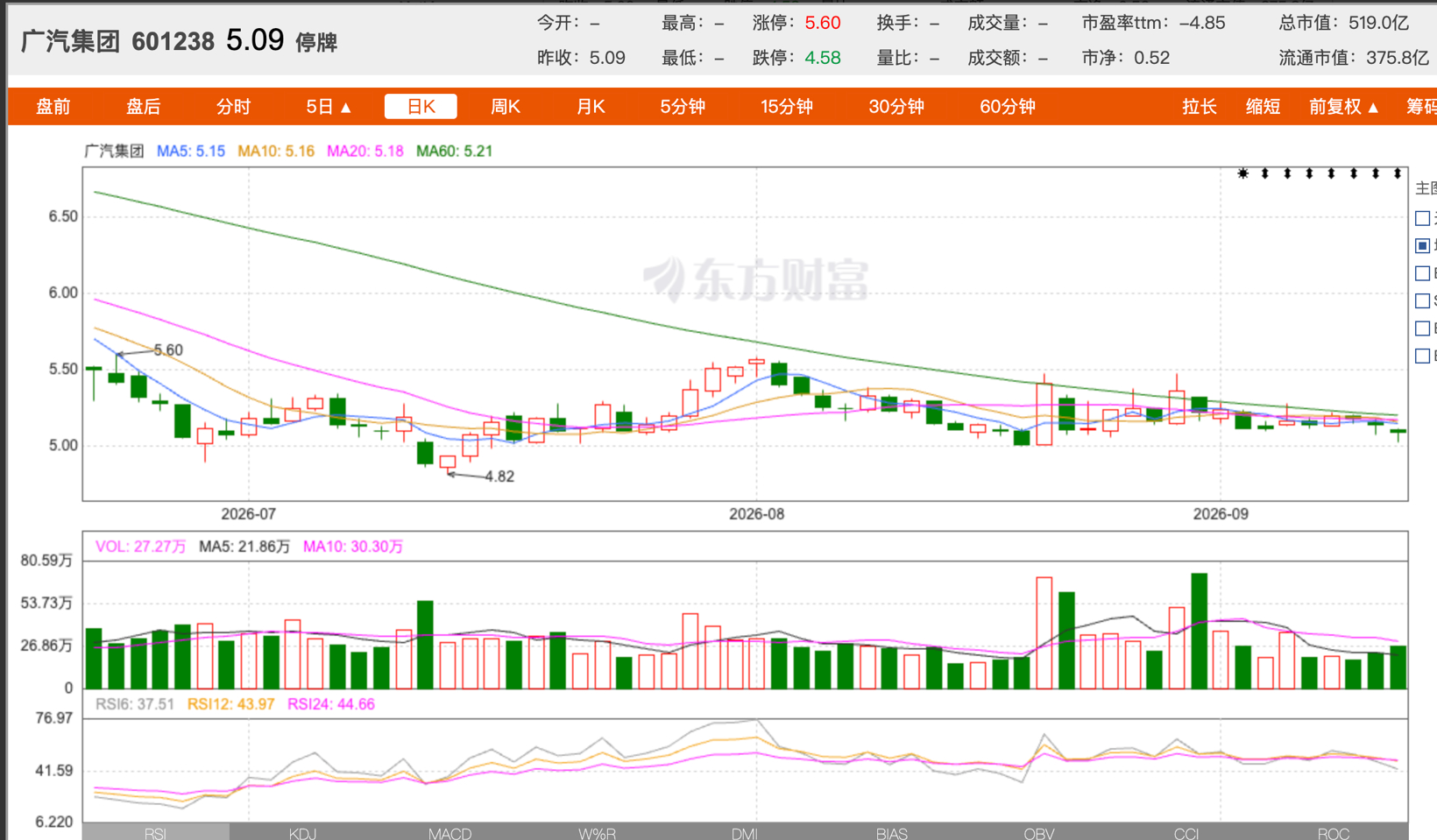
On September 14, state-owned automotive giant GAC Group (601238.SH, 02238.HK) abruptly suspended trading of its shares, sparking intense market speculation. This sudden halt, attributed to an unannounced 'major matter,' strongly points toward an impending GAC Group restructuring that could reshape its electric vehicle (EV) subsidiary, GAC Aion, and redefine its global joint-venture strategy.
Decoding the GAC Group Restructuring: Why Now?
As a seasoned market analyst tracking Chinese automotive supply chains, this trading halt is a calculated strategic move rather than a sudden operational crisis. GAC Group is facing a dual-front challenge: the rapid contraction of profitable legacy joint ventures with Toyota and Honda, and the capital-intensive scaling of its proprietary NEV brand, GAC Aion. A structural reorganization is the logical next step to unlock shareholder value and streamline decision-making.
The GAC Aion IPO Catalyst
GAC Aion has long been positioned as GAC's premium EV champion. However, to sustain its 'China-speed' development and fund global expansion, Aion requires independent access to capital markets. Industry insiders suggest this restructuring could clear the regulatory path for GAC Aion's independent listing on the Hong Kong Stock Exchange, providing the financial runway needed to expand its localized regional footprint in Southeast Asia and Europe.
Financial Profile: GAC Group at a Glance
To understand the stakes of this reorganization, we must look at GAC's recent performance metrics. While volume remains high, margins have been squeezed by intense domestic competition:
| Metric (H1 2024 / Recent) | Status / Impact | Strategic Need |
|---|---|---|
| GAC Aion Sales Volume | Slight contraction due to domestic price wars | Urgent need for overseas market expansion |
| JV Profit Contribution (Toyota/Honda) | Declining profit margins | Reallocating capital toward intelligent EV platforms |
| Trading Suspension Status | Full-day halt pending major announcement | Regulatory compliance during asset reallocation |
Strategic Implications for Western Competitors and Investors
Western OEMs and institutional investors should watch this development closely. GAC's reorganization reflects a broader trend of Chinese state-owned enterprises (SOEs) streamlining their corporate structures to become more agile. Rather than operating as bloated conglomerates, they are pivoting into focused, high-tech EV competitors.
- Supply Chain Compliance: By restructuring, GAC can better isolate its domestic operations from its export-focused entities, ensuring smoother trade compliance in strict regulatory markets like the EU and US.
- Cross-Border Collaboration: An independent GAC Aion could seek strategic sourcing alliances or technology-sharing partnerships with Western legacy brands looking to accelerate their transition to intelligent cockpits and advanced ADAS.