When Guangzhou Automobile Group (GAC) signaled formal plans to establish passenger vehicle assembly capacity across Europe, corporate communiques framed the expansion as a bold milestone of internationalization. Yet beneath the confident rhetoric lies an urgent commercial defensive maneuver. Confronted with the European Union's countervailing duties on Chinese battery electric vehicles (BEVs)—which impose provisional tariffs ranging up to 35.3% on top of existing 10% baseline import levies—state-backed Chinese automakers can no longer rely on low-cost shipping corridors from Pearl River Delta manufacturing hubs to secure European showroom margins.
Historically, GAC operated as one of China's most profitable legacy joint-venture powerhouses, leveraging lucrative partnerships with Toyota and Honda in southern China to bankroll its internal electrification initiatives. Over the past five years, that dynamic inverted. As domestic internal combustion engine (ICE) sales deteriorated amid brutal domestic price wars triggered by BYD and Geely, GAC doubled down on its proprietary EV brand, GAC Aion, alongside its luxury performance marque, Hyptec (formerly Hyper). While Aion successfully captured massive domestic volume through fleet operators and mass-market retail, its operating margins were compressed into single digits. Seeking higher gross margins abroad, GAC targeted Europe. Now, with Brussels tightening the perimeter through anti-subsidy duties and stringent carbon tracking under the EU Battery Regulation, GAC's European gambit serves as an unvarnished test case of whether a Chinese state-owned enterprise (SOE) can build vehicles profitably outside its heavily subsidized domestic comfort zone.
Deconstructing the AEP 3.0 Platform: Architecture, Powertrain, and Real-World Metrics
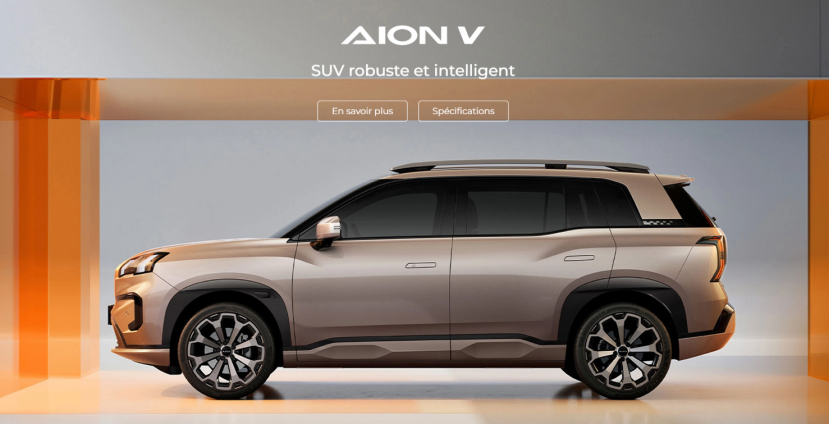
To evaluate GAC's competitive positioning in the mature European market, one must dissect the underlying engineering of the vehicles it intends to assemble locally. At the heart of GAC’s export push is the AEP 3.0 (Automotive Electric Platform), an electric-first chassis that underpins models like the Aion V, Aion Y Plus, and the Hyptec HT SUV. Built around a scalable 400V/800V silicon carbide (SiC) electrical architecture, AEP 3.0 represents a clean break from the modified multi-energy platforms that defined GAC’s initial electrification efforts.
GAC heavily advertises its proprietary 'Magazine Battery 2.0' technology, which incorporates a high-safety thermal barrier utilizing aerogel insulation, real-time battery cell impedance monitoring, and directional heat vents designed to prevent thermal propagation even during catastrophic pinprick punctures. In domestic Chinese testing under CLTC standards, GAC claims system energy consumption as low as 12.8 kWh per 100 kilometers for its single-motor configurations. However, when translated to the stringent European WLTP cycle, real-world highway consumption shifts closer to 17.5 to 19.2 kWh/100 km due to aerodynamic drag penalties at sustained speeds above 120 km/h and reduced auxiliary heating efficiency in sub-zero ambient temperatures.
| Vehicle Model | Platform Architecture | Pack Chemistry & Capacity (kWh) | Max DC Fast Charging Rate | WLTP Claimed Range (km) | Base European Retail Target (€) |
|---|---|---|---|---|---|
| GAC Aion V (2nd Gen) | AEP 3.0 (400V / 800V SiC) | LFP / NCM (75.3 kWh) | 180 kW (3C Peak) | 520 km | €34,500 (Projected) |
| Volkswagen ID.4 Pro | MEB Architecture (400V) | NCM 712 (77.0 kWh) | 175 kW | 550 km | €46,335 |
| Renault Scenic E-Tech | AmpR Medium (400V) | NCM (87.0 kWh) | 150 kW | 625 km | €46,990 |
| BYD Atto 3 | e-Platform 3.0 (400V) | LFP Blade (60.5 kWh) | 88 kW | 420 km | €37,990 |
As illustrated in the comparison matrix, GAC seeks to position the second-generation Aion V directly between entry-level compact crossovers and mid-tier legacy offerings. By offering a peak fast-charging capability of up to 180 kW on an optimized 400V architecture (scaling to 800V on premium Hyptec trims), GAC outpaces entry-level BYD models. Yet, power electronics efficiency on paper does not solve the vehicle dynamics gap: European market reception requires rigid compliance with localized chassis tuning, multi-link rear suspension damping calibrated for high-speed autobahn stability, and steering responsiveness that matches European legacy benchmarks rather than low-effort Chinese urban commuting preferences.
Supply Chain Realities: Tier-1 Sourcing and the Cost Breakdown of Assembly
The operational calculus of GAC European EV localization hinges entirely on supply chain configuration. When assembling an EV inside the European Union, an OEM faces two primary structural paths: Completely Knocked Down (CKD) assembly with high imported content, or deep local manufacturing incorporating European Tier-1 and Tier-2 component ecosystems.
GAC’s domestic bill of materials (BOM) relies heavily on domestic Tier-1 champions: CALB and GAC's internal battery subsidiary Infore Mobility for battery packs, Inovance for e-axles and motor controllers, and Desay SV for digital cockpits. However, parallel industrial developments—such as safety systems supplier Autoliv expanding technical center capacity in Wuhan to engineer active and passive occupant protection systems tailored to global crash standards—demonstrate how Chinese OEMs are upgrading tier-1 partnerships to conquer Euro NCAP testing protocols. Sourcing from Western Tier-1 suppliers like Autoliv, Continental, and Bosch gives GAC immediate safety credibility, but it erodes the structural cost delta enjoyed in domestic Chinese plants.
Consider an estimated Bill of Materials breakdown for a C-segment electric SUV manufactured in Guangzhou versus localized assembly in Central/Eastern Europe:
- Battery Pack (75 kWh LFP): In China, GAC procures cells at roughly $55–$60 per kWh at the pack level, totaling approximately $4,300. Procuring European-assembled or tariff-compliant packs elevates this cost to $85–$95 per kWh ($6,750), an immediate 56% cost penalty.
- Body-in-White & Stamping: High automation in Chinese gigafactories yields a structural frame cost around $2,400. In Europe, higher capital expenditure amortization and elevated industrial energy costs increase this to $3,200.
- E-Powertrain & Inverter (SiC): Domestically integrated Chinese supply chains produce a complete 150 kW drive unit for roughly $1,400. Sourcing components with European local content requirements pushes this figure beyond $1,850.
- Assembly Labor Cost: A manufacturing assembly line worker in Guangzhou costs GAC approximately $5.50 to $7.00 per hour including benefits. In Central Europe (e.g., Hungary, Slovakia, or Poland), total labor costs range between €14.00 and €19.00 per hour ($15.00–$20.50/hr), effectively tripling labor input costs per vehicle.
These industrial realities demonstrate that localizing assembly to escape a 30% countervailing duty is not an absolute margin windfall; rather, it replaces tariff expenses with structural manufacturing premiums.
Competitive Impact Assessment: Incumbents, Challengers, and Margin Compression
GAC's European entrance injects volatility into an already hyper-competitive landscape, but the collateral damage will not be distributed evenly across the European automotive ecosystem.
For incumbent European volume manufacturers such as Stellantis (Peugeot, Citroën, Fiat) and Renault, GAC’s localized presence threatens the lower end of the mainstream EV spectrum. Stellantis has attempted to insulate itself by partnering with Leapmotor, effectively creating an internal low-cost Chinese EV channel within European assembly facilities (such as Tychy, Poland). If GAC establishes greenfield or brownfield contract assembly in a low-cost Eastern European jurisdiction, it will directly challenge the Leapmotor T03/C10 and Renault Scenic E-Tech on pricing while retaining superior standard interior equipment, such as dual-zone heat pumps, 360-degree ADAS sensor suites, and standard panoramic roofs.
Conversely, for decoupled global legacy OEMs such as Hyundai-Kia, the strategic playing field looks fundamentally different. Having engineered dedicated, high-margin 800V architectures (E-GMP) that sell successfully in North America and Western Europe, Hyundai-Kia avoids catastrophic margin compression in the Chinese domestic retail market while retaining established distribution networks, robust dealer loyalty, and non-Chinese battery supply lines that easily clear international regulatory hurdles. Players like Hyundai-Kia prove that independent global operations can defend double-digit operational margins without relying on low-cost Chinese factory output.
Within the Chinese peer cohort, GAC is fighting an uphill battle against BYD and Geely. BYD is already constructing full-scale vehicle and battery manufacturing plants in Szeged, Hungary, and Turkey, establishing massive early-mover scale. Geely commands indigenous European platforms via Volvo, Polestar, and Smart joint ventures. GAC, by contrast, lacks international consumer brand equity in Europe. Without an extensive established retail dealer network, GAC faces heavy customer acquisition costs (CAC), forcing it to surrender significant retail margin to independent European dealership groups like Emil Frey to secure floor space.
The Reality Check: The Illusions of Plug-and-Play Overseas Assembly
Press releases trumpeting international factory expansions routinely conceal severe operational, electrochemical, and logistical friction. While market observers frequently assume that Chinese industrial prowess can be seamlessly copy-pasted onto European soil, rigorous analysis reveals substantial engineering and structural hurdles.
First is the **Rules-of-Origin and Tariff Evasion Trap**. European trade authorities are acutely aware of basic 'screwdriver assembly' strategies. Under European Union anti-circumvention provisions, simple assembly operations that merely screw together imported complete knockdown kits from China will not qualify as European domestic production. To circumvent the 20% to 35% countervailing duties, at least 45% of the vehicle’s added value must originate locally, and the battery pack—representing 35% to 40% of the vehicle's total BOM—cannot simply be imported pre-assembled from Guangdong without triggering scrutiny. Unless GAC commits billions of euros to localized battery module assembly or secures local cell supply from suppliers like CATL’s Debrecen plant, the vehicles rolling off European assembly lines will remain legally liable for duties.
Second is the **Grid Physics and Energy Cost Differential**. Automobile manufacturing is intrinsically energy-intensive, requiring substantial natural gas and electricity inputs for paint shop thermal curing, metal stamping presses, and robotic welding lines. In southern China, industrial power costs average approximately $0.08 to $0.10 per kWh, subsidized by domestic baseload coal and hydro. In Germany, France, and Central Europe, industrial power volatility post-2022 has settled at €0.18 to €0.26 ($0.20–$0.28) per kWh. When combined with rigorous EU corporate carbon reporting standards (CSRD) and European battery carbon footprint passports, the carbon intensity of manufacturing an EV in Europe presents engineering hurdles that GAC's domestic domestic-optimized factory layouts were never designed to mitigate.
Third is the **LFP Cold-Weather Performance Gap**. GAC’s cost superiority rests largely on lithium iron phosphate (LFP) chemistry. While LFP offers exceptional thermal stability and lifecycle durability, its discharge characteristics degrade sharply when operating in Northern and Central European winter climates (-10°C to 5°C). Lithium-ion intercalation slows, internal cell resistance spikes, and without continuous pre-heating—which drains net pack energy—real-world highway range drops by up to 38%. European consumers accustomed to the consistent performance of high-nickel NCM chemistries found in Volkswagen or BMW vehicles may exhibit severe buyer dissatisfaction if low-temperature thermal management is compromised.
Trade Compliance, Battery Passports, and Geopolitical Enclosures
Navigating the contemporary European market requires far more than setting up a stamping plant; it demands full integration into an increasingly defensive trade and regulatory architecture.
The EU’s definitive anti-subsidy duties on Chinese BEVs mark the definitive end of uninhibited trade globalization in the automotive sector. For GAC, designated duties mean that exporting from its state-of-the-art Panyu plants incurs a devastating cost disadvantage at European ports of entry. However, attempting to establish European manufacturing creates its own regulatory vulnerabilities:
- Foreign Subsidies Regulation (FSR): Under the EU’s FSR framework, the European Commission possesses statutory authority to investigate and penalize foreign companies operating within the EU if their investments are backed by state subsidies that distort the single market. As a municipal state-owned enterprise receiving direct municipal support, research grants, and favorable land-use allocations in China, GAC's European capital expenditures will be subjected to intense regulatory forensic audits.
- The EU Battery Regulation: Beginning in 2025, every EV battery sold within the EU must carry an interoperable Digital Battery Passport detailing its material provenance, recycled lithium and cobalt content, and cradle-to-gate carbon emissions. GAC's domestic battery suppliers operate within an opaque upstream mining and refining chain across Jiangxi and Inner Mongolia that struggles to document compliance with stringent EU supply chain due diligence directives.
- Strategic Localization Alliances: To survive, GAC cannot operate in isolation. It must pursue joint-venture equity structures or contract manufacturing agreements with established European players or contract assemblers (such as Magna Steyr or Valmet Automotive) to establish compliance shields and tap into localized institutional know-how.
Strategic Scenarios and Investor Directives
As GAC transitions from blueprint announcements to site selection, environmental permitting, and tooling orders, the medium-term commercial outlook divides into three distinct strategic trajectories over the 2025–2030 horizon.
Bull Case
GAC executes a nimble asset-light manufacturing entry via a brownfield joint venture or contract manufacturing partnership in Central Europe (e.g., Slovakia or Hungary), minimizing upfront capital expenditures. By partnering with European Tier-1 suppliers for localized seating, interior trim, and chassis components, and sourcing LFP battery cells from localized Chinese battery plants in Europe, GAC achieves genuine 45%+ local value addition. This successfully circumvents countervailing duties, allowing the Aion V and Aion Y to undercut legacy European competitors by 15% at retail while maintaining acceptable corporate operating margins of 3% to 5%.
Base Case
GAC encounters prolonged environmental permitting, union wage negotiations, and industrial supply bottlenecks, delaying full commercial production until late 2027. In the interim, GAC must absorb EU countervailing tariffs on imported vehicles to establish brand presence, suffering sustained operational losses across its European sales division. Once localized production begins, higher utility and labor costs limit vehicle retail price discounts to less than 8% compared to the VW ID.4, resulting in modest European volumes of 25,000 to 40,000 units annually—insufficient to offset total capital investments.
Bear Case
The European Commission expands its regulatory perimeter, applying Foreign Subsidies Regulation scrutiny to GAC's European manufacturing financing while lowering local content tolerances. Simultaneously, European domestic OEMs accelerate the release of low-cost €25,000 urban BEVs (e.g., Renault Twingo, VW ID.2all), neutralizing GAC's value proposition. Stuck with an underutilized assembly facility, high fixed European overhead, and sluggish retail demand, GAC is forced to scale down European operations, retreating to emerging markets across Southeast Asia, South America, and the Middle East where trade barriers remain minimal.
Strategic Takeaways for Automotive Executives
- Tariff Avoidance Through Assembly Is Capital-Intensive: Simple CKD assembly kits will face immediate anti-circumvention penalties under EU trade rules. Meaningful localization demands capital-heavy integration of local battery cells and power electronics, eliminating the structural cost advantage enjoyed in China.
- Operating Costs Offset Manufacturing Margins: The assumption that Chinese production efficiency can be replicated in Europe overlooks European industrial power tariffs, unionized labor structures, and mandatory corporate sustainability reporting directives.
- Distribution Remains the Ultimate Bottleneck: Without the multi-billion-dollar brand equity of legacy marques or the digital cult following of Tesla, Chinese entrants like GAC must sacrifice massive margin concessions to third-party European dealer groups to secure floor space and service networks.
- Watch Independent Decoupled OEMs: Investors should favor automakers that have reduced their dependence on the domestic Chinese price war while building resilient, non-Chinese supply chains, as they possess superior pricing power and structural margin insulation.