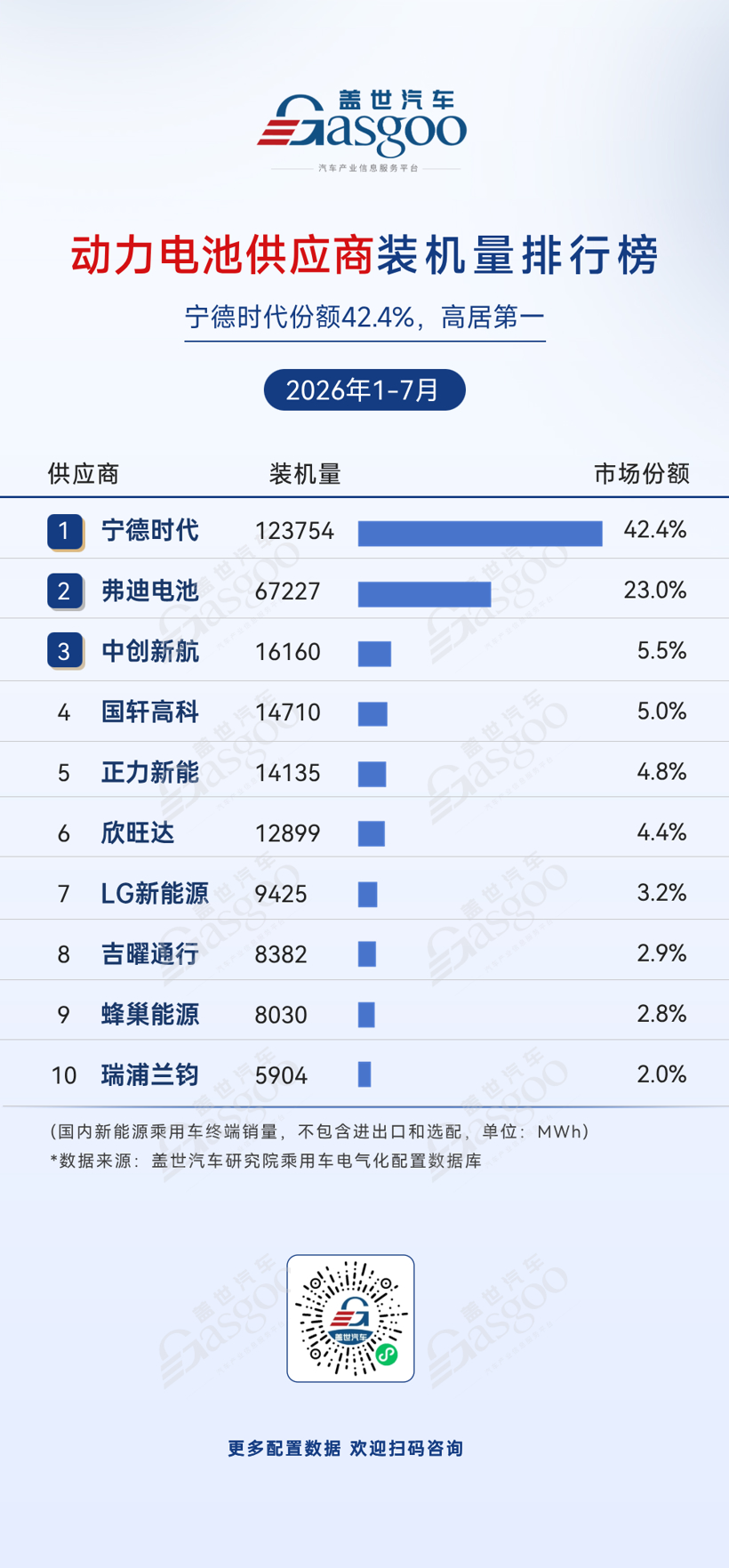
The global automotive supply chain is undergoing a structural paradigm shift, driven by the rapid acceleration of Chinese EV vertical integration. Traditional Tier 1 suppliers, who historically dominated the internal combustion engine era, are finding their market share compressed as Chinese electric vehicle manufacturers aggressively transition to in-house component production. According to the latest data from the Gasgoo Research Institute for January to July 2026, vertical integration has evolved from an experimental cost-saving measure into the dominant strategic blueprint in the world's most competitive EV market.
Squeezing the Middle: The 2026 Electrification Supplier Landscape
As a market analyst closely tracking global supply chain dynamics, I find the latest Gasgoo data for the first seven months of 2026 highly revealing. The domestic electric vehicle ecosystem is bifurcating. On one side are massive vertically integrated OEMs like BYD and Geely, who produce everything from semiconductors to battery packs. On the other side are dedicated tech suppliers who must offer unparalleled technological advantages to secure design wins.
The rise of OEM self-production ('自制') is no longer limited to batteries. It now encompasses the entire high-voltage system, including silicon carbide (SiC) inverters, integrated thermal management units, and 3-in-1 or 8-in-1 electric drive systems. This integration directly challenges the traditional outsourced purchasing model.
| Rank | Supplier / OEM Division | Core Tech Focus | Primary Market Impact |
|---|---|---|---|
| 1 | FinDreams (BYD) | LFP Blade Batteries, Integrated E-Axles | Captive supply for BYD; rapid external customer expansion. |
| 2 | Tesla (In-House) | Drive Units, Custom BMS Architecture | Pioneered vertical integration; setting baseline cost standards. |
| 3 | UAES (United Automotive) | Power Electronics, On-Board Chargers | Navigating transition from joint-venture legacy to EV tech. |
| 4 | Inovance Automotive | Motor Controllers, Custom Powertrains | Key third-party supplier for emerging brands (e.g., Xiaomi). |
| 5 | VREMT (Geely Group) | 800V Charging Systems, Battery Packs | Supplying Zeekr, Volvo, and Polestar with highly integrated tech. |
Why Vertically Integrated OEMs Are Winning the Margin War
In the highly competitive EV landscape, speed and cost are the ultimate vectors of competition. Vertically integrated companies enjoy several structural advantages:
- Unmatched Development Velocity: While traditional sourcing cycles take 24 to 36 months, vertically integrated OEMs can align hardware modifications with software OTA updates in a fraction of that time, reflecting China-speed innovation.
- Optimized Cost Structures: By eliminating the margin layers of intermediate Tier 1 suppliers, OEMs can reallocate resources to consumer-facing features like advanced driver assistance systems (ADAS) or smart cabin enhancements.
- Supply Chain Compliance and Adaptability: In an era of shifting trade relations, keeping production in-house or localized simplifies compliance and ensures rapid adaptability to regional requirements.
Implications for Western OEMs and Legacy Tier 1 Suppliers
For Western OEMs and established global Tier 1 suppliers, this shift is a call to action. Competing with vertically integrated Chinese manufacturers requires a strategic evolution. Rather than viewing this as a zero-sum threat, forward-thinking Western automotive firms are leaning into strategic sourcing alliances and cross-border technology integration.
Collaborative models that leverage the specialized, high-volume production capabilities of Chinese suppliers allow Western companies to fast-track their own electrification efforts. By focusing on localized regional footprints and supply chain compliance, international automakers can maintain high technical standards while optimizing their overall bill of materials (BOM).