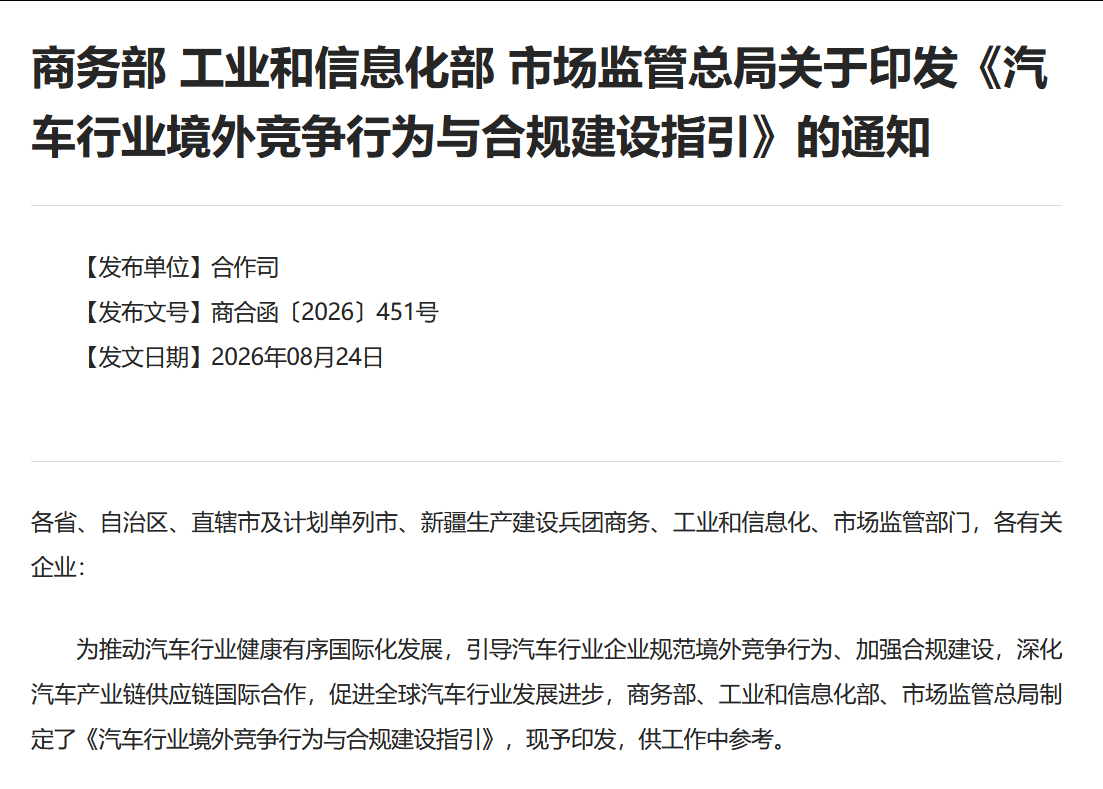
As a Shanghai-based automotive policy analyst tracking international trade adjustments, I have observed that the global expansion of Chinese electric vehicle (EV) manufacturers is entering a highly disciplined phase. In a coordinated policy effort, three prominent Chinese regulatory bodies—the Ministry of Commerce (MOFCOM), the Ministry of Industry and Information Technology (MIIT), and the State Administration for Market Regulation (SAMR)—jointly released comprehensive guidelines targeting the outbound operations of domestic automotive enterprises. These new China EV export regulations mark a strategic transition from high-velocity volume penetration to structured, long-term brand equity and tariff compliance.
The Strategic Shift: Restraining Outbound Pricing Volatility
The joint-ministry directive specifically advises Chinese automotive enterprises to avoid frequent and massive price fluctuations in overseas markets. This represents an unprecedented attempt by Beijing to regulate the outbound pricing strategies of its domestic champions. Domestically, Chinese EV brands have engaged in relentless price wars to capture market share. However, exporting this hyper-competitive strategy has triggered significant regulatory countermeasures from Western jurisdictions.
By establishing these guidelines, Chinese regulators aim to stabilize the average selling price (ASP) of Chinese clean energy vehicles globally. This stabilization is designed to build premium brand equity rather than positioning Chinese high-tech products as budget-tier alternatives.
Key Objectives Behind the China EV Export Regulations
Analyzing the regulatory move reveals three core strategic motivations for Beijing:
1. Enhancing Tariff Compliance and Trade Adaptability
Aggressive price cuts in foreign markets frequently attract anti-dumping investigations and countervailing duties. By discouraging sudden downward price adjustments, Beijing encourages automakers to focus on localized regional footprints. Ensuring that export models maintain stable, sustainable margins helps align with international anti-dumping standards and mitigates trade friction under complex tariff regimes.
2. Encouraging Strategic Localization
Rather than relying solely on pure exports manufactured within China, the directives encourage Chinese OEMs to establish local value creation systems. This includes investing in local assembly facilities, battery recycling systems, and localized research centers. Such cross-border collaboration fosters goodwill with host nations, especially in Europe and South America, converting potential trade barriers into collaborative industrial projects.
3. Stabilizing the Global Automotive Supply Chain
A stable pricing structure prevents erratic supply shocks and builds trust with global distribution networks, Tier-1 suppliers, and financial institutions. International auto buyers and commercial fleet operators require predictable residual values, which are severely damaged by rapid vehicle price cuts.
Comparing the Old vs. New Global Expansion Strategies
The strategic shift mandated by the new guidelines changes the playbook for Chinese OEMs operating internationally:
| Strategic Dimension | Previous Practice (Aggressive Export) | New Directive (Strategic Compliance) |
|---|---|---|
| Pricing Strategy | Unpredictable discounts, exporting domestic price wars. | Stable pricing corridors, margin defense. |
| Expansion Model | Direct shipping of completely built units (CBUs). | Strategic localization, regional factories, joint ventures. |
| Regulatory Focus | Rapid volume growth. | Tariff compliance, ESG alignment, localized supply chain integration. |
Analytical Outlook: What This Means for Western Competitors and Investors
For Western legacy OEMs and institutional investors, this regulatory guidance is a critical signal. First, it suggests that the immediate threat of a hyper-aggressive price war in European and South American markets from Chinese entrants may decelerate. This provides a window for Western OEMs to advance their own localized battery and ADAS technologies through strategic sourcing alliances and global supplier partnerships.
Second, the emphasis on localization means that Chinese players will increasingly behave like traditional automotive multinationals. Investment analysts should watch for increased capital expenditures (CapEx) in regional hubs like Hungary, Spain, Brazil, and ASEAN, as Chinese automotive leaders pivot from raw export volume to deep regional market integration.