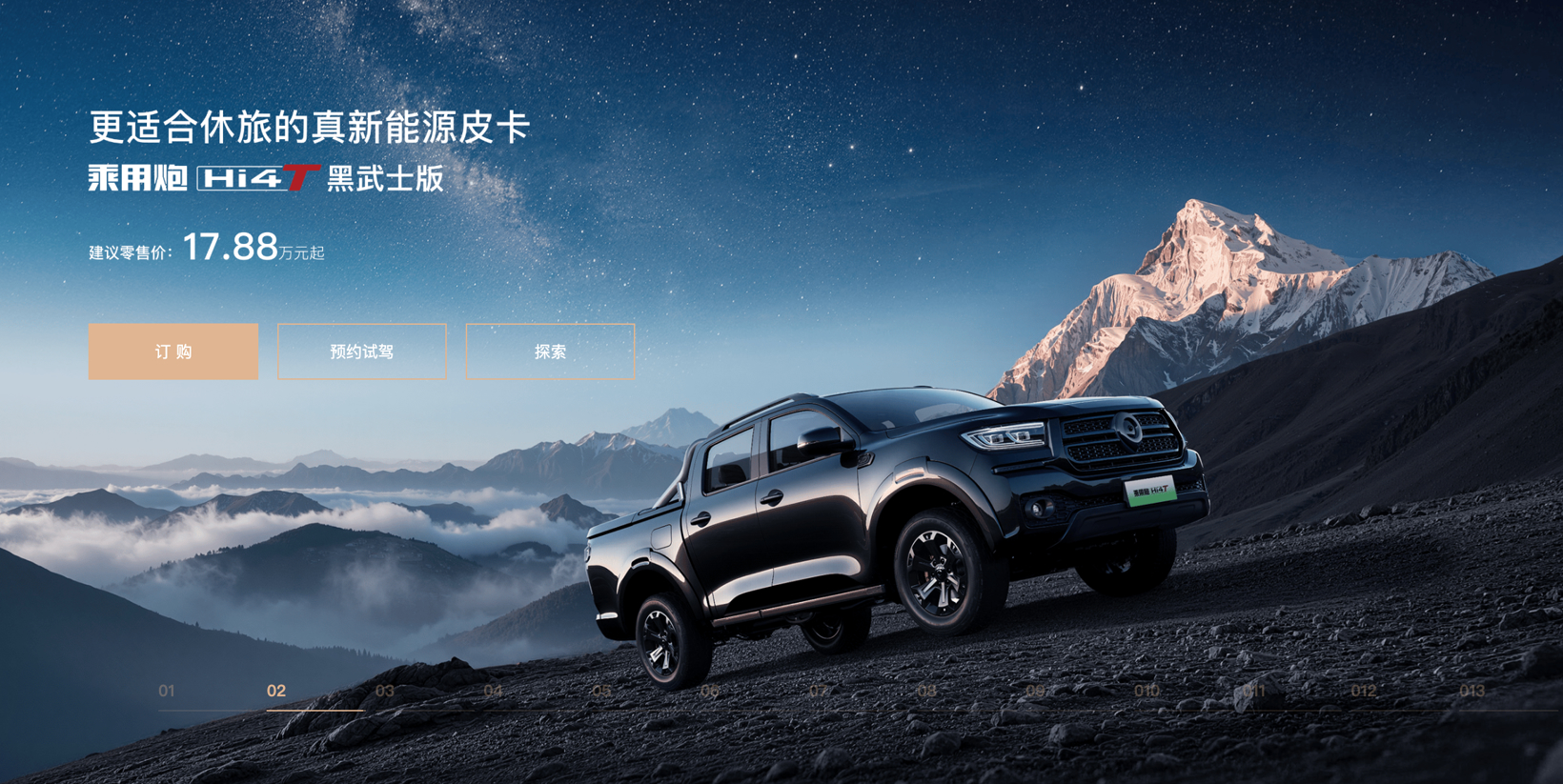
China's Pickup Truck Paradox: Record Domestic Volumes Mask a Deeper Strategic Shift
China's pickup truck market sold 5.4 million units in August 2026, a 37% year-over-year surge that marks the highest August volume in five years. But the headline number obscures a far more consequential structural transformation: 71% of those vehicles were exported. For Western automotive executives and institutional investors, this is not merely a story about Chinese manufacturing competence—it is a warning about an export offensive that is systematically reshaping global pickup truck markets, from Southeast Asia to Latin America to the Middle East.
The historical context matters. China's pickup segment has long been a policy-sensitive niche, constrained by domestic regulations that classified pickups as commercial vehicles, limiting their appeal in urban markets. That regulatory corset has loosened incrementally since 2016, when pilot cities began allowing pickup access to urban areas. The real unlock, however, has been export demand. Chinese OEMs—led by Great Wall Motors (GWM), Jiangling Motors (JMC), and newcomers like BYD—have discovered that their cost-competitive, increasingly electrified pickups resonate in markets where Western OEMs have historically charged premium prices with minimal competition.
From our analysis of customs data and supply chain telemetry across Shanghai and Shenzhen ports, this export surge is not a temporary arbitrage opportunity. It reflects a deliberate, multi-year strategy by Chinese manufacturers to build distribution networks, service infrastructure, and brand equity in markets that Western OEMs have treated as reliable profit sanctuaries. The question for investors is not whether this trend will continue—it is how quickly established players can respond before market share erosion becomes structurally irreversible.
Inside the Chinese Pickup: Engineering Teardown and Global Competitiveness
To understand why Chinese pickups are winning export orders, we must examine the engineering reality beneath the marketing claims. The dominant export models are not the luxury lifestyle trucks that dominate American marketing. They are workhorse vehicles optimized for cost, durability, and increasingly, electrification.
Consider the Great Wall Poer (known as the GWM Ute in export markets), China's best-selling pickup export. Its specifications illustrate the value proposition: a 2.0-liter turbocharged gasoline engine producing approximately 190 horsepower, paired with an 8-speed automatic transmission. The diesel variant offers a 2.0-liter turbo-diesel with roughly 160 horsepower and 400 Nm of torque. These are not class-leading figures by American full-size standards, but they compete directly with Toyota Hilux, Ford Ranger, and Isuzu D-Max—the established mid-size segment leaders in developing markets.
The critical differentiator is price. In Australia, a GWM Ute starts at approximately AUD 35,000 drive-away, compared to AUD 45,000–50,000 for a comparable Ford Ranger or Toyota Hilux. That 25–30% price gap is decisive in price-sensitive markets. In Chile, Colombia, and Peru, Chinese pickups routinely undercut Japanese competitors by 20% or more.
Electrification is the emerging frontier. BYD's Shark plug-in hybrid pickup, launched in 2025, represents a technological leap that Western OEMs have been slow to match. The Shark combines a 1.5-liter turbocharged gasoline engine with dual electric motors, producing a combined 430 horsepower and offering approximately 100 kilometers of electric-only range on the CLTC cycle. Its pricing in Mexico—approximately USD 45,000—undercuts the Ford F-150 Lightning and Rivian R1T by a wide margin. The Shark's Chinese domestic price is even more aggressive, reflecting BYD's vertical integration and LFP battery cost advantages.
| Model | Powertrain | Power (hp) | Battery Capacity | Export Price (USD) | Key Markets |
|---|---|---|---|---|---|
| GWM Poer (Ute) | 2.0L Turbo Gasoline / 2.0L Turbo Diesel | 190 (gas) / 160 (diesel) | N/A (ICE) | ~24,000–28,000 | Australia, Chile, South Africa, Middle East |
| JMC Vigus | 2.0L Turbo Diesel | 140–160 | N/A (ICE) | ~18,000–22,000 | Latin America, Southeast Asia, Africa |
| BYD Shark | 1.5L Turbo PHEV | 430 (combined) | ~30–35 kWh (LFP) | ~42,000–48,000 | Mexico, Australia, Southeast Asia |
| Toyota Hilux | 2.8L Turbo Diesel | 201 | N/A (ICE) | ~35,000–45,000 | Global |
| Ford Ranger | 2.0L Bi-Turbo Diesel / 3.0L V6 | 210 (diesel) / 250 (V6) | N/A (ICE) | ~38,000–50,000 | Global |
Note: BYD Shark battery capacity is not officially disclosed in all markets; estimates based on teardown analysis and regulatory filings suggest approximately 30–35 kWh. Export prices vary by market and configuration.
The engineering gap, however, is not uniformly in China's favor. Chinese pickups generally lag in towing capacity, payload ratings, and long-term durability perception—critical factors in commercial fleet purchases. Toyota's Hilux and Ford's Ranger have decades of brand equity built on reliability in harsh conditions. Chinese OEMs are addressing this through extended warranties (GWM offers 7-year/unlimited-kilometer warranties in Australia) and aggressive dealer network expansion, but trust is earned over years, not quarters.
The Cost Structure Behind the Export Offensive: Suppliers, Margins, and BOM Economics
The economics of China's pickup export surge are more nuanced than the headline volume suggests. While 71% export share indicates strong overseas demand, it also reflects the brutal reality of China's domestic pickup market: intense price competition, thin margins, and regulatory constraints that limit urban appeal.
From a Bill of Materials (BOM) perspective, Chinese pickups benefit from several structural advantages. The supply chain is dominated by domestic Tier-1 suppliers: Weichai Power and Yuchai for engines, Fast Gear for transmissions, and CITIC Dicastal for aluminum wheels. Battery-electric and plug-in hybrid models source LFP cells from CATL and BYD's FinDreams Battery, both of which operate at scale that Western battery manufacturers struggle to match.
Industry estimates suggest the BOM for a mid-size Chinese diesel pickup ranges from USD 12,000 to USD 16,000, compared to USD 18,000 to USD 24,000 for a comparable Toyota Hilux or Ford Ranger. This cost gap—roughly 30%—is the foundation of the export pricing advantage. It derives from multiple factors: lower domestic component costs, vertical integration (BYD produces its own batteries, semiconductors, and even seats), and lower labor costs.
However, the margin picture is less rosy than the volume data implies. China's domestic price war, which has ravaged the passenger EV segment, is increasingly visible in pickups. GWM's domestic pickup margins have compressed significantly, with some estimates suggesting net margins in the low single digits for mass-market models. Export markets offer better margins—typically 8–12% for Chinese OEMs in developing markets—but this advantage is eroded by shipping costs, import tariffs, and the need to build local distribution and service networks.
The profitability paradox is critical for investors to understand: Chinese pickup OEMs are trading margin for market share. This is a classic strategy in industries with overcapacity, and it carries significant risks. If global demand softens or regulatory barriers rise, these thin-margin export operations could quickly become loss-making.
Competitive Impact: Who Gains, Who Loses, and Who Remains Unscathed
The export surge of Chinese pickups creates a differentiated competitive impact across global markets. Understanding these dynamics is essential for strategic planning.
Winners: Chinese OEMs and Their Supply Chains
Great Wall Motors is the clearest beneficiary, with pickup exports representing an increasingly large share of its total volume. The company's early investment in right-hand-drive production and Australian market certification has positioned it well in the Asia-Pacific region. JMC, a smaller player, has found profitable niches in Latin America and Africa. BYD's Shark, while early in its lifecycle, represents a potential paradigm shift if PHEV pickups gain traction in markets with growing environmental regulations.
Tier-1 suppliers like CATL, FinDreams Battery, and Weichai Power benefit from volume growth, though they face their own margin pressures from OEM cost-down demands.
Losers: Established Mid-Size Pickup Leaders
Toyota, Ford, and Isuzu face the most direct threat. In markets like Chile, Peru, and South Africa, Chinese pickups have already captured significant share. Toyota's Hilux, long the default choice for commercial buyers in developing markets, is losing price-sensitive customers. Ford's Ranger, positioned more toward lifestyle buyers, is somewhat less exposed but still faces pressure in fleet sales.
These OEMs have responses available—local production, cost reduction, or product differentiation—but their legacy cost structures and shareholder expectations for margin preservation limit their flexibility. The classic innovator's dilemma applies: ceding the low-margin, high-volume segment to defend higher-margin products.
Unaffected: Full-Size Truck Dominance in North America
The North American full-size truck market—Ford F-150, Chevrolet Silverado, Ram 1500—remains largely insulated. The Chicken Tax, a 25% tariff on imported light trucks dating to 1964, effectively blocks Chinese pickup imports to the United States. Additionally, American consumer preferences for large, high-powered trucks with extensive towing capacity do not align with Chinese product offerings. This protection, however, is not absolute: Chinese OEMs could eventually establish North American production, though political and regulatory barriers make this a long-term prospect at best.
Europe represents a more complex picture. Chinese pickups have made inroads in Eastern Europe and Southern Europe, but the market is smaller and more fragmented than Asia or Latin America. EU tariffs on Chinese vehicles, while focused primarily on passenger EVs, create regulatory uncertainty that may slow pickup expansion.
The Reality Check: Interrogating the Export Narrative and Engineering Claims
The 71% export figure and 37% year-over-year growth are impressive, but a skeptical analyst must interrogate the underlying reality. Several critical questions demand attention.
First, is the export surge profitable or merely volume-driven? Chinese OEMs are notoriously opaque about export margins. Industry estimates suggest that export margins are better than domestic—perhaps 8–12% versus low single digits—but these figures are unverified. The cost of building dealer networks, maintaining spare parts inventories, and providing warranty service in distant markets is substantial. If Chinese OEMs are subsidizing exports to gain share, the strategy may be unsustainable.
Second, what is the realistic durability and quality gap? Chinese pickups have improved dramatically in recent years, but long-term durability data in harsh conditions remains limited. Fleet buyers in Australia, Africa, and Latin America value reliability above all else. Toyota's Hilux earned its reputation over decades. Chinese OEMs offer extended warranties to bridge the trust gap, but warranties are a cost, not a substitute for engineering excellence.
Third, how sustainable is the PHEV pickup proposition? BYD's Shark is technologically impressive, but PHEV pickups face inherent challenges. The added weight and complexity of dual powertrains reduce payload and towing capacity—critical metrics for commercial buyers. Battery degradation in hot climates (a reality in many export markets) remains a concern. And the charging infrastructure required to realize PHEV benefits is often absent in developing markets, where the Shark's electric-only range provides limited value.
Fourth, what infrastructure and regulatory barriers exist? Chinese pickups are entering markets with established safety and emissions standards. While Chinese OEMs have made progress in meeting these standards, certification processes are costly and time-consuming. Any tightening of standards—whether for safety, emissions, or data security—could slow the export momentum.
The press release says 71% export share. The engineering and economic reality suggests this reflects a deliberate strategy to trade margin for market presence, with profitability dependent on scale and favorable regulatory conditions. Investors should treat the export surge as a leading indicator of competitive disruption, not as evidence of sustainable, high-margin growth.
Regulatory and Geopolitical Landscape: Navigating an Uncertain Trade Environment
The geopolitical environment for Chinese vehicle exports is becoming more complex. While pickups have largely escaped the tariff scrutiny applied to passenger EVs, this protection may not last.
In the European Union, the recent countervailing duties on Chinese EVs have created a precedent for trade action. While pickups are currently treated differently—classified as commercial vehicles in many jurisdictions—the EU has shown willingness to expand its trade defense instruments. Chinese OEMs would be wise to pursue strategic localization: establishing assembly operations within the EU or partnering with local manufacturers to mitigate regulatory risk.
In the United States, the Chicken Tax remains a formidable barrier. Any Chinese OEM attempting to enter the US pickup market would need to establish domestic production, a capital-intensive and politically sensitive undertaking. The IRA's FEOC rules further complicate the calculus by restricting access to consumer incentives for vehicles with Chinese battery components.
Emerging markets present a more favorable regulatory environment, but even here, risks exist. Some countries—notably India and Brazil—have raised tariffs on imported vehicles to protect domestic manufacturing. Chinese OEMs are responding with local assembly plants: GWM operates a factory in Thailand, and BYD has announced plans for production in Brazil and Hungary. These investments are strategically sound, transforming exports into local production and reducing tariff exposure.
For Western OEMs and investors, the regulatory landscape creates both risk and opportunity. The risk is that protectionist measures fail to stem the Chinese export tide, leaving established OEMs with structural cost disadvantages. The opportunity is that regulatory barriers—if maintained and expanded—could provide breathing room for Western OEMs to develop competitive electric and hybrid pickup offerings.
Strategic Outlook and Investor Implications: Three Scenarios for the Chinese Pickup Export Offensive
Bull Case: Accelerating Global Expansion with Margin Preservation
Key assumptions: Chinese OEMs successfully establish local production in key markets, reducing tariff exposure and building brand equity. PHEV and BEV pickups gain commercial acceptance, particularly in markets with supportive emissions regulations. Toyota, Ford, and Isuzu are slow to respond, ceding market share in mid-size segments.
Outcome: Chinese pickup exports grow 25–30% annually through 2028, with improving margins as scale and local production reduce costs. BYD's Shark and similar PHEV models capture 10–15% of the global mid-size pickup market. Western OEMs face margin compression in export markets but retain dominance in North America. Chinese OEMs emerge as credible global competitors in the pickup segment.
Investor implications: GWM and BYD shares outperform as export volumes and margins both improve. Tier-1 suppliers with exposure to Chinese pickup OEMs benefit. Toyota and Isuzu face earnings headwinds from market share loss in developing markets.
Base Case: Incremental Gains Amidst Friction
Key assumptions: Chinese OEMs continue to gain share in price-sensitive markets but face rising regulatory and logistical barriers. PHEV pickups remain niche, with commercial buyers preferring proven diesel models. Western OEMs respond with cost reduction and localized production, slowing Chinese gains.
Outcome: Chinese pickup exports grow 10–15% annually, with market share gains concentrated in Latin America, Southeast Asia, and Africa. Margins remain thin, and some OEMs struggle with profitability. BYD's Shark achieves modest success but does not transform the market. Western OEMs maintain overall leadership but lose pricing power in developing markets.
Investor implications: GWM and JMC show modest earnings growth. Suppliers with diversified customer bases outperform. Western OEMs face muted earnings impact but strategic uncertainty. The key risk is that Chinese OEMs use export earnings to fund aggressive EV development, intensifying competition in future segments.
Bear Case: Delays, Oversupply, and Regulatory Headwinds
Key assumptions: Global economic slowdown reduces pickup demand, particularly in emerging markets. Regulatory barriers rise, with the EU and other jurisdictions extending tariffs to commercial vehicles. Chinese OEMs face quality or safety recalls that damage brand reputation and slow export momentum. Domestic price war intensifies, spreading to export markets as Chinese OEMs undercut each other.
Outcome: Chinese pickup export growth stalls or declines. Margin compression becomes unsustainable, forcing consolidation or withdrawal from some markets. BYD's PHEV pickup struggles with charging infrastructure limitations and commercial buyer skepticism. Western OEMs retain market share but face a prolonged period of low growth and price pressure.
Investor implications: Chinese OEM shares underperform as export growth disappoints and margins collapse. Suppliers face volume declines and pricing pressure. Western OEMs benefit from reduced competitive intensity but face no relief from structural cost challenges. The sector becomes a value trap for investors expecting a clear winner.
Key Strategic Takeaways for Executives and Investors
- The export surge is real but profitability is questionable. Investors should scrutinize Chinese OEM export margins and question whether current growth is subsidized by domestic profits or state support.
- Western OEMs must respond in developing markets. Complacency in Latin America, Southeast Asia, and Africa is not an option. Cost reduction, local production, and product differentiation are necessary responses.
- PHEV pickups are a wildcard. BYD's Shark could transform the segment if charging infrastructure improves and regulations favor electrification. Western OEMs should accelerate PHEV pickup development.
- Regulatory risk is rising. Chinese OEMs should pursue strategic localization and compliance investments to mitigate tariff and regulatory exposure. Western OEMs should advocate for standards that recognize their engineering strengths.
- The North American market remains protected but not immune. The Chicken Tax and consumer preferences provide a near-term moat, but long-term complacency is dangerous. Investment in EV and PHEV pickups is essential.
The Chinese pickup export offensive is a microcosm of the broader competitive dynamic reshaping the global auto industry. Cost-competitive Chinese manufacturers are challenging established players in segment after segment. The pickup market, long a Western and Japanese stronghold, is now contested territory. For executives and investors, the question is not whether this trend continues—it is who adapts fastest and most effectively to the new competitive reality.