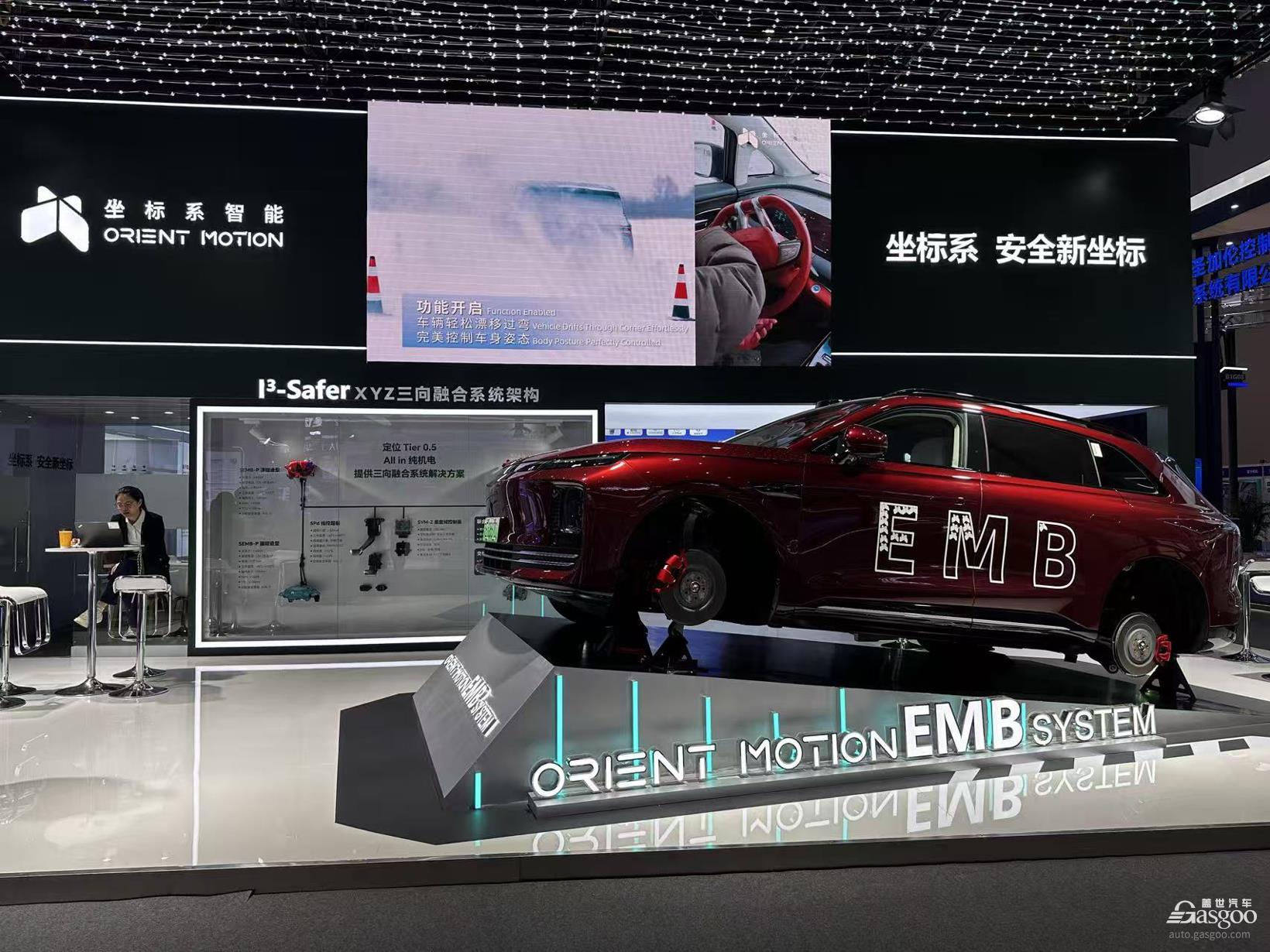
As the global automotive industry undergoes its most significant transition in a century, the competitive battlefield has shifted from the internal combustion engine to the software-defined vehicle. At the heart of this evolution is intelligent chassis technology—the critical integration of electronic-mechanical systems, by-wire control, and active suspension that bridges software commands with physical movement. For global investors and Tier 1 suppliers, understanding the rapid rise of Chinese domestic suppliers in this niche is essential to forecasting the future of global automotive supply chains.
Historically, the automotive chassis was considered a purely mechanical domain, dominated by legendary European and North American Tier 1 suppliers like Bosch, Continental, and ZF. These legacy giants held deep patents in anti-lock braking systems (ABS), electronic stability control (ESC), and steering columns. However, the electrification wave has disrupted this status quo. High-performance electric vehicles (EVs) and advanced driver-assistance systems (ADAS) require millisecond-level response times that traditional mechanical linkages simply cannot deliver. This has paved the way for the adoption of comprehensive intelligent chassis technology.
The Shift from Mechanical to By-Wire Systems
The core of modern intelligent chassis technology lies in 'by-wire' control systems—including brake-by-wire, steer-by-wire, and active suspension systems. By replacing physical, hydraulic, or mechanical connections with electrical signals, by-wire systems decouple driver input from vehicle response. This decoupling is a prerequisite for Level 3 and Level 4 autonomous driving, allowing the onboard computer to control vehicle dynamics seamlessly.
Chinese suppliers have leveraged their proximity to the world's largest and most aggressive EV market to accelerate the validation of these systems. For instance, while Western Tier 1s have historically favored highly integrated but slower-to-develop 'black box' solutions, Chinese firms have adopted a highly collaborative 'white box' or 'gray box' model. This approach allows OEMs to participate in the software co-development, leading to faster vehicle iteration cycles.
Competitive Landscape: Legacy Giants vs. Rising Chinese Tier 1s
To understand the current market dynamics, we can compare the developmental focus and strategic positioning of traditional global Tier 1 suppliers with emerging Chinese providers specializing in intelligent chassis technology:
| Metric / Feature | Legacy Western Tier 1 Giants | Emerging Chinese Tier 1 Suppliers |
|---|---|---|
| Primary Focus | System reliability, global scale, and deep patent defense. | Agile iteration, custom integration, and rapid commercialization. |
| Development Cycle | 24 to 36 months. | 12 to 18 months. |
| System Architecture | Mainly Two-Box or traditional modular designs. | Rapid adoption of integrated One-Box and Electro-Mechanical Braking (EMB). |
| Collaboration Model | Proprietary 'black-box' software. | Open-architecture 'white-box' systems. |
In the field of brake-by-wire, the transition from 'Two-Box' (separate braking actuation and stability control) to 'One-Box' (fully integrated system) has been rapid. Companies like Tuopu Group, Bethel Automotive Safety Systems (BOCG), and Tinove have successfully commercialized One-Box solutions at highly competitive price points, catching the attention of global procurement teams looking for cost-efficient technology integration.
Strategic Implications for Western OEMs and Investors
For Western automakers, the rapid maturation of Chinese intelligent chassis technology presents a unique strategic opportunity. Rather than viewing these developments through a purely competitive lens, forward-thinking Western OEMs are establishing strategic sourcing alliances to leverage these innovations. This helps reduce development costs and accelerates the launch of competitive EV models globally.
Furthermore, as international trade frameworks evolve, localized regional footprint planning is becoming paramount. Many Chinese Tier 1 suppliers are proactively investing in overseas manufacturing facilities across North America, Europe, and Southeast Asia. This localized presence ensures strict supply chain compliance and mitigates geopolitical risks while bringing advanced engineering expertise closer to Western assembly lines.
The Rise of Steer-by-Wire
As steer-by-wire (SbW) systems begin to enter high-end production vehicles, the technology removes the physical steering column entirely. This offers vehicle designers unparalleled freedom to redesign cabin spaces—such as enabling retractable steering wheels for future autonomous driving modes. It also improves safety by preventing the steering column from entering the cabin during high-speed frontal collisions. Chinese developers are working closely with local OEMs to implement SbW systems, building a vital database of real-world driving telemetry that will help refine these algorithms faster than traditional development processes typically allow.
Conclusion: The Path Forward for Global Automotive Supply Chains
The evolution of intelligent chassis technology highlights a broader trend: the automotive supply chain is transitioning from a rigid hierarchical pyramid to a dynamic, collaborative network. Traditional Tier 1 giants remain powerful forces with deep institutional knowledge, but their emerging competitors are proving that speed, open architectures, and deep hardware-software integration are key differentiators in the EV era.
For institutional investors and automotive strategists, monitoring these supply chain shifts is no longer optional. The companies that successfully master intelligent chassis systems will control the physical platform upon which the future of autonomous mobility is built.