When technical negotiators from Beijing and Brussels signaled a tentative framework consensus to avert punitive anti-subsidy countervailing duties through price undertakings, global financial desks breathed a premature sigh of relief. The diplomatic posturing from both the European Commission and China\'s Ministry of Commerce (MOFCOM) suggests an orderly off-ramp: replacing definitive countervailing duties of up to 35.3%—which sit atop the standard 10% base car import tariff—with bilaterally agreed minimum import prices (MIP) and localized volume quotas. Yet beneath the diplomatic veneer of the China-EU EV trade negotiations lies a harsh industrial reality. This compromise does not resolve the structural overcapacity tearing through the domestic Chinese automotive landscape, nor does it provide European legacy manufacturers with an enduring moat against aggressive technological competition.
To grasp why this diplomatic compromise is precarious, one must examine the geopolitical and economic fault lines established over the past twenty-four months. The European Commission\'s anti-subsidy investigation, initiated in late 2023 under Ursula von der Leyen, determined that state-backed financing, subsidized lithium refining, cheap land grants, and state-directed debt facilities gave Chinese battery electric vehicle (BEV) exporters an unfair competitive advantage of 20% to 30% on delivered vehicle costs. In response, Chinese automakers led by BYD, SAIC Motor, and Geely accelerated retail rollouts across Europe, leveraging massive volume at home to undercut domestic European models. However, the resulting trade friction has transformed European capital allocation, forcing a high-stakes renegotiation of global automotive supply chains.
The Anatomy of Compromise: Tariffs Versus Price Undertakings
The core mechanism under debate within the China-EU EV trade negotiations is the substitution of definitive countervailing duties with negotiated price undertakings under Article 8 of the EU\'s anti-subsidy regulation. Under a standard countervailing duty framework, tariffs are paid directly to European customs authorities by the importer of record, siphoning cash away from the exporter and inflating retail sticker prices for European buyers. Conversely, an agreed minimum import price framework permits Chinese OEMs to capture the artificial margin premium themselves, on the strict condition that landed retail prices do not undercut determined baseline benchmarks.
This technical distinction creates starkly diverging financial outcomes across different corporate balance sheets. For high-volume producers relying on slim margins and sheer scale, an artificially enforced high price floor disrupts the primary vector of market entry: price-to-specification dominance. Consider the divergence between state-owned volume players like SAIC Motor (facing individual duties of 35.3%) and privately managed conglomerates like Geely (18.8%) and BYD (17.0%). A uniform price undertaking would force SAIC\'s MG brand to abandon its sub-€30,000 retail positioning for models like the MG4, shifting their go-to-market model from raw volume dispersion to direct feature-for-feature competition against seasoned European incumbents.
| Manufacturer & Model Architecture | Baseline Landed Cost (Est. CIF Europe) | Standard EU Tariff (10%) + Countervailing Duty | Proposed Minimum Price Undertaking (Floor Est.) | Battery Chemistry & Architecture | Strategic Production Pivot Plan |
|---|---|---|---|---|---|
| BYD (Seagull / Dolphin) e-Platform 3.0 | €14,200 - €18,500 | 27.0% Total (10% + 17.0%) | €23,500 - €26,000 | Blade LFP (Cell-to-Body), 400V | Szeged, Hungary Facility (Operational 2025/2026) |
| SAIC Motor (MG4 Electric) MSP Modular Scalable Platform | €17,800 - €21,000 | 45.3% Total (10% + 35.3%) | €27,500 - €29,500 | Rubik\'s Cube Ternary/LFP mix, 400V | European greenfield site scouting (Spain/Poland) |
| Geely Group (Zeekr X / Volvo EX30) SEA (Sustainable Experience Architecture) | €22,500 - €26,000 | 28.8% Total (10% + 18.8%) | €34,000 - €37,000 | High-Nickel NCM / LFP options, 400V/800V | Contract manufacturing at Ghent, Belgium; CTP plants |
| Tesla (Model 3 - Giga Shanghai) Dedicated Platform | €24,000 - €27,500 | 17.8% Total (10% + 7.8%) | €38,500 - €41,000 | CATL LFP / LG Energy Sol NCM, 400V | Supply realignment via Giga Berlin expansion |
| Volkswagen Group (ID.3 / Cupra Born) MEB Platform (Domestic EU Baseline) | €26,500 - €30,000 (Ex-Works Zwickau) | 0% (Domestic Production) | €33,000 - €36,000 (Market Retail) | Ternary NCM / Prismatic, 400V | Restructuring Zwickau and Emden; Spanish cell plant |
The comparative data reveals that even under a minimum price undertaking, Chinese manufacturers maintain a considerable gross manufacturing buffer, derived from highly integrated domestic supply networks. However, closing the price gap eliminates the primary catalyst that drove European fleet buyers and retail consumers toward unproven foreign brands. Stripped of an aggressive 20% discount against a Volkswagen ID.3 or a Renault Mégane E-Tech, Chinese OEMs must pivot their entire brand proposition toward software sophistication, rapid delivery schedules, and warranty packages—arenas where brand equity and localized dealer networks exert massive influence.
Supply Chain Realities and the Central European Localization Rush
Faced with the regulatory ceiling of the China-EU EV trade negotiations, Chinese automakers are executing a structural supply chain shift: nearshoring production inside the European Union\'s customs union. The blueprint mirrors the Japanese automotive sector\'s strategic playbook in North America during the Voluntary Export Restraint (VER) era of the 1980s. However, the modern transition is complicated by strict European supply chain tracing, battery carbon footprint passports, and the EU Critical Raw Materials Act.
BYD\'s industrial commitment in Szeged, Hungary represents the tip of this localized manufacturing spear. With an estimated initial capacity of 150,000 units annually, expanding to 300,000 units, the facility aims to bypass external tariff walls entirely. Yet, manufacturing an EV in Central Europe introduces an entirely different cost structure. While tier-1 manufacturing labor costs in Shenzhen or Changsha range between €6 and €9 per hour, fully loaded labor in Hungary or Poland ranges between €13 and €18 per hour—substantially lower than Germany\'s €55+ per hour, but still a steep operational escalation for companies accustomed to Chinese labor economics.
More critical than assembly labor is the upstream supply chain for battery cells and localized components. A passenger car produced inside the EU requires at least 45% local value addition to qualify for tariff-free distribution within the single market under standard preferential origin rules. If Chinese OEMs simply ship fully assembled battery packs containing Chinese-refined lithium and LFP cathode materials to Hungary for final \'screwdriver\' assembly, they risk falling foul of European rules of origin. Consequently, battery giants CATL (building a 100 GWh plant in Debrecen, Hungary), EVE Energy, and Gotion High-Tech are plowing billions into European battery cell production. This migration introduces massive capital expenditure loads that inevitably compress the corporate profit margins previously enjoyed during high-volume domestic runs in China.
The Competitive Re-alignment: Winners, Hostages, and Decoupled Players
The geopolitical maneuvering around the China-EU EV trade negotiations exposes deep structural divergences among legacy European automotive groups. Rather than presenting a unified continental front, European OEMs are split based on their exposure to Chinese domestic manufacturing, joint ventures, and retaliatory risks.
The China Market Hostage Bloc: German Premium Automakers
Volkswagen Group, BMW, and Mercedes-Benz have consistently lobbied Berlin to oppose harsh EU measures against Beijing. The economic rationale is straightforward: these three groups generate between 25% and 35% of their global vehicle sales inside mainland China. German OEMs fear that any tariff imposition will trigger symmetrical regulatory retaliation from Beijing, targeting high-margin combustion engine luxury imports (such as vehicles equipped with engines displacing 2.5 liters or more). Furthermore, their joint ventures with SAIC, FAW, and Dongfeng remain critical sources of operational cash flow. Any trade warfare that accelerates the flight of Chinese consumers toward domestic premium brands like Li Auto, Nio, and Huawei\'s HIMA alliance directly threatens corporate dividend distributions in Wolfsburg, Munich, and Stuttgart.
The Continental Defense Bloc: Stellantis and Renault
Conversely, groups with minimal exposure to the Chinese domestic retail market—such as Stellantis and Renault—have taken a far more defensive stance. Carlos Tavares, departing CEO of Stellantis, long championed strict protectionist measures to insulate European industrial manufacturing from what he characterized as a structural 30% cost disadvantage. For Stellantis, mass-market brands like Fiat, Peugeot, and Citroën operate in direct price competition against imported MG and BYD models. Yet even within this defensive cohort, pragmatism has forced hybrid arrangements: Stellantis acquired a 21% strategic stake in Chinese EV start-up Leapmotor, establishing Leapmotor International to assemble low-cost B10 and T03 models at Stellantis\'s Tychy plant in Poland. This dynamic underlines the central paradox: European legacy manufacturers are simultaneously fighting Chinese market penetration while leveraging Chinese EV platforms to achieve electrification targets.
The Decoupled Resilience: Hyundai-Kia
Standing outside the immediate China-Europe crossfire are decoupled global players, most notably South Korea\'s Hyundai Motor Group. Having drastically scaled down its domestic Chinese retail operations following years of intense local brand competition, Hyundai-Kia has avoided the margin-crushing domestic Chinese price wars. By concentrating capital allocation on dedicated high-margin 800V architectures (E-GMP) and securing independent battery joint ventures across the United States, Europe, and India, Hyundai and Kia maintain balance sheet flexibility without worrying about retaliatory crackdowns from Chinese trade regulators. Their structural insulation highlights the vulnerability of German OEMs that remain dependent on Chinese market revenue.
The Reality Check: Interrogating the Volume Illusion and Engineering Gaps
While industry analysts frequently celebrate Chinese EV production milestones as evidence of technological supremacy, an engineering and macroeconomic audit paints a more nuanced picture. The very dynamic propelling Chinese OEMs into European trade negotiations—massive export volumes—is primarily driven by domestic balance sheet desperation rather than uncontested industrial strength.
First, consider the domestic profitability paradox. The relentless price war raging across the Chinese mainland has pushed the majority of domestic EV brands into cash-burn territory. Aside from BYD and Li Auto, virtually every domestic Chinese EV pure-play is operating with negative net operating margins. Overcapacity in Chinese automotive manufacturing plants is estimated by industry observers to exceed 15 million units annually. The push into Europe via aggressive export pricing is not a victory lap; it is an economic release valve to liquidate inventory that cannot be absorbed domestically at profitable price points. If a negotiated price undertaking sets a minimum import price ceiling in Europe, Chinese automakers will lose their primary mechanism for dumping volume, directly threatening factory utilization rates in Changzhou, Hefei, and Shenzhen.
Second, electrochemistry imposes severe operational trade-offs that corporate marketing material routinely glosses over. The overwhelming majority of budget-focused Chinese EV exports utilize Lithium Iron Phosphate (LFP) chemistry. While LFP provides exceptional cycle life, robust thermal stability, and low cell-level production costs (averaging $50 to $60 per kWh at Chinese cell manufacturing plants), its gravimetric energy density remains fundamentally constrained between 160 and 190 Wh/kg at the pack level. More critically for European consumers, LFP suffers from severe capacity degradation and charging impedance in cold-weather conditions. Independent Nordic testing consistently demonstrates that LFP-equipped passenger cars can lose between 35% and 45% of their rated CLTC/WLTP driving range when ambient temperatures drop below freezing, accompanied by sharp throttling of DC fast-charging acceptance curves due to lithium plating risks.
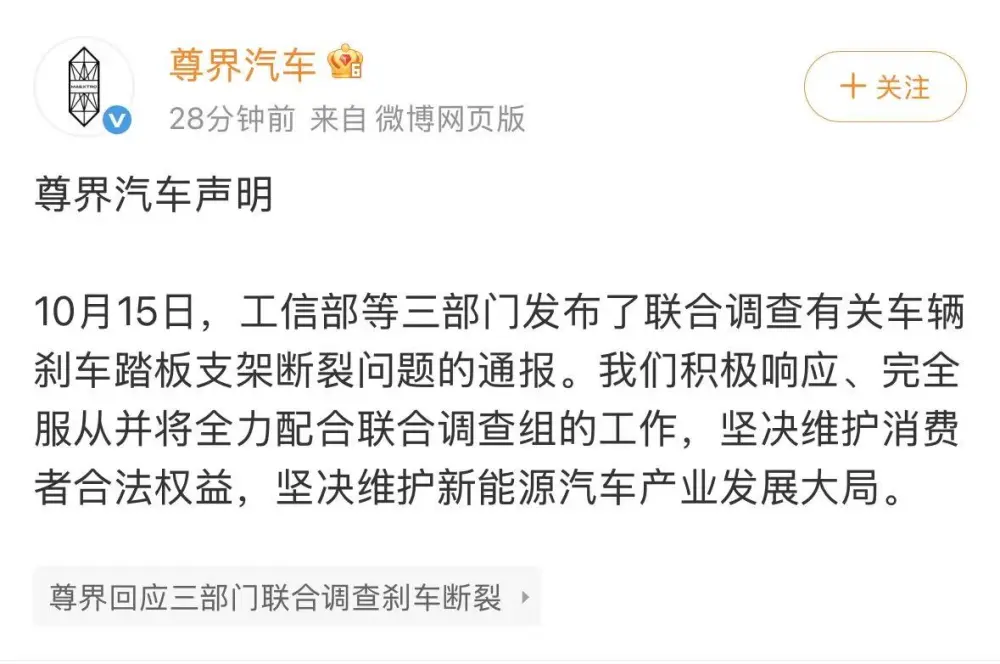
Furthermore, the domestic industry\'s aggressive pace of vehicle development—often compressing standard 48-month vehicle engineering cycles down to 18 to 24 months—is beginning to reveal latent mechanical and software quality control fissures. A prominent recent case in point within China\'s domestic regulatory environment is the joint investigation launched by three Chinese government ministries into the braking system anomalies reported on the high-profile Zunjie (Maextro) V800 luxury EV. When vehicle architectures are rushed to commercial retail to feed relentless hype cycles, validation testing of safety-critical electromechanical interfaces—such as electro-hydraulic braking systems (One-Box/Two-Box brake-by-wire units) and integrated chassis domain controllers—runs the risk of truncation. For European buyers who place a heavy premium on mechanical durability, chassis dynamics, and functional safety (ISO 26262 ASIL-D compliance), any systemic hardware or braking anomalies will permanently shatter brand equity in a market that does not easily grant second chances.
The Regulatory Maze: WTO Compliance and Rules of Origin Traps
As the China-EU EV trade negotiations progress, both parties must navigate an intricate labyrinth of international trade law and binding regulatory frameworks. Replacing tariffs with a price undertaking agreement is not an informal bilateral handshake; it must withstand formal World Trade Organization (WTO) scrutiny under the Agreement on Subsidies and Countervailing Measures (SCM).
Under WTO jurisprudence, price undertakings must be targeted, auditable, and structured to completely eliminate the injurious effects of the identified subsidies without operating as an illegal export cartel or arbitrary market-sharing pact. This presents an administrative challenge for the European Commission\'s Directorate-General for Trade. How does an authority monitor the landed transaction prices of dozens of distinct vehicle trims, software-subscription configurations, dealer discounting schemes, and trade-in overvaluations across 27 sovereign member states? If an OEM discounts a high-margin home charger, bundles lifetime free DC fast-charging, or manipulates leasing residual values through captive finance subsidiaries, the minimum price undertaking can be circumvented.
Simultaneously, the European Union\'s regulatory apparatus is closing potential transshipment and component assembly avenues. The EU Foreign Subsidies Regulation (FSR) empowers Brussels to investigate greenfield investments inside the EU if those facilities receive distortive capital injections or subsidies from non-EU sovereign entities. This means that Chinese battery and vehicle assembly plants in Hungary or Slovakia could face secondary investigations if their European subsidiaries are financed through low-interest loans from Chinese state policy banks. Furthermore, tightening European battery carbon footprint regulations, mandated under the EU Battery Regulation (2023/1542), will require granular lifecycle emissions reporting from 2025 onwards. Batteries manufactured in Chinese provinces reliant on coal-heavy electrical grids will struggle to achieve the carbon certification necessary to access premium European subsidies, independent of whether an overarching trade consensus is reached in Brussels.
Strategic Outlook: Three Divergent Scenarios for Institutional Portfolios
For automotive executives, corporate treasury teams, and institutional equity analysts tracking cross-border mobility assets, the China-EU automotive stand-off will dictate multi-billion-euro capital deployment decisions through the end of the decade. Three distinct macro scenarios outline the potential trajectories of this regulatory confrontation:
Bull Case: Managed Coexistence via Industrial Alliances
Under this high-cooperation outcome, Beijing and Brussels finalize a sophisticated price undertaking mechanism that establishes index-linked minimum prices pegged to average European production cost indices. Chinese OEMs successfully deploy localized assembly plants across Central and Eastern Europe, establishing joint ventures with European tier-1 suppliers (e.g., Bosch, Continental, Valeo) to satisfy local content requirements exceeding 50%. European legacy OEMs secure uninterrupted access to Chinese battery technology and domestic Chinese luxury profit pools without facing retaliatory measures. Market share stabilizes, with Chinese brands capturing a sustainable 10% to 12% of the European EV market, operating primarily as premium-spec alternatives rather than cut-rate price disruptors.
Base Case: Fragmented Friction and Regulatory Enforcement Friction
In the most probable mid-term scenario, a high-level framework agreement is signed, but ongoing compliance friction leads to recurring investigations. The European Commission uncovers widespread circumvention via captive automotive finance leasing structures and grey-market dealer incentives. Brussels retaliates by converting price undertakings back into definitive countervailing duties on specific non-compliant manufacturers, while Chinese regulators enact selective, non-tariff regulatory obstacles against German ICE exports (such as elongated customs clearances and stringent software certifications). Chinese EV market share growth in Europe slows from hyper-expansion to a grinding, capital-intensive pace, compelling brands without substantial balance sheet depth to withdraw entirely from Western Europe.
Bear Case: Breakdown, Tariff Cascades, and Industrial Decoupling
The pessimistic outcome involves a complete collapse of negotiations following domestic political realignments in key EU member states or aggressive trade litigation at the WTO. The EU enforces maximum definitive countervailing duties up to 35.3% on top of base tariffs, while invoking the Foreign Subsidies Regulation to block state-backed greenfield plant construction in Eastern Europe. Beijing responds with retaliatory 25% tariffs on large-displacement European engine imports and initiates anti-dumping actions against European luxury automotive exports. European legacy OEMs face immediate double-digit earnings downgrades due to collapsed Chinese JV revenues, while Chinese domestic EV makers are forced back into an oversaturated domestic market, accelerating corporate bankruptcies and emergency state consolidations in China.
Key Strategic Implications for Automotive Leadership
Navigating the complex aftermath of the China-EU EV trade negotiations requires enterprise executives and institutional investors to look past headline diplomatic announcements and recalibrate operational models based on cold economic telemetry:
- Re-evaluate European Pricing Ceilings: Western auto analysts must remove ultra-low budget Chinese EV assumptions from their long-term market models. With minimum price undertakings or countervailing duties institutionalized, the era of the sub-€20,000 imported Chinese C-segment EV in Europe is effectively over. European incumbents have secured a multi-year window to industrialize their own low-cost EV architectures (e.g., Renault Twingo, VW ID.2).
- Audit True Localization Capital Expenditures: Building an operational automotive assembly plant in Europe requires a completely different capital intensity profile compared to constructing domestic capacity in China. Analysts must interrogate OEM cash flow statements for escalating European CAPEX, high localized union labor contracts, and compliance costs tied to the EU Battery Passport.
- Factor in Component Provenance Risks: The trade bottleneck will rapidly shift from fully assembled vehicles (CBUs) to completely knocked-down (CKD) kits and battery cell packs. Investors should scrutinize whether Chinese battery producers in Europe can genuinely meet European rules-of-origin thresholds without incurring prohibitive secondary duties.
- Track Mechanical Reliability Over Feature Lists: The speed of software-driven vehicle launches in China must be measured against traditional Western engineering durability standards. Regulatory investigations into safety-critical components—such as the recent braking system probes on high-end Chinese EV flagships—demonstrate that long-term brand equity in mature markets requires flawless functional safety, not merely attractive dashboard screens and artificial intelligence marketing claims.