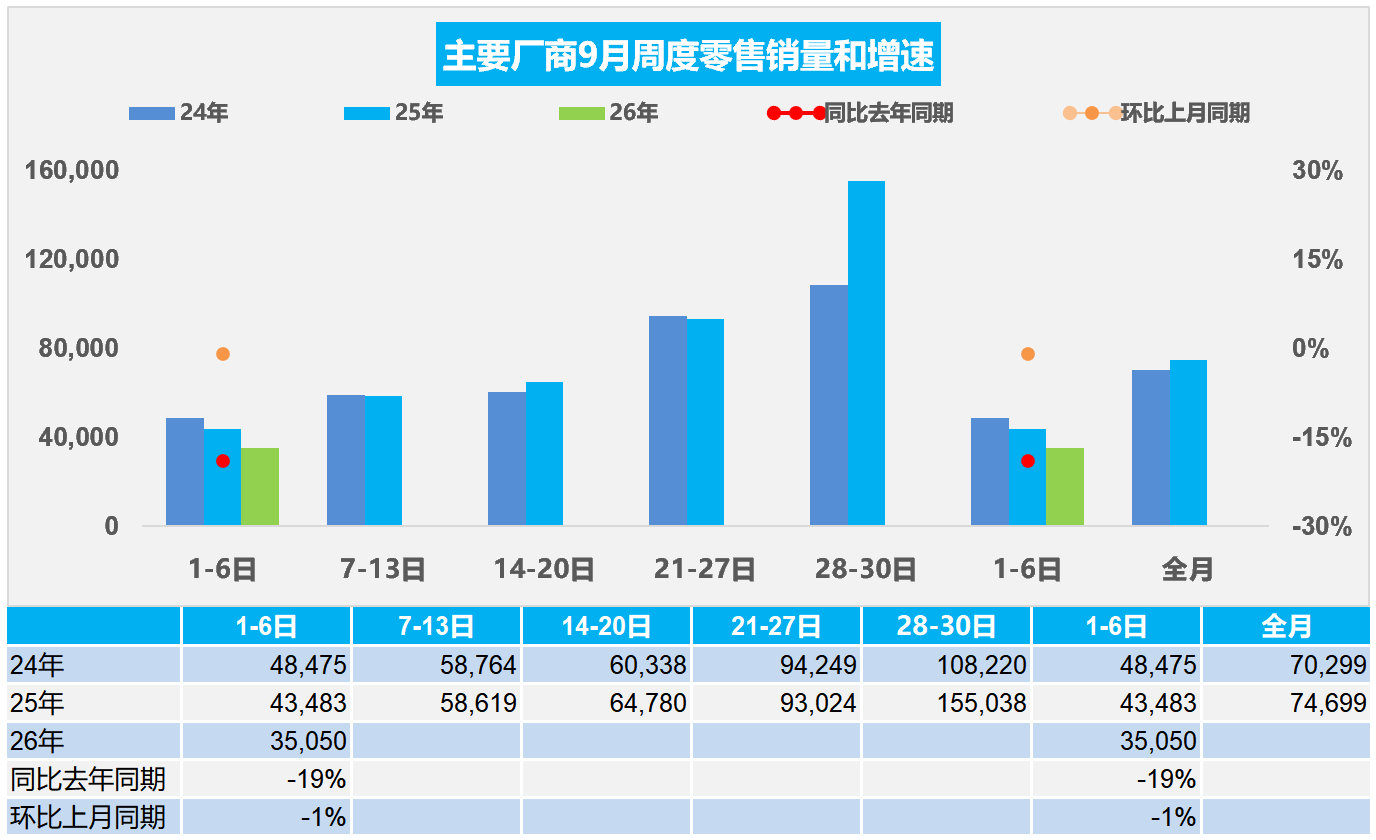
The landscape of the global automotive industry has reached a stunning structural tipping point. According to the latest retail data released by the China Passenger Car Association (CPCA) for the first week of September 2026 (September 1–6), the weekly domestic passenger vehicle market registered a total retail volume of 210,000 units. While overall retail volume dipped 19% year-over-year, the critical headline is the rapid acceleration of the China electric vehicle market penetration, which officially crossed the historic 70% threshold during this period.
The Historical 70% Milestone: Demystifying the Numbers
This 70% weekly market penetration represents an unprecedented transition. To put this in perspective, just three years ago, analysts were debating when China would cross the 50% milestone. Today, more than two out of every three passenger vehicles sold in China are classified as New Energy Vehicles (NEVs), which encompass battery electric vehicles (BEVs) and plug-in hybrid electric vehicles (PHEVs).
While the overall passenger vehicle market saw a temporary year-over-year decline of 19% in retail volume during this specific week—a contraction largely attributed to macroeconomic adjustments and changing buying cycles—NEV demand remained highly resilient. The contraction was almost entirely borne by legacy internal combustion engine (ICE) vehicle segments.
| Metric (Sept 1–6, 2026) | Value / Volume | Year-over-Year (YoY) Change |
|---|---|---|
| Total Passenger Retail Sales | 210,000 units | -19% |
| NEV Penetration Rate | >70% | Significant Increase |
| Primary Drivers | PHEV range optimization, localized manufacturing efficiencies, and smart-cabin software integration. | |
The Structural Shift: Displacing Legacy Internal Combustion Engines
As a professional market analyst monitoring global automotive supply chains, this rapid transition highlights a wider paradigm shift. The era of traditional ICE dominance in China is effectively coming to an end. This trend is no longer just a regulatory push; it is driven by consumer demand for superior digital experiences, advanced driver-assistance systems (ADAS), and highly competitive pricing offered by domestic manufacturers.
Impact on Western Legacy OEMs and Joint Ventures
For decades, Western legacy OEMs relied on highly profitable joint ventures (JVs) in China to subsidize their global operations. However, the accelerating China electric vehicle market penetration rate is applying intense competitive pressure on these traditional ICE-heavy portfolios. To navigate this highly dynamic market, international automakers are rapidly pivoting toward strategic cross-border collaborations.
Rather than relying solely on legacy architectures, forward-looking global OEMs are forming technology integration and strategic sourcing alliances with Chinese innovators. This allows international brands to leverage local supplier expertise in battery chemistries (such as advanced lithium iron phosphate, or LFP) and smart connectivity platforms, facilitating rapid localized regional footprints and ensuring trade adaptability.
Why This Accelerating Adoption Matters for Global Investors
For institutional investors and strategic planners, China's domestic NEV penetration rate serves as a leading indicator for global automotive trends. There are three key takeaways from this milestone:
- Technological Convergence: As domestic market penetration reaches mature phases, Chinese manufacturers are prioritizing supply chain compliance and advanced engineering standards to meet global export requirements.
- The Rise of PHEVs: A significant portion of the growth pushing past the 70% threshold is driven by next-generation plug-in hybrids and range extenders, which resolve highway range anxiety while retaining cost parity with traditional vehicles.
- Infrastructure Maturation: Achieving a sustained penetration rate of over 70% is only possible due to highly mature charging and battery-swapping networks across both urban and tier-2/3 regional centers.
Ultimately, this latest data from the CPCA demonstrates that consumer habits in the world's largest automotive market have structurally transformed. For global OEMs, success no longer lies in trying to defend legacy ICE market share, but in successfully executing localized technology integrations to remain competitive in a highly electrified era.