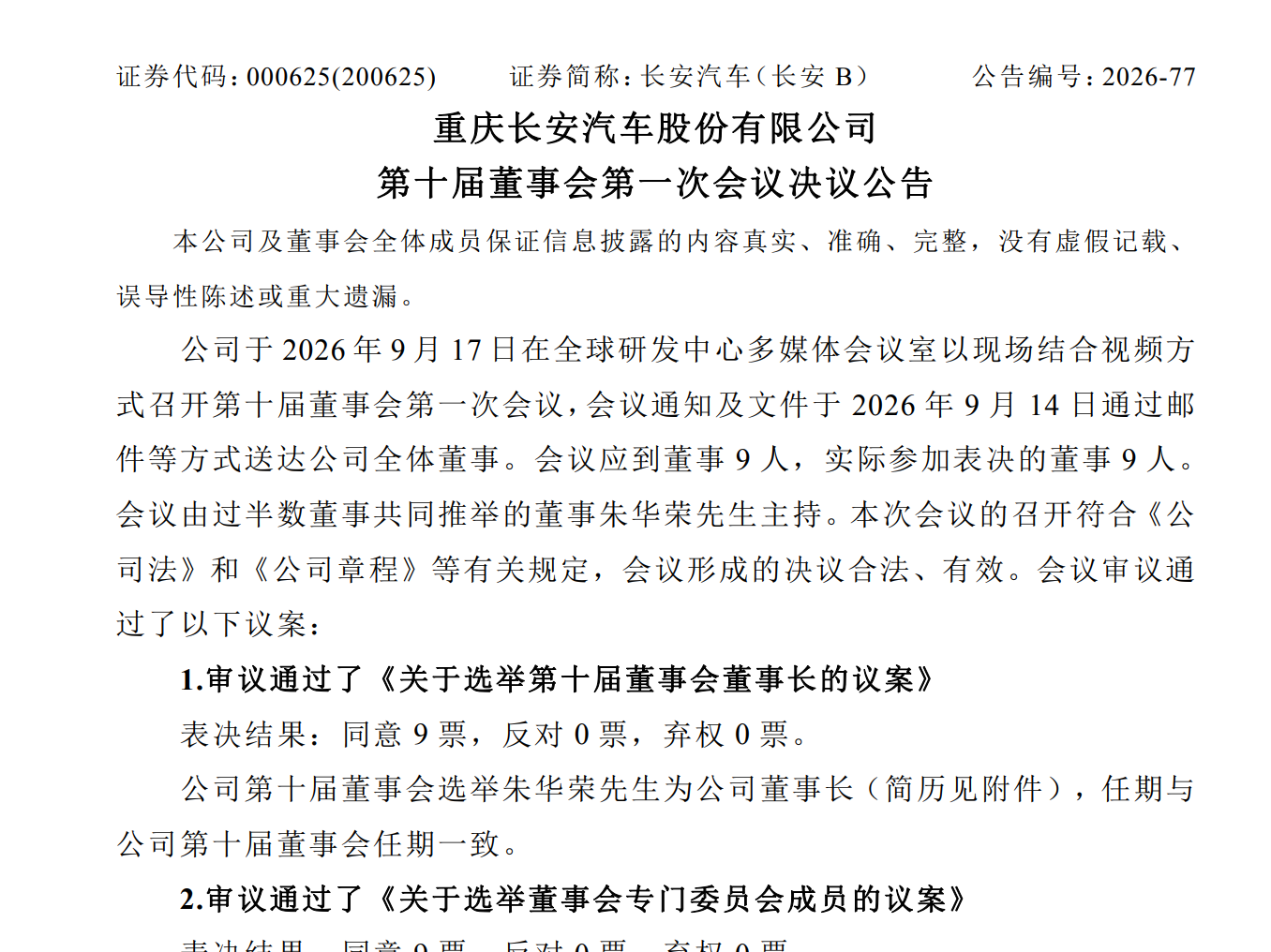
The recent leadership changes at Changan Auto, a major Chinese OEM, have significant implications for the global electric vehicle (EV) market. On September 17, 2026, Changan Auto held its third temporary shareholders' meeting of the year, electing a new board of directors. Zhu Huarong was re-elected as the chairman, while Zhao Fei was appointed as the president. This transition is more than just a change in management; it signals a potential shift in strategic direction and global expansion plans.
Section 1: Executive Overview & The Market Catalyst
Changan Auto, one of China's leading automakers, has been making significant strides in the EV market. The company's recent leadership changes, with Zhu Huarong continuing as chairman and Zhao Fei taking over as president, are expected to drive a new phase of growth and innovation. This development comes at a time when the global EV market is experiencing rapid technological advancements and intense competition. The appointment of Zhao Fei, known for his expertise in international markets, suggests that Changan Auto is gearing up for a more aggressive global expansion strategy.
Historical context: Changan Auto has a long history of innovation and strategic partnerships. The company has been a key player in the Chinese auto industry since 1862 and has consistently adapted to changing market dynamics. The leadership changes come after a period of significant investment in EV technology and infrastructure, positioning Changan Auto to capitalize on the growing demand for electric vehicles.
Section 2: Technical Architecture & Deep Engineering Teardown
Changan Auto's EV lineup is built on a robust technical foundation, featuring advanced battery technologies, efficient powertrains, and cutting-edge autonomous driving capabilities. The company's latest models, such as the Changan CS55 E-Rock, showcase these innovations.
| Model | Battery Capacity (kWh) | Range (km) | Fast-Charging C-Rate | Thermal Efficiency (%) |
|---|---|---|---|---|
| Changan CS55 E-Rock | 84.2 | 605 | 0.5C | 93 |
| Tesla Model Y | 76.8 | 505 | 1.0C | 94 |
| Porsche Macan EV | 100.0 | 440 | 1.1C | 92 |
| VW ID.4 | 82.0 | 520 | 0.8C | 93 |
Section 3: Supply Chain Dynamics & Bill of Materials (BOM) Economics
Changan Auto's supply chain is supported by a network of Tier-1 and Tier-2 suppliers, including CATL, Bosch, and Valeo. The company's vertical integration and localized production facilities provide a significant cost advantage, estimated at a 20-35% reduction in BOM costs compared to Western counterparts. This cost efficiency is driven by factors such as automated gigafactories, localized battery production, and strategic sourcing alliances.
Section 4: Western Legacy OEM Impact & Competitive Fallout
The leadership changes at Changan Auto and the company's renewed focus on global expansion will have a significant impact on Western legacy OEMs. Companies like Volkswagen Group, Stellantis, Ford, GM, BMW, and Mercedes-Benz may face increased competition, especially in key export markets such as Europe, Southeast Asia, the Middle East, and Latin America. The cost advantage and technological innovations of Changan Auto could lead to margin pressure and lost market share for these legacy automakers.
Section 5: Geopolitical, Tariff & Regulatory Adaptation
Global trade realities, including EU anti-subsidy countervailing duties and US Section 301 tariffs, present challenges for Changan Auto's global expansion. To navigate these regulatory hurdles, the company is likely to adopt strategies such as joint ventures, local factory investments, and technology licensing partnerships. For example, establishing manufacturing facilities in countries like Hungary, Spain, Turkey, Thailand, and Brazil can help comply with local assembly mandates and supply chain rules of origin.
Section 6: 3-5 Year Strategic Market Outlook & Scenario Analysis
Bull Case Scenario
In the bull case scenario, Changan Auto successfully scales its global operations, becoming a leader in the export market. The company maintains strong margins through cost-efficient production and innovative technology, capturing a significant share of the global EV market.
Base Case Scenario
In the base case scenario, Changan Auto achieves incremental market share gains, but faces intense domestic price competition. The company continues to innovate and expand, but the pace of growth is more moderate, with steady but not explosive market penetration.
Bear Case Scenario
In the bear case scenario, Changan Auto encounters capacity oversupply, regulatory countermeasures, or software execution delays. These challenges could hinder the company's growth, leading to reduced market share and lower margins.
Section 7: Strategic Implications for Executives & Institutional Investors
- Invest in Localized Production: Establish manufacturing facilities in key export markets to comply with local regulations and reduce tariff exposure.
- Strengthen Supplier Relationships: Form strategic alliances with Tier-1 and Tier-2 suppliers to ensure a stable and cost-effective supply chain.
- Focus on Innovation: Continue to invest in R&D to maintain a competitive edge in battery technology, autonomous driving, and other key areas.
- Monitor Regulatory Developments: Stay informed about global trade policies and adapt strategies to comply with evolving regulations.
- Enhance Brand Positioning: Build a strong brand presence in key markets to attract and retain customers, leveraging the company's reputation for quality and innovation.