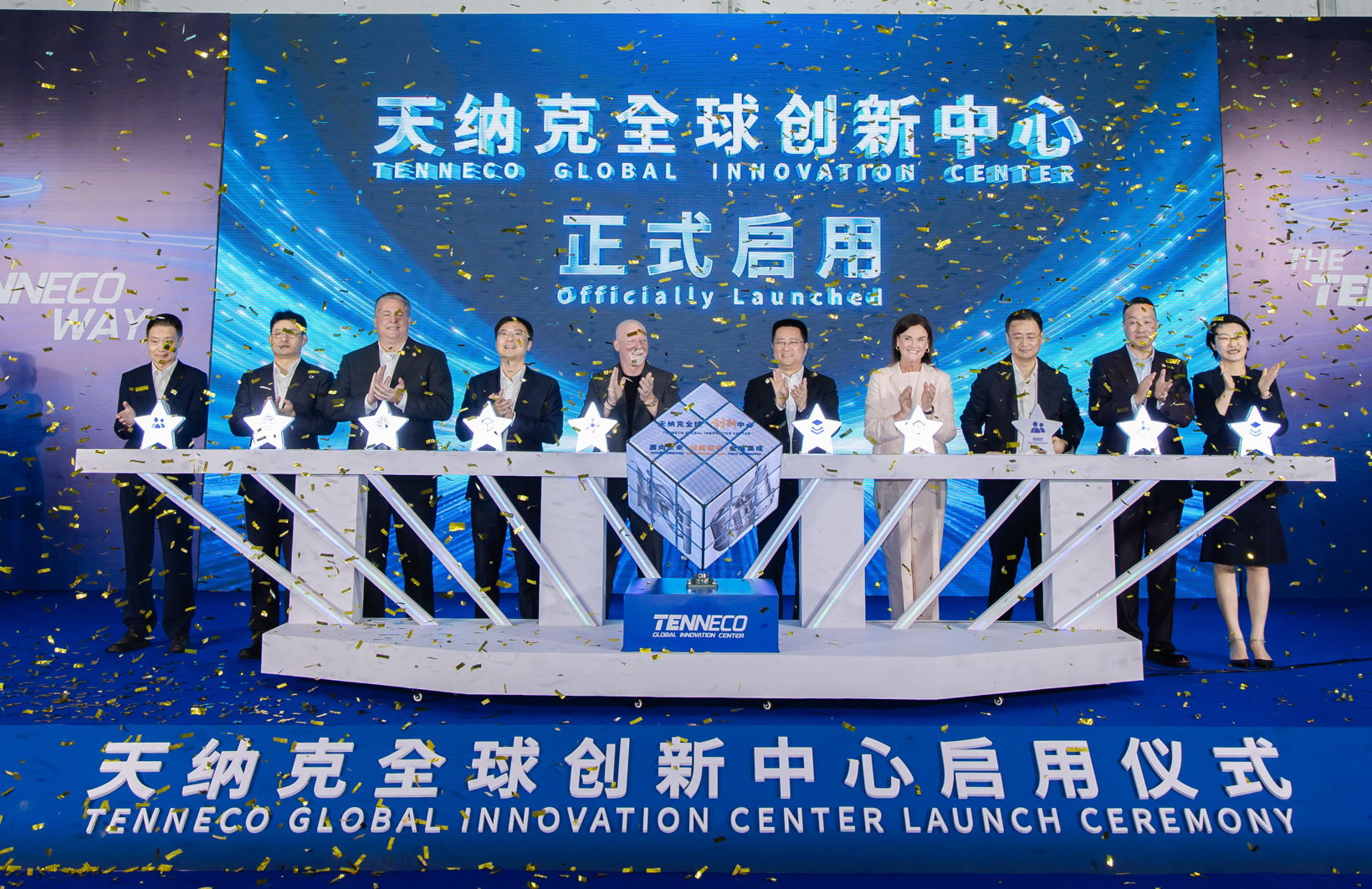
The global automotive industry is undergoing a massive structural shift that extends far beyond vehicle assembly. A major driver of this transformation is the accelerating trend of automotive R&D localization in China. On September 3, 2026, American Tier-1 automotive giant Tenneco officially inaugurated its new Global Innovation Center in Kunshan, Jiangsu Province. This state-of-the-art facility integrates advanced powertrain, clean air, and ignition technologies under one roof, signaling a profound evolution in how global automotive suppliers approach regional innovation and global product development.
Redefining 'In China, for the World'
Historically, Western multinational suppliers viewed their Chinese operations primarily as localized manufacturing hubs to serve regional vehicle programs. Today, the rapid development of hybrid and electric powertrains has flipped this dynamic. The Kunshan Innovation Center represents a strategic pivot toward cross-border collaboration, where engineering solutions incubated in China will influence vehicle architectures globally.
By embedding research and development directly into the world's most dynamic New Energy Vehicle (NEV) ecosystem, Tenneco can execute technology integration at 'China-speed.' This agile development pace is critical for global OEMs looking to keep pace with rapid innovation cycles while maintaining robust supply chain compliance and expanding their localized regional footprint.
Kunshan Center Capabilities: Advanced Powertrain and Clean Air Systems
The Kunshan Global Innovation Center consolidates several key engineering domains that are vital to the current transition phase of the automotive industry. With the massive market surge of Plug-in Hybrid Electric Vehicles (PHEVs) and Extended Range Electric Vehicles (EREVs) globally, advanced internal combustion engine (ICE)-adjacent technologies are experiencing a strategic renaissance.
The facility targets three critical technology sectors:
- Advanced Powertrain Systems: Optimizing mechanical efficiency and integration for next-generation hybrid and traditional propulsion setups.
- Clean Air Technologies: Developing next-generation thermal and emission management systems to assist global OEMs in meeting tightening global decarbonization and ESG standards.
- Ignition Tech: Engineering advanced, high-energy ignition systems essential for high-efficiency, lean-burn hybrid engines.
The strategic localization of these technologies is outlined in the table below, showcasing how China-based development translates to global advantages:
| Strategic Focus Area | Primary Driver in China Ecosystem | Global Application Benefit |
|---|---|---|
| High-Efficiency Hybrid Powertrains | Rapid EREV/PHEV market adoption and consumer demand. | Exportable platform designs for EU/US low-emission standards. |
| Advanced Thermal Management | Ultra-fast local supplier validation loops. | Enhanced battery lifetime and cabin efficiency in global EV platforms. |
| Digital & Smart R&D | Highly integrated local Tier-2 and Tier-3 technology partners. | Reduced time-to-market for global platform updates and vehicle launches. |
The Strategic Imperative for Western OEMs and Investors
For Western auto manufacturers and market analysts, Tenneco’s move confirms that the technological center of gravity is shifting toward localized development. Rather than relying on rigid, centralized design offices in Europe or North America, global Tier-1s are utilizing strategic localization to remain competitive. This allows them to foster strategic sourcing alliances that integrate local innovations into global platforms smoothly and efficiently.
Furthermore, this strategy offers protection against shifting macroeconomic trade dynamics. Establishing localized engineering and testing capabilities allows global suppliers to support foreign automakers with localized compliance solutions, reducing exposure to logistics bottlenecks and international trade adjustments.