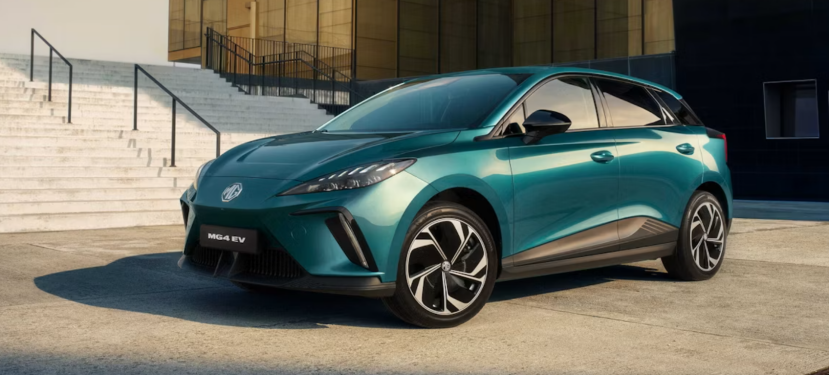
As Western markets implement strict import regulations, the landscape of Chinese EV manufacturing in Europe is entering a new phase of industrial maturity. Rather than retreating from the European market, top-tier Chinese automakers are pivoting toward strategic localization. A key milestone in this shift is SAIC Motor's advanced negotiations with the Spanish government to establish a domestic production facility—a move aimed at bolstering its localized regional footprint and securing long-term EU tariff compliance.
The Shift Toward Localized Regional Footprints in the EU
According to recent updates from Spain's Ministry of Defense, SAIC Motor's proposed factory project is undergoing close evaluation for final approvals. Establishing a localized manufacturing presence allows SAIC to transform its supply chain from a vulnerable cross-border shipping model into a resilient, region-specific operation. By setting up physical operations within the EU, SAIC aligns with local industrial policies, positioning itself as a contributor to European employment and regional decarbonization goals.
For European policymakers and regional authorities, projects like SAIC's Spain plant present a strategic opportunity. Instead of enduring standard trade friction, local governments can capture high-value manufacturing jobs, integrate advanced battery assembly lines, and stimulate local tier-1 supplier ecosystems.
Navigating Trade Frameworks with Proactive Compliance
Rather than seeking temporary regulatory workarounds, Chinese automakers are embracing long-term trade adaptability. This involves a structural commitment to the regions where they sell, conforming to ESG standards, local sourcing requirements, and standard tariff compliance frameworks.
Key Metrics of SAIC's Localized Strategy
| Strategic Pivot | Operational Details | Core Industrial Objective |
|---|---|---|
| Primary Location | Spain (Strategic logistics & maritime access) | Optimized distribution for Southern European and Mediterranean markets. |
| Regulatory Focus | Full EU tariff compliance | Mitigation of import duties through local assembly and regional value-add. |
| Economic Contribution | Direct employment & supplier development | Fostering positive relationships with EU trade bodies and national governments. |
Domestic Technological Synergies: The Changan-Huawei Model
While global expansion demands localized manufacturing footprint strategies, domestic innovation remains the engine room for Chinese OEMs. Parallel to SAIC's European expansion, Changan Automobile has deepened its joint venture with tech giant Huawei. This partnership focuses on co-developing next-generation smart cockpit architectures and advanced driver assistance systems (ADAS).
This dual strategy—deepening technology integration at home while building out localized assembly networks abroad—enables Chinese automakers to maintain product competitiveness without compromising on regional regulatory demands. By integrating leading domestic software and battery technology into European-built chassis, OEMs can offer advanced, cost-competitive electric vehicles that meet both global quality benchmarks and stringent regional certifications.
Strategic Implications for Western Automotive Investors
For Western investors and automotive analysts, this development signals a shift from direct competition to structured cooperation. The transition of Chinese EV manufacturing in Europe from an export threat to a localized industry partner opens new avenues for joint ventures, co-development, and strategic sourcing alliances. Legacy European OEMs can leverage these localized ecosystems to accelerate their own electrification transitions, driving down battery costs and speeding up time-to-market for entry-level EV models.