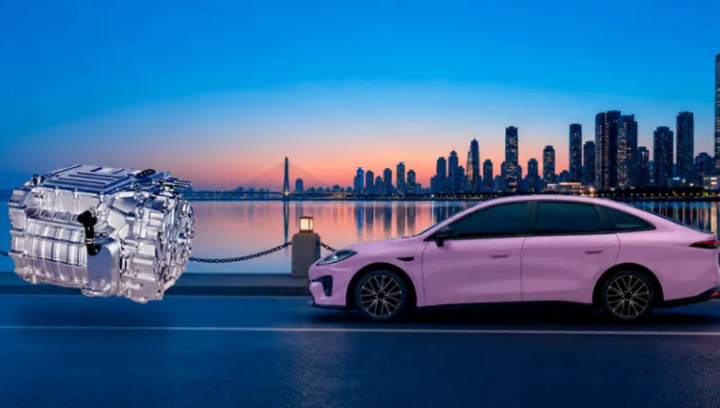
The global automotive race toward ultra-efficient electric drivetrains has crossed a decisive threshold in material science. Guangzhou Automobile Group (GAC Group), through its proprietary powertrain subsidiary and research institutes, has entered into an institutional strategic partnership with the Dongguan Institute of Materials Science and Technology under the Chinese Academy of Sciences (CAS). The stated milestone of this collaboration is the world first industrial mass production of an amorphous alloy electric drive system for commercial electric passenger vehicles. While Western tier-1 suppliers and legacy original equipment manufacturers (OEMs) have spent decades studying amorphous metals in theoretical laboratory environments and micro-scale transformer cores, this industrialization marks the formal transition of metallic glass technology into primary traction motor stator and rotor assemblies.
Historically, electric vehicle traction motors have predominantly relied on electrical non-oriented silicon steel (NOES) sheets, laminated to suppress eddy current losses. Over the past five years, silicon steel sheet thickness has been aggressively downscaled from 0.35 mm to 0.20 mm and even 0.15 mm to accommodate high motor rotational speeds exceeding 20,000 RPM. However, thin electrical steel hits a hard thermodynamic and mechanical ceiling: manufacturing yields plummet, stamping dies wear out rapidly, and high-frequency hysteresis loss continues to severely penalize vehicle highway cruising range. By pivoting to soft magnetic amorphous alloy ribbons—often referred to as metallic glass—GAC and the Chinese Academy of Sciences have solved core manufacturing hurdles that previously prevented this brittle, high-hardness material from being shaped into full-scale automotive motor cores.
Technical Architecture & Deep Engineering Teardown: Metallurgical Shifts in Electric Drive Units
To comprehend the engineering impact of the amorphous alloy electric drive, one must analyze the foundational physics of motor core electromagnetic dissipation. When an electric vehicle operates at sustained highway speeds or rapid acceleration cycles, traction motor rotational velocities frequently surpass 18,000 to 24,000 RPM. At these high fundamental switching frequencies, the magnetic core of the stator experiences alternating magnetic fluxes that induce two major energy parasitic drains: hysteresis loss and eddy current loss, collectively designated as total core loss (Pfe).
Standard high-grade silicon steel (e.g., 20W1200 or 25W1500) possesses an ordered crystalline atomic lattice. Under alternating magnetic fields, the movement of magnetic domain walls across this crystalline structure creates structural friction, dissipating valuable electrical power as heat. In stark contrast, amorphous alloys are manufactured by ultra-rapid solidification, cooling molten metal alloys (typically iron, boron, silicon, and carbon compositions) at rates exceeding one million degrees Celsius per second (10^6 K/s). This instantaneous freezing prevents crystal nucleations from forming, yielding an unordered, isotropic glassy structure with no grain boundaries. Consequently, magnetic domain rotation encounters minimal resistance, lowering coercive force (Hc) to sub-5 A/m levels compared to 20-40 A/m in advanced electrical steels.
Furthermore, amorphous ribbons feature an intrinsic electrical resistivity of approximately 130 to 145 microhm-centimeters (μΩ·cm), which is nearly three times greater than the 45 to 55 μΩ·cm characteristic of high-silicon electrical steels. Coupled with an ultrathin ribbon profile of just 0.025 mm (25 microns)—roughly one-sixth the thickness of the thinnest automotive-grade silicon steel sheets—eddy current paths are restricted. Engineering telemetry derived from the GAC-CAS development bench verifies that stator core iron losses are slashed by 50% to 65% across primary operational frequencies between 400 Hz and 1,200 Hz. When integrated into an 800V-to-900V Silicon Carbide (SiC) high-voltage architecture, the total system efficiency of the electric drive unit climbs beyond 94.5% over the comprehensive WLTC drive cycle, achieving peak motor efficiency figures above 98.2%.
| Engineering Metric | GAC-CAS Amorphous Alloy EDU | Tesla Model 3/Y (Hairpin IPM) | Porsche Macan EV (Permanent Magnet) | BYD Han EV (Blade Powertrain) |
|---|---|---|---|---|
| Core Lamination Material | Iron-based Amorphous Ribbon | Low-loss Silicon Steel (0.25mm) | High-frequency Silicon Steel (0.20mm) | Low-loss Silicon Steel (0.27mm) |
| Ribbon / Sheet Thickness | 0.025 mm (25 μm) | 0.25 mm (250 μm) | 0.20 mm (200 μm) | 0.27 mm (270 μm) |
| Iron Core Loss (at 400Hz/1.0T) | ~0.25 - 0.35 W/kg | ~1.10 - 1.30 W/kg | ~0.85 - 1.05 W/kg | ~1.20 - 1.45 W/kg |
| Inverter Semiconductor Tech | 800V Silicon Carbide (SiC) | 400V/800V Silicon Carbide (SiC) | 800V Silicon Carbide (SiC) | 800V Silicon Carbide (SiC) |
| Maximum Rotor Speed | 22,000 - 24,000 RPM | 18,500 - 20,000 RPM | 21,000 RPM | 18,000 RPM |
| WLTC Powertrain Efficiency | > 94.5% | ~92.0% - 92.5% | ~93.0% | ~91.5% - 92.0% |
| Thermal Core Dissipation Need | Low (reduced thermal load) | Moderate | Moderate | Moderate to High |
The primary technological barrier that prevented prior commercial adoption was the mechanical brittleness and saturation magnetic flux density (Bs) of metallic glass. While standard silicon steel can achieve saturation flux densities of 1.9 to 2.1 Tesla, traditional iron-based amorphous alloys traditionally capped out around 1.52 to 1.56 Tesla. The collaborative synthesis between GAC and the Dongguan Materials Research Institute developed proprietary transition-metal microalloying techniques, raising saturation induction closer to 1.68 Tesla while deploying advanced stress-free laser cutting and automated continuous stacking processes. This mitigates the micro-fracturing and interlaminar insulation degradation that historically caused premature stator failure during automated coil winding.
Supply Chain Dynamics & Bill of Materials (BOM) Economics
The transition of advanced metallurgical formulations from state laboratory benches into high-volume gigafactories underscores the structural speed of China automotive supply chain vertical integration. Historically, the global production of amorphous ribbons was dominated by industrial pioneers such as Metglas (a subsidiary of Hitachi Metals, now Proterial) in Japan. However, over the past decade, Chinese materials conglomerates like Advanced Technology & Materials (AT&M) and Qingdao Yunlu Advanced Materials have built massive, highly automated ribbon melt-spinning production plants, capturing over 60% of the worldwide volume in distribution transformer applications.
By teaming directly with the CAS Dongguan Institute—located in the core of the Guangdong-Hong Kong-Macao Greater Bay Area hardware and manufacturing cluster—GAC effectively bypassed external Tier-1 intermediaries. The supply chain matrix relies on an ultra-localized network of raw material purifiers, high-precision laser machining tool builders, and GAC wholly owned powertrain production entity, Juwan Technology and Ino-Power. This vertical synthesis directly influences the Bill of Materials (BOM) economics of electric vehicles in several ways:
- Raw Material Cost Offsets: While amorphous ribbons currently command an raw material processing cost premium of roughly 15% to 25% over baseline non-oriented electrical steel, the material total core loss reduction enables motor down-sizing. An amorphous motor requires fewer overall kilograms of core material and copper winding to deliver equivalent thermal and magnetic output.
- Battery Sizing Optimization: A 3% to 5% net operational efficiency improvement over combined drive cycles directly translates into battery capacity savings. In an 80 kWh battery electric vehicle, achieving identical vehicle range requires roughly 2.5 to 4.0 fewer kilowatt-hours of cells. At current LFP pack costs of $65/kWh and high-nickel NMC pack costs of $95/kWh, this reduces vehicle BOM by $160 to $380 per vehicle unit, fully absorbing any transient unit-cost delta of the novel alloy core.
- Manufacturing Automation Synergies: By pairing localized automated continuous stamping, adhesive bonding, and laser cutting lines developed within Guangdong manufacturing corridors, GAC production line cycle time (takt time) approaches parity with conventional hairpin motor stator production lines, unlocking economy-of-scale advantages inaccessible to lower-volume niche competitors.
Western Legacy OEM Impact & Competitive Fallout
The successful mass production of an amorphous alloy electric drive exposes a widening gap between Western legacy OEMs and Chinese automotive conglomerates regarding speed of fundamental materials research commercialization. Traditionally, legacy European and North American manufacturers (such as Volkswagen Group, Stellantis, Ford, and General Motors) have prioritized packaging optimization, modular skateboards, and digital infotainment interfaces, while delegating fundamental magnetic and metallurgical powertrain innovations entirely to legacy Tier-1 suppliers like Bosch, Continental, BorgWarner, or ZF.
However, Tier-1 suppliers face multi-year capital expenditure evaluation cycles and conservative automotive-grade qualification processes, routinely requiring 60 to 84 months to introduce foundational material deviations into serial vehicle production. GAC, supported by targeted national applied science networks via the Chinese Academy of Sciences, bridged this gap from pilot research to vehicle serial assembly in a consolidated 36-month timeframe. For Western automakers, this dynamic introduces severe competitive friction on multiple fronts:
In the Chinese domestic market, where retail EV price wars remain fierce and consumers scrutinize real-world range accuracy, electric vehicles equipped with next-generation amorphous drive units will exhibit noticeably superior highway range retention. Historically, EV range diminishes by 25% to 35% when cruising at 120 km/h due to high motor core frequencies and aerodynamic drag. Slicing core losses by half directly softens this degradation, granting domestic models a decisive performance narrative that Western joint-venture vehicles will struggle to match using off-the-shelf conventional silicon steel motors.
Furthermore, in critical export battlegrounds across Europe, Southeast Asia, and the Middle East, Western automakers are already contending with structural margin compression. If Chinese OEMs can deliver equal or superior real-world electric ranges while installing smaller, lighter, and less expensive battery packs due to high-efficiency amorphous powertrains, the systemic cost advantage enjoyed by Chinese electric vehicles will solidify further, widening the cost-per-kilometer gap beyond the reach of conventional manufacturing playbooks.
Geopolitical, Tariff & Regulatory Adaptation Strategies
As advanced Chinese EV innovations scale rapidly, they enter an increasingly fractured geopolitical landscape characterized by evolving trade barriers. The European Union has formalized anti-subsidy countervailing duties on imported battery electric vehicles manufactured in China, while the United States maintains elevated Section 301 tariffs reaching 100% on Chinese-built EVs. In response to these market dynamics, Chinese automotive leadership is steadily shifting from direct built-up vehicle export models toward sophisticated, localized supply chain integration frameworks.
Rather than relying solely on exporting fully assembled vehicles featuring the amorphous alloy drive units from ports in Guangzhou, GAC and broader Chinese industrial players are executing localized, regulatory-compliant manufacturing strategies:
- Regional Production Localization: Chinese OEMs are actively investing in local assembly and powertrain facilities across regions with favorable commercial and trade relationships, including Thailand, Malaysia, Brazil, Turkey, and selected European manufacturing centers such as Hungary and Spain. By exporting technical process IP, high-value stator ribbon metallurgy, and manufacturing automated equipment, OEMs can fulfill local value creation (LVC) requirements, ensuring tariff-compliant access to regional markets.
- Technology Integration Joint Ventures: Cross-border technical alliances are expanding. Much like Stellantis partnering with Leapmotor to deploy modular architectures globally, Tier-1 powertrain licensing agreements enable international legacy OEMs to access advanced motor components without violating regulatory origin rules or supply chain security directives.
- Supply Chain Traceability and ESG Compliance: By establishing verified carbon accounting across the metallurgical supply chain—specifically tracking the energy-intensive rapid solidification melting phase of amorphous ribbons—Chinese producers are aligning with the EU Carbon Border Adjustment Mechanism (CBAM) and strict European battery and vehicle lifecycle emission directives.
3-5 Year Strategic Market Outlook & Scenario Analysis
The industrial deployment of amorphous alloy traction motors marks the opening salvo of a broader metallurgical disruption across the automotive landscape. Over the coming half-decade, the speed and scale at which this technology displaces traditional silicon steel laminations will be shaped by supply constraints, processing economics, and competitive OEM responses.
Bull Case Scenario: Rapid Scaling and Global Powertrain Disruption
In this scenario, high-throughput laser processing and improved ribbon stamping technologies rapidly mature, pushing amorphous motor manufacturing costs down to absolute parity with premium 0.20 mm electrical steel by 2027. GAC scales production across its entire high-end sub-brands (including Aion and Hyptec), compelling rival domestic giants like BYD, Geely, and Chery to launch their own amorphous motor programs in partnership with domestic material specialists. High-speed highway real-world range improvements of 5% establish amorphous technology as a consumer must-have specification, forcing European and American OEMs to initiate fast-tracked technology licensing and localized joint ventures to remain competitive in global export hubs.
Base Case Scenario: High-Tier Specialization and Incremental Spread
Under the base trajectory, the unique mechanical challenges of amorphous ribbon handling—such as laser cutting edge brittleness and delicate stator stacking requirements—restrict high-volume deployment initially to premium EV platforms ($30,000+ segment) operating on 800V-plus architectures. Non-oriented electrical steel maintains its dominant market share in entry-level, low-cost urban commuter vehicles where high-speed motor efficiency gains are marginal. Over a 4-year horizon, amorphous drives capture roughly 12% to 18% of the premium battery electric vehicle market, functioning as a primary high-performance differentiator for domestic platforms before gradual, broader Tier-1 diffusion takes hold.
Bear Case Scenario: Manufacturing Bottlenecks and Alternative Metallurgies
In this conservative outlook, automated yield limitations and the high capital expenditure required to re-tool high-speed motor stator assembly plants slow industrial adoption beyond GAC initial pilot lines. Concurrently, rapid metallurgical innovations in ultra-thin microcrystalline silicon steels (e.g., 0.10 mm to 0.15 mm grades) and nanocrystalline soft magnetic composites bridge part of the high-frequency efficiency gap without requiring sweeping changes to legacy stamping press tooling. In this environment, amorphous drives remain a respected, high-efficiency niche solution confined to low-volume, flagship performance vehicles, while mainstream vehicle platforms continue to rely on traditional, incrementally optimized silicon steel architectures.
Strategic Implications for Executives & Institutional Investors
The operationalization of amorphous alloy electric drives provides critical insights for automotive executives, tier-1 procurement directors, and technology investment portfolios navigating the automotive shift:
- Rethink Powertrain BOM Allocation: Efficiency gains derived from deep material science directly diminish the reliance on oversized, expensive battery packs. Automotive procurement teams should re-evaluate their component spending, recognizing that an incremental upfront investment in high-efficiency soft magnetic motor alloys yields substantial net savings at the pack-level BOM.
- Audit Upstream Metallurgical Partnerships: Institutional investors must look beyond traditional battery cell chemistry (LFP vs. NMC vs. Solid-State) and scrutinize next-generation traction motor supply chains. Advanced soft magnetic materials, ribbon melt-spinning capacity, and precision laser assembly equipment represent high-margin, critical bottlenecks in next-wave EV engineering.
- Monitor the OEM-Academy Commercialization Velocity: The collaboration between GAC and the Chinese Academy of Sciences illustrates how tight structural ties between government research institutes and aggressive commercial OEMs bypass multi-year Tier-1 lag. Western OEMs must explore deeper co-development arrangements with domestic material laboratories to compress traditional 7-year design cycles.
- High-Frequency Traction is the New Efficiency Frontier: With Silicon Carbide (SiC) inverters now standard across premium architectures, the primary parasitic drain in the electric powertrain has shifted from switching conduction losses to motor magnetic core losses. Powertrain roadmaps that fail to incorporate advanced core materials—whether amorphous alloys, nanocrystalline metals, or soft magnetic composites—risk lagging significantly in real-world high-speed efficiency telemetry.