Is Xpeng’s 20.6% gross margin and aggressive Robotaxi rollout a game-changer for the global EV market?
Overview of Xpeng’s Q1 2026 Financials
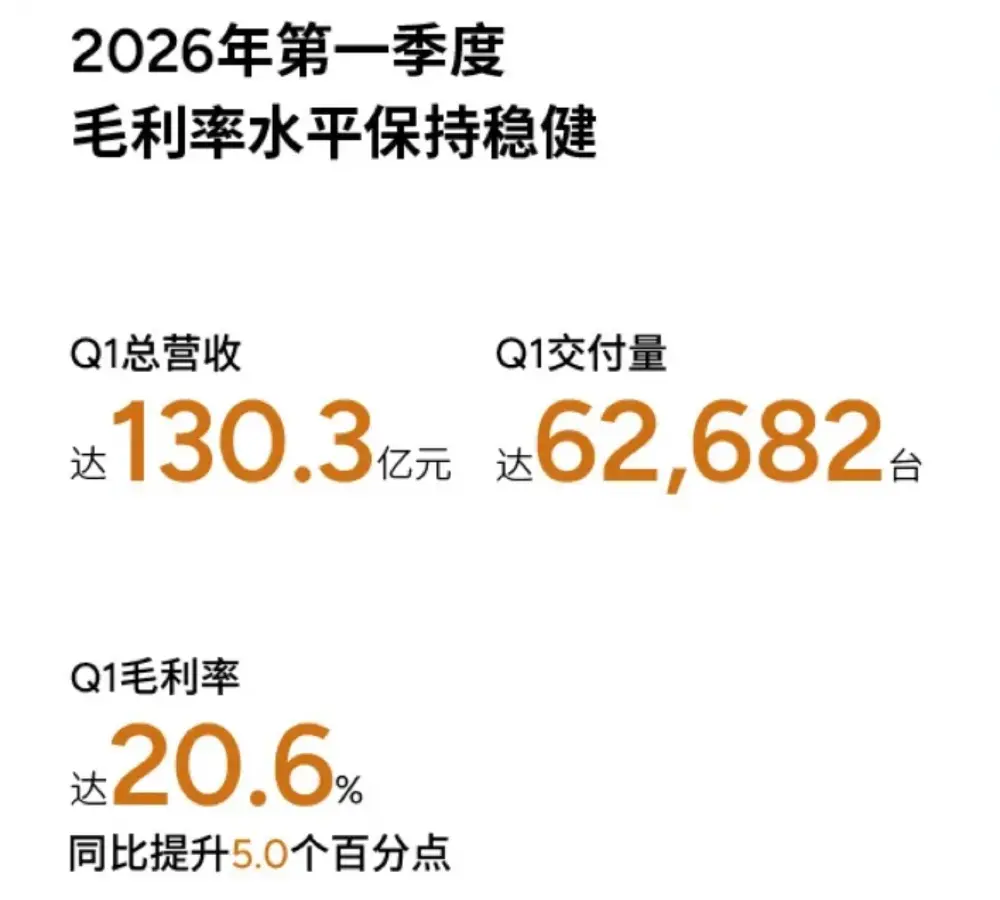
On May 28, 2026, Xpeng Motors released its Q1 2026 financial report, showcasing impressive growth and strategic advancements. The company delivered a total of 62,682 vehicles, generating a revenue of 130.3 billion RMB (approximately $19.5 billion USD). This includes 110.0 billion RMB from vehicle sales and 20.3 billion RMB from services and other income, marking a 41.2% year-over-year increase.
Key Financial Highlights
-
Gross Margin: Xpeng reported an overall gross margin of 20.6%, up by 5 percentage points from Q1 2025.
-
Cash Reserves: As of the end of Q1 2026, the company had 420.9 billion RMB in cash reserves.
Strategic Initiatives and Product Launches
Chairman He Xiaopeng highlighted that 2026 will see the delivery of four new models, including the GX, which was launched on May 20, 2026. The GX is available in both pure electric and super-range versions, with a starting price of 269,800 RMB. Within 12 hours of its launch, the GX received 24,863 pre-orders, indicating strong consumer interest.
Robotaxi and Humanoid Robots: A New Frontier
Xpeng has set ambitious goals for the mass production of Robotaxis and humanoid robots. The first fully self-developed Robotaxi, based on the GX model, rolled off the production line on May 18, 2026, in Guangzhou. This vehicle features a pure visual solution, equipped with the second-generation VLA model and four Turing AI chips, providing 3,000 TOPS of effective computing power. The system does not rely on high-precision maps or LiDAR, enabling cross-city deployment. Xpeng plans to start passenger demonstration operations in Guangzhou in the second half of 2026.
Additionally, the construction of the production base for the humanoid robot IRON began in February 2026 in Tianhe District, Guangzhou. The facility, covering approximately 110,000 square meters, is expected to start mass production by the end of 2026, with the robots entering Xpeng’s offline stores as guides in Q1 2027.
Advanced Driving Systems and Market Impact
Xpeng’s second-generation VLA system, officially rolled out in March 2026, has seen significant adoption. According to the company, over 50% of driving miles in the first month were completed using the VLA system, suggesting that advanced driving systems are becoming a key factor in purchasing decisions.
Global Context and Industry Implications
Recent reports from Reuters and Bloomberg highlight the growing importance of autonomous driving and robotics in the EV industry. Xpeng’s robust financial performance and strategic initiatives position it as a leader in this space. The company’s focus on cost control through in-house technology development and the expansion of overseas markets further solidify its competitive edge.
See our analysis on Advanced Driving Systems in China for more insights into the technological advancements and market dynamics.