While Western analysts continue to debate when Tesla will achieve true driverless autonomy, Chinese EV pioneer XPeng has quietly reached a massive milestone. In May 2026, XPeng officially rolled its first mass-produced XPeng L4 Robotaxi off the production line in Guangzhou. This represents not just a new vehicle, but a monumental shift in the global autonomous driving landscape.
Building on its reputation for rapid innovation, XPeng's new autonomous vehicle challenges Western market assumptions by bypassing high-definition maps and expensive LiDAR, relying instead on a vision-centric system powered by its own custom silicon.
The Turing AI Chip: XPeng's Bid for Vertical Integration
At the heart of the new XPeng L4 Robotaxi is the proprietary Turing AI chip. XPeng has integrated four of these self-developed chips into the vehicle, yielding an astonishing 3,000 TOPS of local computing power. This massive computing capability allows the system to operate with a response latency of under 80 milliseconds.
- Mapless & LiDAR-less Architecture: Unlike legacy L4 players like Alphabet's Waymo that rely heavily on expensive sensor suites and pre-mapped geofences, XPeng is pursuing a generalized approach. This design allows for rapid cross-city deployment without heavy infrastructure preparation.
- Vertical Integration: By designing the Turing AI chip in-house, XPeng mirrors Tesla's silicon strategy, bypassing traditional chipmakers like Nvidia to optimize both cost and hardware-software synergy.
Strong Delivery Momentum Fuels XPeng's R&D Machine
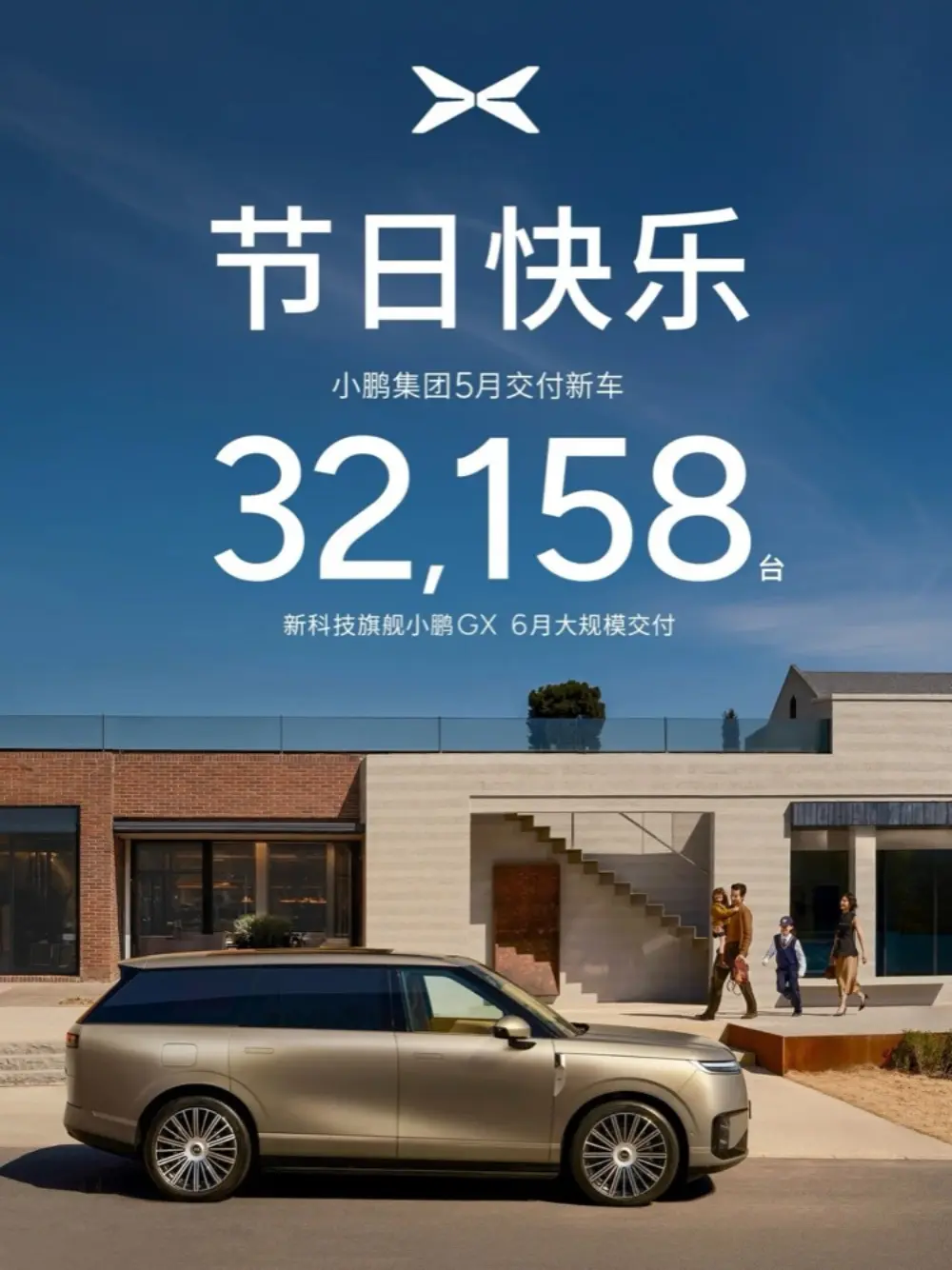
Autonomous driving R&D is an expensive game, but XPeng's commercial division is providing the necessary cash flow. In May 2026, XPeng reported 32,158 vehicle deliveries, showcasing strong market demand.
A significant driver of this growth is the newly launched XPeng GX, which debuted on May 20. Offering both pure electric and super range-extender options across eight trims, the GX secured over 24,800 major orders within just 12 hours of launch. Notably, the high-margin 'Ultra' flagship trim accounted for more than 80% of these orders, hinting at stronger average selling prices (ASPs) and healthier margins for the automaker.
(Related reading: How China's changing ADAS regulations are shaping EV valuations.)
Why Western Investors and OEMs Must Pay Attention
For years, Western automakers viewed Chinese OEMs primarily as fast followers in EV battery manufacturing but laggards in core software. The deployment of the XPeng L4 Robotaxi completely dismantles this narrative.
According to reports from Bloomberg and other global financial media, the race for autonomous ride-hailing is accelerating rapidly. XPeng's ability to transition from conceptual AI designs to mass-produced, chip-integrated L4 vehicles in a major tier-1 Chinese city like Guangzhou demonstrates what industry insiders call 'China-speed.'
Key Strategic Takeaways:
- The End of the Sensor Wars: XPeng's pivot away from LiDAR in its flagship L4 platform signals that neural network-based vision systems are winning the autonomous driving paradigm war.
- Geopolitical Resilience: Developing proprietary Turing AI chips insulates XPeng from potential semiconductor supply chain shocks and Western export restrictions.
- Imminent Commercialization: Public road L4 testing is already underway in Guangzhou, with a broader roll-out scheduled for Q3 2026.
As XPeng scales its robotaxi operations, Western OEMs and investors can no longer afford to ignore China's software capability. The gap between Western perception and Chinese reality in autonomous driving is closing faster than ever.