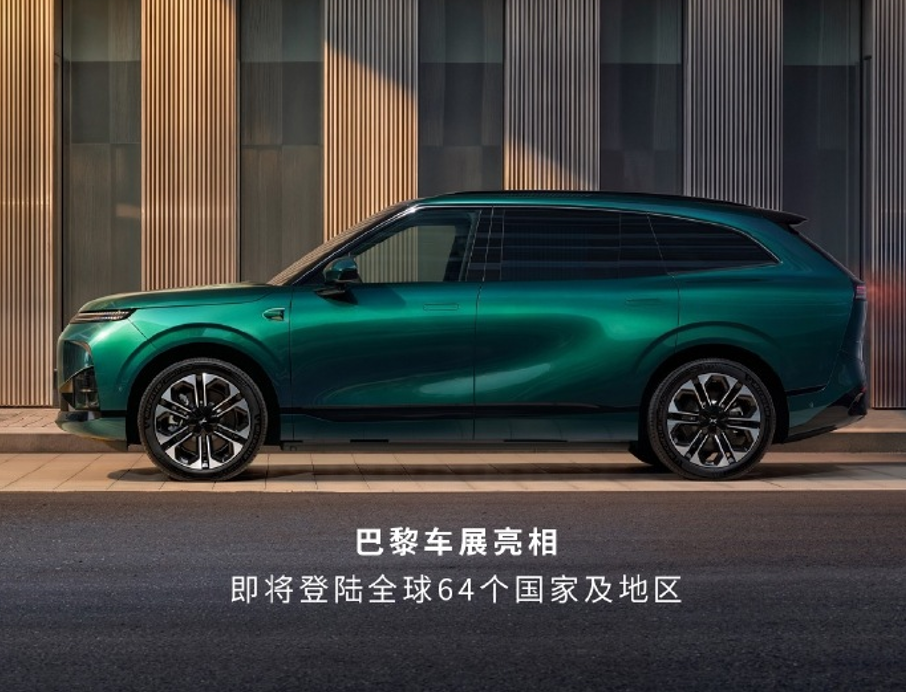
XPeng Motors has confirmed that its next-generation AI flagship SUV, the G9L, will make its global debut at the Paris Motor Show on October 12, with a planned rollout to 64 countries and regions. The announcement marks one of the most aggressive international expansion plays by a Chinese EV maker to date — and it lands squarely in the middle of an escalating EU trade standoff over Chinese electric vehicles.
For Western auto executives and institutional investors, the G9L is not merely another model launch. It is a stress test of whether Chinese software-defined vehicle (SDV) architecture, built around domestic AI compute and LFP battery chemistry, can win over European consumers who remain skeptical of both the technology's long-term reliability and its geopolitical provenance.
From Guangzhou to Paris: The Strategic Logic Behind XPeng's European Gambit
XPeng's decision to debut the G9L globally in Paris — rather than at a domestic auto show — reflects a broader shift in the company's strategic calculus. China's domestic EV market has become a brutal price-war battleground where average selling prices have declined for six consecutive quarters. For XPeng, which reported a net loss of RMB 1.04 billion in Q1 2025, export markets represent not just growth but survival.
The 64-country rollout plan is notably ambitious for a company that delivered approximately 91,507 vehicles in the first half of 2025. That is a fraction of BYD's monthly volume. Yet XPeng's strategy diverges from BYD's volume-at-all-costs approach. The company is positioning the G9L as a premium AI flagship, targeting European consumers who value software capability and advanced driver assistance systems (ADAS) over raw range figures.
This positioning carries historical echoes. When Chinese smartphone makers like Huawei and Xiaomi entered Europe in the 2010s, they initially competed on price before migrating upmarket through software ecosystems. XPeng is attempting a similar trajectory in automotive — but the stakes are higher, the regulatory barriers steeper, and the capital requirements far more punishing.
Inside the G9L: AI Compute, LFP Chemistry, and the SEPA 2.0 Platform
The G9L is built on XPeng's SEPA 2.0 (Smart Electric Platform Architecture), a 800V high-voltage platform that supports silicon carbide (SiC) MOSFET inverters and DC fast charging. According to company disclosures, the platform enables a charging rate of up to 4C on compatible DC infrastructure, translating to approximately 10–80% state of charge in under 20 minutes under optimal conditions.
Battery specifications remain partially undisclosed. Industry estimates suggest the G9L will offer a 78–92 kWh LFP battery pack from CATL or CALB, with CLTC range figures in the 600–700 km bracket. Notably, XPeng has not confirmed whether a high-nickel ternary (NCM) variant will be offered for European markets — a critical omission given that LFP chemistry suffers approximately 30–40% range degradation at temperatures below -10°C, a scenario common across Northern European markets where premium SUV demand is concentrated.
Turing AI Chip and XNGP 5.0 Autonomy
XPeng's proprietary Turing AI chip, announced in 2024, is central to the G9L's positioning. The chip reportedly delivers 30 TOPS (INT8) per unit, with the G9L carrying multiple units to support the XNGP 5.0 end-to-end neural network architecture. XPeng claims the system can operate without HD maps in urban environments — a technical claim that, if verified, would place it ahead of most Western OEMs' current production ADAS systems.
However, the critical caveat is regulatory certification. XNGP 5.0 has been validated primarily under Chinese regulatory frameworks where data collection and geo-fencing rules differ fundamentally from EU GDPR and UNECE R157 requirements. No independent European regulatory audit of XPeng's end-to-end autonomy stack has been published.
| Specification | XPeng G9L | Tesla Model Y (EU) | BMW iX xDrive50 | Hyundai Ioniq 5 (E-GMP) |
|---|---|---|---|---|
| Platform Voltage | 800V (SEPA 2.0) | ~400V | ~400V | 800V (E-GMP) |
| Battery Chemistry | LFP (est.) | LFP / NMC | NMC | NMC / LFP |
| Peak DC Charge Rate | ~4C (claimed) | ~3C (V3 SC) | ~2C | ~3.5C (350 kW) |
| ADAS Compute | Turing AI (est. 30 TOPS/unit) | HW4 (~72 TOPS) | Mobileye EyeQ5 (24 TOPS) | Mobileye / HDP (not disclosed) |
| Autonomy Approach | End-to-end NNP, no HD map (claimed) | FSD Vision (no radar) | Level 2+ w/ HD map | HDP w/ HD map |
| EU Tariff Status | 35.3% countervailing duty (est.) | Made in Berlin (exempt) | Made in Germany (exempt) | Made in Czech Republic (exempt) |
Battery Supply Chain, SiC Inverters, and the Real Cost of European Ambition
XPeng's supply chain strategy relies heavily on Chinese tier-1 suppliers. CATL remains the primary battery cell partner, though CALB has been qualified as a secondary source. The SiC inverters are sourced primarily from STMicroelectronics and Infineon — a notable non-Chinese dependency that provides a degree of supply chain resilience against potential Chinese export controls on power electronics.
Bill of Materials (BOM) cost estimates for the G9L, based on teardown analyses of comparable SEPA 2.0 vehicles, suggest a production cost of approximately $28,000–$32,000 per unit. With EU countervailing duties applied at the point of import, the landed cost rises to approximately $38,000–$44,000. XPeng has not publicly disclosed European pricing, but competitive positioning against the Tesla Model Y (€44,990 in Germany) and the BMW iX (€77,300) suggests a target MSRP of €48,000–€55,000.
That price point creates a margin squeeze. Unlike BYD, which has vertically integrated battery production through FinDreams and can absorb tariff costs more effectively, XPeng remains dependent on external cell suppliers. Industry estimates suggest XPeng's automotive gross margin was approximately 8–10% in 2024 — well below Tesla's 17–18% and BMW's automotive segment margin of 9–10% (which benefits from higher ASPs and software revenue).
Without margin relief, XPeng's 64-country rollout risks becoming a volume-dilutive exercise. The company must either localize European production — a capital-intensive undertaking estimated at $500 million–$1 billion for a greenfield plant — or accept compressed margins on imported units.
The Competitive Landscape: Who Gains, Who Loses, and Who Watches From the Sidelines
XPeng's entry into 64 markets poses the most direct threat to Stellantis, Renault, and Volkswagen in the European mid-premium SUV segment. These OEMs have historically dominated the €45,000–€55,000 price band but have been slower to deploy 800V architectures and end-to-end ADAS. The G9L's combination of 800V charging, AI-centric marketing, and competitive pricing could erode their market share in Southern and Eastern European markets where brand loyalty is less entrenched.
Tesla is less exposed. Its Berlin Gigafactory production exempts it from EU countervailing duties, and its Supercharger network remains a structural advantage that XPeng cannot replicate without substantial capital expenditure. However, Tesla's refusal to adopt an 800V architecture across its lineup means the G9L can claim a legitimate charging-speed advantage in marketing materials.
Hyundai-Kia is arguably the best-positioned Western OEM. The E-GMP platform already delivers 800V architecture, 350 kW charging, and competitive ADAS — and crucially, Hyundai produces the Ioniq 5 and Kia EV6 in Europe (Czech Republic and Slovakia), avoiding tariffs entirely. Hyundai's strategic decision to reduce exposure to the Chinese domestic retail market has preserved its margins while XPeng and its Chinese peers fight a domestic price war.
Chinese competitors present a more complex picture. BYD has already established a European presence with the Atto 3, Seal, and Dolphin, and is building a manufacturing plant in Hungary. NIO has pursued a battery-swap model in Europe but has struggled with adoption. XPeng's differentiation lies in its software-first positioning — but software alone rarely wins mass-market consumers without charging infrastructure and service networks.
The Reality Check: What XPeng's Paris Debut Doesn't Tell You
The press release says the G9L is an 'AI flagship SUV' with 'end-to-end autonomy.' The engineering reality suggests several claims require independent validation.
First, the 4C charging claim. While 4C rates are theoretically achievable with LFP chemistry under controlled laboratory conditions, sustained 4C charging accelerates lithium plating and dendrite formation, degrading cycle life. CATL's own Shenxing battery — the closest commercial equivalent — is rated at 4C but with a warranted cycle life of approximately 1,000 cycles to 80% state of health. For a vehicle expected to last 150,000–200,000 km, that cycle life may prove marginal under real-world European driving conditions.
Second, the end-to-end autonomy claim. XPeng's XNGP 5.0 has demonstrated impressive capabilities in Chinese cities, but Chinese urban environments differ fundamentally from European ones: road geometry, signage, pedestrian behavior, and regulatory constraints all diverge. The system has not passed UNECE R157 audits, and XPeng has not announced a European homologation timeline for Level 3 functionality.
Third, the 64-country rollout. Announcing a 64-country plan is not the same as executing one. Distribution networks, service infrastructure, homologation requirements, and local financing partnerships each represent multi-year undertakings. XPeng's current European footprint is limited to a handful of markets (Norway, Netherlands, Germany, France). Scaling to 64 countries within a reasonable timeframe would require partnerships with large dealer groups — partnerships that come with margin concessions.
Finally, the profitability question. XPeng's net loss in Q1 2025 was RMB 1.04 billion. The 64-country rollout will require significant upfront investment in marketing, distribution, and compliance. If European volumes ramp slower than projected — a common outcome for Chinese brands entering unfamiliar markets — XPeng's cash burn could accelerate.
EU Tariffs, Localization Pressure, and the Geopolitical Minefield
The European Commission's countervailing duties on Chinese-built EVs — ranging from 7.8% to 35.3% depending on the manufacturer — represent the single most significant regulatory obstacle to XPeng's European ambitions. XPeng's estimated duty rate, based on its level of cooperation with the EU investigation, is approximately 20.7%, which — combined with the standard 10% import tariff — results in a total duty burden of over 30%.
This creates a structural disadvantage. Tesla's Berlin-made Model Y faces no such duties. BMW's iX, produced in Dingolfing, is equally exempt. Hyundai's Ioniq 5, manufactured in the Czech Republic, faces neither tariffs nor quota restrictions.
XPeng's options are limited. Localizing production in Europe would require either a greenfield plant (capital expenditure of $500 million–$1 billion, timeline of 3–4 years) or a contract manufacturing partnership with an established European OEM. The latter is more capital-efficient but raises questions about IP protection and brand control.
An alternative strategy — increasing local content through European battery sourcing and assembly — could potentially reduce the effective tariff rate, but EU rules of origin require substantial transformation, not mere assembly, for tariff exemption. XPeng has not announced any European battery sourcing agreements, though industry speculation suggests discussions with Northvolt (Sweden) and ACC (France) may be underway.
Beyond tariffs, XPeng must navigate EU data privacy regulations (GDPR), which restrict the cross-border transfer of vehicle data. XPeng's AI systems rely on massive Chinese data sets for training; replicating that training in Europe would require either federated learning architectures or European data centers — both costly propositions.
Bull Case: Premium Positioning Wins Over Tariff Headwinds
XPeng successfully differentiates the G9L on software capability, capturing 2–3% of the European mid-premium SUV segment by 2027. European consumers, particularly in tech-forward markets like Norway and the Netherlands, embrace the AI-centric value proposition. XPeng secures a European manufacturing partnership by 2028, eliminating tariff exposure and improving gross margins to 15%+. The 64-country rollout is executed through strategic distribution partnerships with minimal capital outlay.
Base Case: Incremental Gains Amidst Persistent Friction
XPeng achieves modest European volumes of 15,000–25,000 units annually by 2027, concentrated in 10–15 markets where distribution partnerships are strongest. Tariffs compress margins, but XPeng's cost structure and Chinese supply chain efficiency allow it to remain price-competitive. The 64-country target is quietly revised downward to 25–30 countries as management prioritizes profitability over geographic reach. Gross margins hover at 10–12%, insufficient to fund aggressive expansion but adequate to sustain operations.
Bear Case: Tariffs, Delays, and Cash Burn Force Retrenchment
EU tariffs prove insurmountable without localization, and XPeng's capital constraints prevent a European manufacturing investment. European volumes disappoint, reaching only 5,000–10,000 units annually. The G9L's LFP battery underperforms in Northern European winter conditions, damaging brand reputation. Competitors like Hyundai and Tesla maintain structural cost advantages. XPeng is forced to deprioritize Europe and refocus on domestic and Southeast Asian markets, writing off significant European investments.
Strategic Takeaways for Executives and Investors
- Watch for localization announcements. XPeng's European viability hinges on whether it can secure a manufacturing partnership or greenfield plant. Any such announcement would be a bullish signal; continued reliance on Chinese exports implies margin compression.
- Monitor LFP cold-weather performance data. Independent winter testing of the G9L in Nordic markets will be the critical litmus test for its premium positioning. Poor cold-weather range could undermine the entire European strategy.
- Track EU regulatory developments on ADAS certification. XPeng's autonomy claims require UNECE R157 validation to be marketable as more than Level 2. A favorable regulatory outcome would represent a significant competitive differentiator.
- Benchmark against Hyundai-Kia's decoupled model. Hyundai's strategic pivot away from Chinese domestic market exposure has preserved margins while scaling 800V EVs. XPeng's trajectory will test whether Chinese OEMs can replicate this margin discipline while expanding globally.
- Evaluate distribution partnership terms. The 64-country plan will require dealer groups and importers to take on inventory risk. The terms of these partnerships — including margin splits and marketing cost-sharing — will determine whether XPeng's European expansion is accretive or dilutive to earnings.
The Verdict: A Bold Bet with Unresolved Physics and Politics
XPeng's G9L global launch at the Paris Motor Show is a strategically rational move for a company that cannot win China's domestic price war on volume alone. The AI-first positioning differentiates it from BYD's cost leadership and NIO's battery-swap niche.
But the 64-country rollout plan reads more like an aspiration than an executable strategy. Without European manufacturing, tariff-exempt battery sourcing, or validated autonomy certification, XPeng faces a structural disadvantage against Tesla, Hyundai, and European incumbents that have already localized production.
The engineering claims — 4C charging, end-to-end autonomy, 800V architecture — are credible on paper but require independent verification under European conditions. The LFP chemistry limitation for cold-weather performance remains unresolved. And the profitability math, given XPeng's current burn rate and gross margin profile, is unforgiving.
For Western OEMs, the G9L represents a credible competitive threat in the mid-premium segment — but not yet an existential one. The more instructive lesson lies in Hyundai-Kia's decoupled strategy: reducing exposure to China's domestic price war while scaling high-margin 800V architectures in tariff-protected markets may prove the more sustainable path to global EV profitability than chasing geographic breadth at the expense of margin depth.
The Paris Motor Show will provide the first concrete specifications. But the real verdict on XPeng's European gambit won't be delivered for 24–36 months, when the interplay of tariffs, consumer adoption, and cash flow determines whether ambition translates into sustainable market presence.