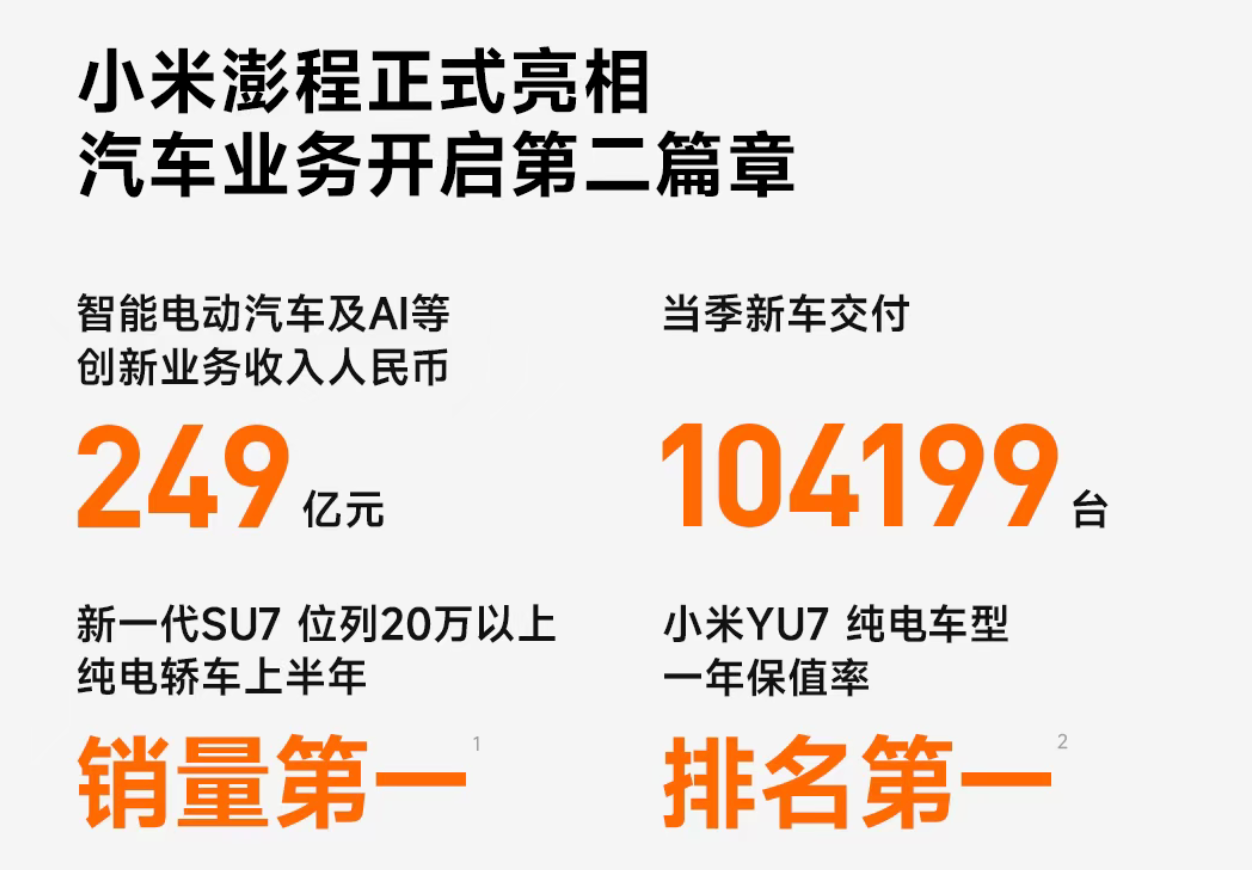
On August 18, 2026, Xiaomi Group (01810.HK) released its second-quarter financial report. Despite the challenges posed by rising prices of storage components, which have impacted the growth of its smartphone business, the company's electric vehicle (EV) segment has seen a significant increase in revenue, now accounting for 22% of total revenue.
Revenue Breakdown and Strategic Implications
The recent financial results highlight a notable shift in Xiaomi's business strategy. The EV segment's revenue share has risen to 22%, up from 15% in the previous quarter. This growth is attributed to the successful launch of new models and increased production capacity. As a Shanghai-based logistics professional, I can attest that this move aligns with the broader trend of Chinese tech companies diversifying into the automotive sector, driven by the rapid innovation and growth in the EV market.
Market Positioning and Competitive Landscape
Xiaomi's increasing focus on the EV market positions it as a strong competitor to established players like Tesla, NIO, and BYD. The company's technological integration and cross-border collaboration are key factors in this strategic shift. By leveraging global supplier expertise and focusing on cost-efficiency and ESG initiatives, Xiaomi aims to create a localized regional footprint and enhance supply chain compliance.
Challenges and Opportunities
While the rise in storage component prices has put pressure on the smartphone business, the EV segment's growth provides a buffer. Xiaomi's strategic localization and trade adaptability are critical in navigating these challenges. The company's investment in R&D and advanced manufacturing technologies will be essential for maintaining its competitive edge in the EV market.