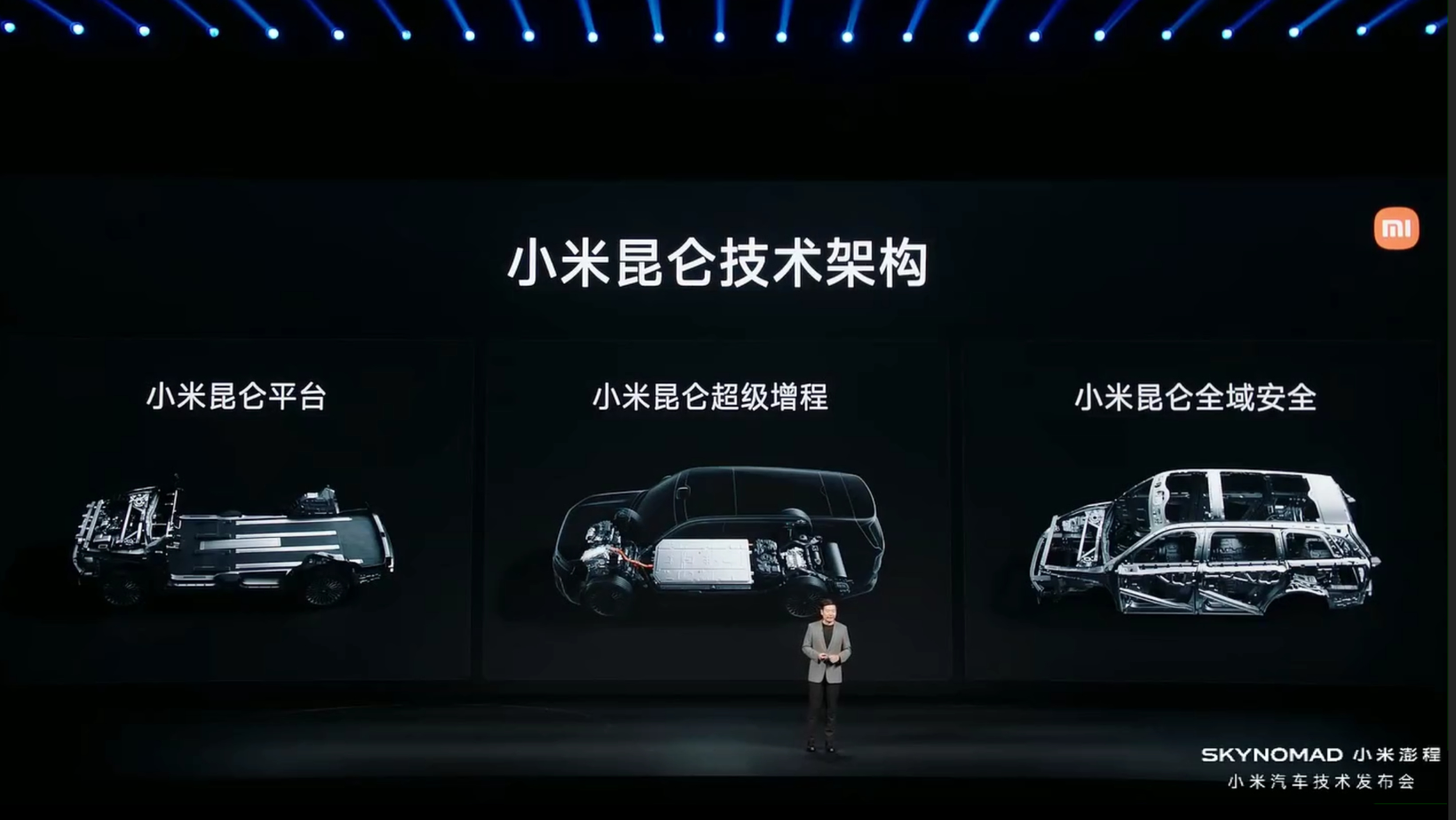
The global automotive landscape is witnessing a massive strategic realignment as tech giant Xiaomi expands its market-disrupting portfolio. Following the commercial success of the pure electric SU7 sedan, the official launch of the Xiaomi Kunlun EREV architecture alongside the Pengcheng N70 Max and N90 M models marks a monumental shift. As a Shanghai-based automotive analyst monitoring supply chain pivots in real-time, this development signals that the extended-range electric vehicle (EREV) segment is no longer just a transitional phase, but a primary technological battleground.
Decoding the Xiaomi Kunlun EREV Architecture
The EREV powertrain—which combines a purely electric drive system with an internal combustion engine acting solely as a generator—has exploded in popularity across China due to its ability to resolve highway range anxiety while maintaining electric efficiency. Xiaomi's entry into this segment is not merely derivative; the brand's proprietary Xiaomi Kunlun EREV architecture integrates highly advanced thermal management, high-performance battery integration, and smart cabin synergy powered by HyperOS.
Key technical focus areas for the Kunlun platform include:
- Advanced Thermal Integration: Optimizing heat dissipation from both the battery and generator to maximize system longevity.
- Ultra-High Power Generation Efficiency: Achieving higher conversion rates of liquid fuel to electricity, reducing operating costs compared to traditional plug-in hybrid electric vehicles (PHEVs).
- Ecosystem Synergy: Unifying the vehicle's powertrain controller with Xiaomi's massive consumer electronic ecosystem for real-time diagnostics and over-the-air (OTA) calibration.
Strategic Realignment: Why Xiaomi is Embracing EREVs
To Western investors and global OEMs, Xiaomi's strategic pivot highlights a broader consensus in the Chinese domestic market: pure battery electric vehicles (BEVs) face growth resistance in mid-to-large family SUV segments. EREVs offer several competitive advantages:
- Reduced Battery Cost Risk: By utilizing smaller batteries paired with highly efficient generator engines, EREVs protect manufacturer margins from volatile battery raw material prices.
- Broadened Addressable Market: This technology caters perfectly to consumers without access to private charging infrastructure or those in regions with cold winter climates, where pure BEVs lose operational efficiency.
- Immediate Volume Scaling: The Pengcheng SUV series (N70 Max and N90 M) targets premium family segments where market leaders currently command significant market share.
The Competitive Landscape: Benchmarking EREV Powerhouses
The premium hybrid market in China is currently dominated by specialized NEV manufacturers. To understand where Xiaomi's platform stands, a comparison of strategic focuses is essential:
| Brand & Platform | Core Technology Focus | Strategic Positioning |
|---|---|---|
| Xiaomi (Kunlun Architecture) | Ecosystem integration, system modularity, fast technical iteration. | Tech-forward premium family SUVs (Pengcheng Lineup). |
| Li Auto (L-Series) | Interior space comfort, high-efficiency range extenders. | Luxury family passenger market. |
| AITO / Huawei (HIMA) | Intelligent driving (ADAS), deep operating system integration. | Premium intelligent luxury crossovers. |
Implications for Western OEMs and Global Investors
For international OEMs and automotive suppliers, Xiaomi's rapid development of the Kunlun platform demonstrates unparalleled agility. Traditional product lifecycles of 4 to 5 years are being compressed to under 2 years in China's competitive tech-to-automotive pipeline. Western organizations can learn from this cross-border technology integration and active strategic sourcing. Global tier-1 suppliers must position their hardware to be highly compatible with modular EREV architectures if they hope to capture a share of this rapid market expansion.