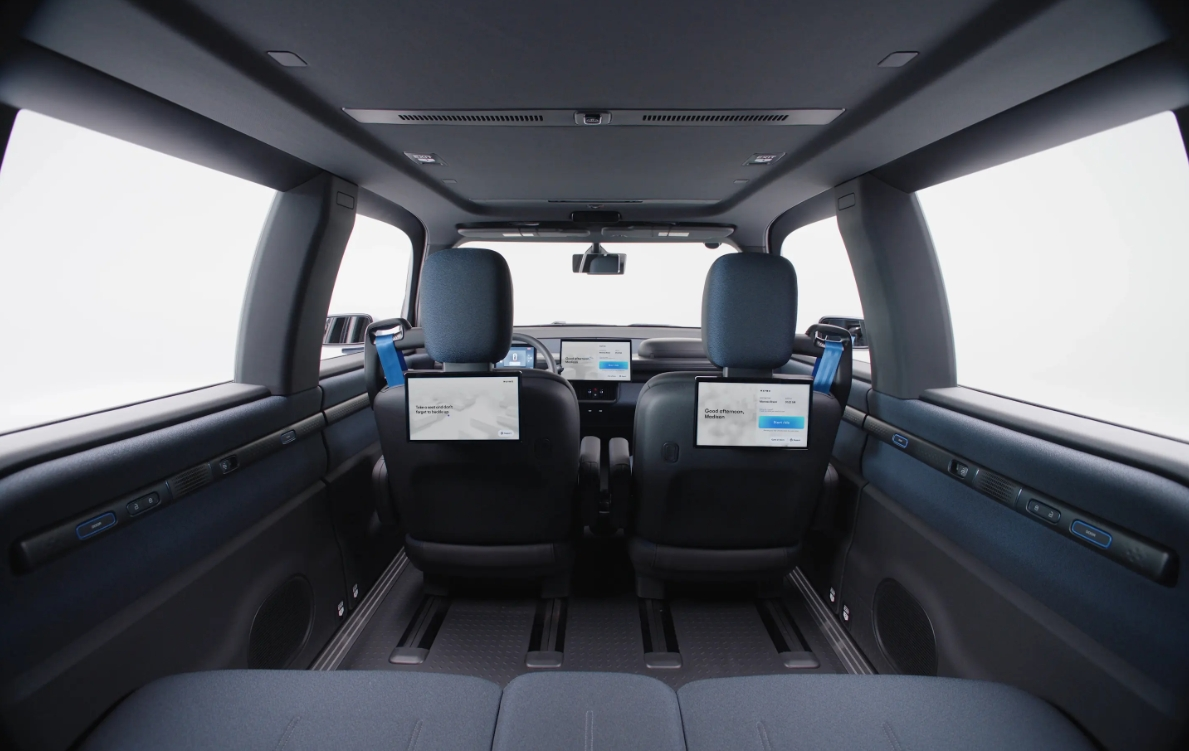
In the high-stakes global race for Level 4 autonomous driving dominance, hardware efficiency is fast becoming the ultimate battleground. Alphabet's self-driving subsidiary, Waymo, recently announced a pivotal shift in its hardware architecture: the development of a custom Application-Specific Integrated Circuit (ASIC) designed specifically for its next-generation Robotaxis. This new autonomous driving compute platform is engineered to deliver over 1,000 TOPS (Trillion Operations Per Second) of processing power, representing a massive leap in vertical integration and thermal-to-compute efficiency.
As a seasoned hardware analyst tracking global autonomous vehicle (AV) supply chains, I see this move as a direct response to the unique physical limitations of electric Robotaxis. Integrating high-performance computing platforms into electric vehicles (EVs), such as the Geely Zeekr-based platforms Waymo plans to deploy, requires balancing extreme computational demands with strict power and thermal budgets. Every watt consumed by an AV supercomputer is a watt taken away from passenger cabin HVAC and driving range.
The Architecture Shift: Why Custom ASICs Matter
To date, most AV developers have relied on general-purpose Graphics Processing Units (GPUs) or highly flexible System-on-Chips (SoCs) like Nvidia's DRIVE platform. While powerful, general-purpose silicon contains legacy architectures designed to handle a wide variety of graphical and computational tasks.
An ASIC, by contrast, is hard-coded for specific mathematical operations—specifically, the low-precision matrix multiplication that drives deep neural networks (DNNs) used in machine perception, sensor fusion, and path planning. By optimizing the silicon layout solely for Waymo's proprietary AI models, this custom chip minimizes unnecessary transistor switching. This results in significantly higher throughput per watt, allowing Waymo to achieve 1,000+ TOPS without draining the vehicle's high-voltage traction battery or requiring exotic, heavy liquid-cooling loops.
Comparative Analysis: Waymo vs. Chinese AV Compute Platforms
How does Waymo's custom chip compare to the leading compute architectures deployed by major Chinese autonomous driving developers? While Western coverage often focuses solely on US-based tech, Chinese OEMs and Tier 1 suppliers have been pioneering highly integrated, multi-chip architectures for years to support rapid local commercialization.
| Developer / Platform | Silicon Source | Reported Compute (TOPS) | Architecture Strategy |
|---|---|---|---|
| Waymo Next-Gen | Custom Google ASIC | 1,000+ | In-house custom ASIC optimized for proprietary DNN models. |
| NIO Adam Platform | 4x Nvidia DRIVE Orin | 1,016 | Multi-chip redundancy using off-the-shelf automotive SoCs. |
| Huawei MDC 810 | Huawei Ascend (In-house) | 400+ | Proprietary AI core architecture focused on localized regional supply security. |
| Horizon Robotics Journey 6 | Horizon Custom BPU | Up to 560 | Domain-specific Brain Processing Unit designed for cost-efficient ADAS & L4. |
While consumer-facing Chinese brands like NIO have reached the 1,000 TOPS threshold by pooling multiple Nvidia chips (as seen in their 4-chip Adam platform), this approach carries high hardware cost and power overhead. Waymo's monolithic or tightly integrated ASIC design aims to deliver similar or superior throughput on a single, much more cost-effective silicon footprint.
Strategic Implications: Vertical Integration and Supply Chain Resilience
Waymo's custom silicon strategy highlights a broader industry trend toward strategic vertical integration. By designing its own processors, Waymo achieves several strategic advantages:
- Algorithm-Silicon Co-design: Hardware engineers can adapt the silicon pathways to perfectly match the evolving software architecture, bypassing the standard 3-year design cycles of external chip vendors.
- Unit Cost Optimization: While the non-recurring engineering (NRE) costs of designing an ASIC are exceptionally high, the per-unit cost at volume is significantly lower than purchasing premium commercial chips.
- Platform Independence: Developing custom intellectual property (IP) insulates Waymo from the supply and pricing pressures of the highly consolidated global semiconductor supply chain.
In China, a parallel wave of localized hardware design is unfolding. Companies like Baidu (with its Kunlun chips) and Geely-backed ECARX are actively pursuing custom or semi-custom silicon to optimize their ADAS and L4 Robotaxi software stacks. This suggests that the future of autonomous mobility will not just be won on software algorithms, but on who can build the most efficient, integrated, and reliable physical computing platforms.