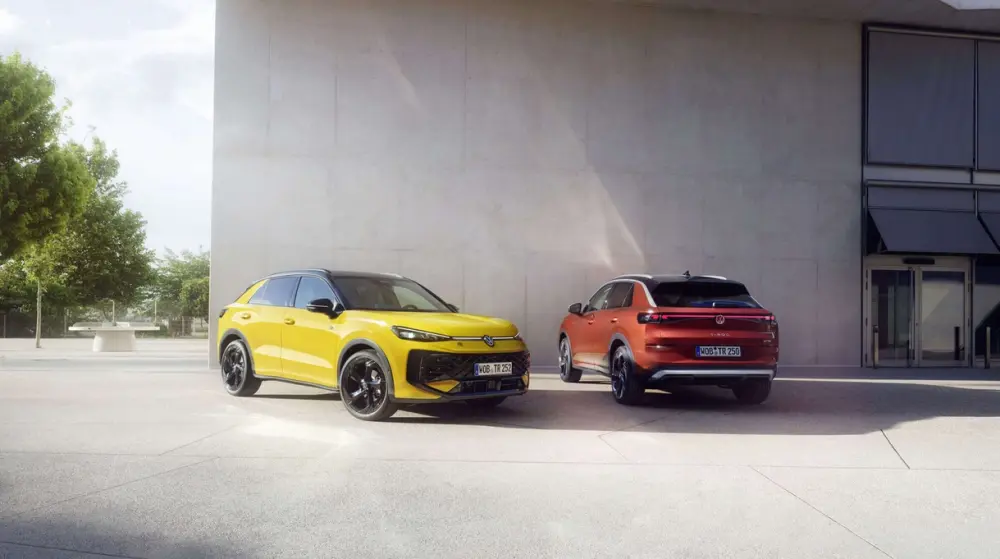
In a historic role reversal that highlights the shifting tectonic plates of the global automotive industry, Volkswagen is facing a paradigm shift: importing its own Chinese-engineered intellectual property back to Europe. As the German industrial giant grapples with unprecedented threats of domestic factory closures and structural inefficiencies, Olaf Lies, the Economics Minister of Lower Saxony—a state holding a vital seat on VW's supervisory board—has floated a radical solution. He proposed utilizing Volkswagen reverse technology transfer by manufacturing vehicles designed and developed in China directly on German assembly lines to protect local jobs.
The Shocking Shift to Reverse Technology Transfer
For decades, Western automotive strategy followed a predictable playbook: design advanced technology in Wolfsburg, Detroit, or Stuttgart, and export it to joint ventures in China. Today, that dynamic has completely inverted. Facing intense competition from agile domestic Chinese OEMs like BYD and Geely, Volkswagen has spent billions accelerating its 'In China, for China' development strategy.
This localized R&D push led to the creation of the Volkswagen China Technology Company (VCTC) in Hefei, alongside strategic partnerships with Chinese EV pioneer XPeng to co-develop the China Electronic Architecture (CEA). Now, with European EV demand lagging and German production costs soaring, stakeholders are realizing that Volkswagen's fastest path to competitive, affordable electric vehicles might run through its Chinese development pipelines.
Comparing the Platforms: Why China-Speed Matters
To understand why a Volkswagen reverse technology transfer is being considered, one must look at the immense cost and technology gap between VW’s European platforms and its Chinese counterparts. The legacy MEB platform, while robust, has struggled with high production costs and software integration bottlenecks. In contrast, the upcoming China Main Platform (CMP) targets a massive 40% cost reduction by leveraging local supply chains and rapid iteration cycles.
| Metric / Feature | European MEB Platform | China Main Platform (CMP) / CEA |
|---|---|---|
| Primary R&D Location | Germany (Wolfsburg) | China (Hefei / Guangzhou) |
| Development Cycle | 48+ Months | ~30-36 Months ('China-Speed') |
| Cost Reduction Target | Baseline (High European labor/energy) | Up to 40% cost reduction |
| Software Integration | In-house Cariad (delayed updates) | Co-developed with XPeng (high-efficiency ADAS) |
The Strategic Obstacles of Importing China to Europe
While the proposal of a Volkswagen reverse technology transfer sounds pragmatically logical on paper, executing it in Germany presents severe structural and geopolitical bottlenecks. As Shanghai-based market analysts, we identify three critical hurdles:
- The Cost-Localization Paradox: The cost advantages of platforms like CMP and CEA are heavily dependent on China's hyper-localized, highly subsidized supply chain (especially LFP batteries and integrated electronics). Replicating these costs in Germany with high European labor and energy prices is virtually impossible.
- Software and Data Sovereignty: Chinese ADAS and digital cockpit systems rely on localized data compliance infrastructure. Transferring these software architectures to meet strict EU GDPR guidelines will require significant recoding, eroding the speed advantage.
- Tariffs and Trade Geopolitics: As the EU levies heavy anti-subsidy duties on Chinese-made EVs, assembling Chinese-engineered platforms inside Europe bypasses direct tariffs, but still exposes VW to supply-chain scrutiny regarding the origin of components.
What This Means for Western Investors and OEMs
This proposal is a wake-up call for legacy automakers worldwide. It serves as empirical proof that Chinese EV ecosystems are no longer 'cheap clones'; they are now the benchmark for cost efficiency and technological integration. For Western investors, watching a titan like Volkswagen contemplate importing Chinese platform designs to save its home factories confirms that the competitive moat has shifted entirely to the East. OEMs like Ford, Stellantis, and GM will likely face similar decisions in the near future, accelerating a trend of consolidation and deep reliance on Chinese EV supply chains.