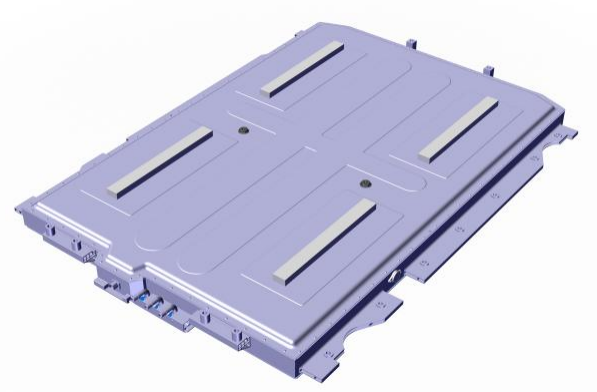
The Holy Grail of electric vehicle adoption has long been matching the refueling speed of internal combustion engine vehicles. While Western market strategies have historically prioritized driving range over raw charging speed, Chinese automotive developers are aggressively shifting the paradigm toward near-instantaneous power replenishment. In a major milestone for ultra-fast charging EV battery technology, Hongqi—the premium brand of state-owned FAW Group—in collaboration with China Automotive Technology and Research Center (CATARC) New Energy, has successfully demonstrated an ultra-fast charging battery that powers from 10% to 70% state of charge (SoC) in a mere 3 minutes and 41 seconds.
This breakthrough, conducted under standard ambient conditions (25°C), represents an estimated charging speed exceeding 8C. For context, a 1C charge rate fills a battery in one hour; an 8C-capable battery can theoretically be fully charged in less than 8 minutes. This development is not merely an incremental laboratory victory; it serves as a critical benchmark for the next generation of global high-voltage vehicle architectures.
The Technical Architecture Behind the Sub-4-Minute Charge
Achieving such speeds without inducing catastrophic lithium plating or thermal runaway requires a fundamental redesign of both the battery chemistry and the vehicle's thermal management systems. While exact commercial chemistry formulations remain proprietary, engineering indicators suggest several critical advancements made by Hongqi and CATARC:
- Advanced Anode Engineering: Conventional graphite anodes struggle with high-current charging because lithium ions cannot intercalate fast enough, leading to metallic lithium plating which degrades cell life and poses fire risks. To counteract this, modern ultra-fast cells utilize isotropic graphite, carbon-coated silicon composites, or advanced hard-carbon anodes that optimize ion-diffusion pathways.
- Ultra-High Conductivity Electrolytes: Low-viscosity electrolytes containing novel lithium salts (such as LiFSI) are deployed to accelerate ion transport through the liquid medium, even under extreme current density.
- Dynamic Thermal Management: Charging at these rates generates immense Joule heating. Hongqi's experimental setup relies on ultra-efficient, multi-channel liquid cooling plates paired with real-time BMS (Battery Management System) algorithms that prevent localized hot spots.
The Infrastructure Challenge: Delivering Megawatts to the Curb
While the battery itself is capable of absorbing energy at this rate, deploying ultra-fast charging EV battery technology requires a parallel leap in infrastructure. To push enough current into a typical 80kWh pack to achieve 10% to 70% in 221 seconds, a charger must deliver continuous output well exceeding 480kW, bordering on megawatt-level charging standards (MCS).
This requires localized grid storage integration (such as stationary buffer batteries) and liquid-cooled charging cables to prevent the hardware from overheating during the high-amperage transfer. As Chinese operators aggressively roll out 480kW and 600kW liquid-cooled charging terminals across high-speed transport corridors, the commercial viability of Hongqi's new battery chemistry becomes highly tangible.
Comparative Landscape: Fast-Charging Metrics
To understand where Hongqi's new milestone sits in the global market, it is helpful to compare it with leading high-voltage battery systems currently in production or late-stage testing:
| Developer / Platform | Claimed Speed (SoC Range) | Estimated Max Charge Rate |
|---|---|---|
| Hongqi / CATARC New Energy | 10% - 70% in 3 min 41 sec | 8C - 10C (Est.) |
| Zeekr (Golden Battery V2) | 10% - 80% in 10.5 min | 5.5C |
| Li Auto (Mega / Qilin 5C) | 10% - 80% in 10.3 min | 5C |
| Tesla Model Y (V3/V4 Supercharger) | 10% - 80% in ~20 min | ~2.5C - 3C |
Strategic Implications for Global Competitors
For Western automakers and tier-1 suppliers, this technological acceleration emphasizes the need for close cross-border collaboration and strategic sourcing alliances. To remain competitive in premium segments, global brands must transition rapidly to 800V silicon carbide (SiC) power electronics capable of supporting these rapid energy transfer rates. Rather than attempting to match these extreme electrochemical breakthroughs in isolation, Western OEMs can leverage global supplier expertise and localized joint ventures to integrate these high-power charging architectures into their own vehicle lineups, thereby satisfying the global consumer's growing demand for rapid charging convenience.