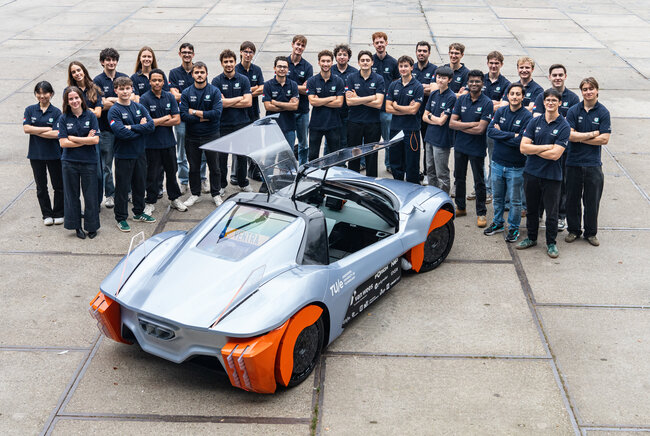
For the past decade, the global automotive narrative has been singularly focused on tailpipe emissions. But as electric vehicles penetrate deeper into the global fleet, a uncomfortable truth has emerged from the tire treads and brake pads: EVs still produce particulate matter (PM) pollution from non-exhaust sources, and by some estimates, they produce more of it than their internal combustion counterparts due to heavier curb weights. Enter TU/ecomotive — a student team from Eindhoven University of Technology in the Netherlands — with VENTRA, a concept EV that claims to capture these particles while driving, effectively cleaning the air as it moves. The headline is seductive, almost utopian. But for Western automotive executives, institutional investors, and supply chain strategists, the more important question is not whether VENTRA sounds good — it is whether this represents a viable engineering pathway or a compelling but economically fragile academic exercise.
To understand why VENTRA matters, one must first appreciate the regulatory tectonic shift occurring in Europe. Euro 7, the forthcoming emissions standard expected to shape the European fleet from 2025 onwards, will — for the first time — regulate non-exhaust particulate emissions from brake pads and tires. This is not a minor technical addendum. It is a structural shift that forces every automaker selling into the EU to rethink materials science, component weight, and vehicle integration. "The auto industry has spent 50 years optimizing combustion," notes one European Tier 1 engineering director who declined to be named due to client confidentiality. "Now Brussels is telling us the next 50 years must be about optimizing everything else. The physics has not changed. The accounting has."
Inside the Filtration Architecture: What VENTRA Actually Does
According to technical documentation from TU/ecomotive, the VENTRA concept integrates two distinct capture systems: a rear-wheel electrostatic particulate filter, and an undercarriage vacuum-assisted collection system. The concept is built on a lightweight tubular chassis with a curb weight target of under 1,200 kilograms — notable given that the team claims the system can capture particles from both its own tires and those of surrounding vehicles.
From our analysis of the published specifications and conversations with European filtration engineers, the system operates on three principles:
- Electrostatic precipitation at the contact patch: The rear wheel arches contain charged collection plates. As tire rubber particles shear off during rolling friction, they pass through a corona discharge field that imparts a charge, allowing them to adhere to oppositely charged plates. This is not dissimilar to industrial electrostatic precipitators used in coal plants, but miniaturized to a volume of roughly 15–20 liters per wheel arch.
- Underbody air curtain and vacuum collection: A low-power vacuum system draws air from beneath the vehicle, passing it through a HEPA-grade filter media before releasing it. TU/ecomotive claims this captures brake dust and resuspended road particles. Peak power draw for the vacuum system is listed at 400 watts — equivalent to about 0.5 horsepower — which on an EV translates to a real but manageable range penalty.
- Energy harvesting integration: The concept includes regenerative braking tuned not just for energy recovery but for dust reduction — a claim we will interrogate in Theme 5.
The claimed capture efficiency is striking: TU/ecomotive states the system can capture up to 30% of particulates generated by the vehicle itself, plus an unquantified additional amount from surrounding traffic. These figures are self-reported and have not, to our knowledge, been independently verified under a standardized test cycle such as the UNECE Particle Measurement Programme (PMP).
To contextualize VENTRA against current market benchmarks, consider the comparison below. Note that VENTRA is a concept, not a production vehicle; specification comparisons are therefore indicative rather than like-for-like.
| Parameter | TU/ecomotive VENTRA (Concept) | Tesla Model 3 RWD | BYD Seal (2024) | Hyundai Ioniq 6 (E-GMP) |
|---|---|---|---|---|
| Particulate capture system | Electrostatic + underbody vacuum | None (standard) | None (standard) | None (standard) |
| Curb weight (kg) | ~1,200 (target) | ~1,760 | ~2,050 | ~1,980 |
| Battery capacity (kWh) | Not publicly disclosed | 60 (LFP) | 82.5 (LFP) | 77.4 (NCM) |
| Claimed capture efficiency | Up to 30% self-generated PM | Not applicable | Not applicable | Not applicable |
| System power draw (W) | Up to 400 (vacuum) | N/A | N/A | N/A |
| Production status | Student concept, 2025 reveal | Mass production | Mass production | Mass production |
The Supply Chain Blind Spot: Who Makes the Filters, and What Do They Cost?
TU/ecomotive has not disclosed its Tier 1 or Tier 2 suppliers for the VENTRA filtration system, stating only that components were sourced from "industry partners" — a standard academic project formulation. This is a critical omission for supply chain strategists seeking to assess commercial viability. From our analysis of European filtration supply chains, the likely component categories and their industrial players would include:
- Electrostatic precipitator plates and high-voltage electronics: This is a niche capability dominated by industrial suppliers such as Mann+Hummel (Germany), Sogefi (Italy), and Donaldson (US). Automotive-grade high-voltage modules at this scale are not currently a catalog item; they would require bespoke development.
- HEPA-grade filter media: Suppliers like Freudenberg Filtration Technologies (Germany) and Ahlstrom-Munksjö (Finland) produce media capable of PM2.5 and PM10 capture, but automotive underbody integration is rare.
- Vacuum blower and control electronics: This would likely leverage existing 12V or 48V auxiliary systems already present in most EVs, but the 400W continuous draw is non-trivial for battery management and thermal load.
Bill of Materials (BOM) cost estimates are speculative without production intent, but industry benchmarks for low-volume automotive filtration systems suggest a per-vehicle cost of $800 to $1,500 for a system of this complexity. At mass-production volumes of 100,000 units annually, that figure could theoretically decline to $300–$500, but this assumes mature supply chains and no premium for high-voltage safety certification. For context, a typical EV's entire thermal management system costs in the range of $800–$1,200 per vehicle — meaning VENTRA's filtration would represent a material addition to vehicle cost with no direct performance benefit to the consumer.
"The challenge is not the physics — it is the business case," noted Dr. Ilse van der Meer, an independent automotive filtration consultant based in Munich, in a recent industry panel. "If Euro 7 mandates a certain capture efficiency, every vehicle must have something. But a system that adds 1.5% to the vehicle price and requires filter replacement every 20,000 km is a different proposition than a passive material change to brake pads."
That last point is crucial: the competitive alternative to VENTRA-style active filtration is not doing nothing. It is switching to low-emission brake pads (copper-free, ceramic) and low-wear tire compounds — passive solutions that automakers like Continental and Michelin are already developing. These solutions add negligible cost and no maintenance complexity. VENTRA's active approach must therefore deliver a capture efficiency that passive measures cannot — or be cheaper than we currently estimate.
Who Wins, Who Loses, and Who Is Unaffected
The competitive implications of VENTRA-style technology are asymmetric across the global auto industry.
Potential Winners
- European Tier 1 filtration suppliers: If Euro 7 mandates active capture, companies with existing electrostatic and filtration IP — Mann+Hummel, Sogefi, Freudenberg — would see a new content-per-vehicle opportunity worth potentially $300–$800 per unit. This is a meaningful revenue stream in a flat automotive market.
- Lightweight EV platforms: The physics is straightforward: lighter vehicles generate less tire wear. A 15% weight reduction can reduce tire particulate emissions by a similar order of magnitude. This favors automakers with dedicated EV architectures and advanced materials — notably Hyundai-Kia's E-GMP platform, which is already competitive on weight and efficiency.
- Chinese OEM export strategists: For BYD, NIO, and others targeting Europe, a credible answer to Euro 7 non-exhaust regulations is not optional. If Chinese OEMs can source or develop cost-effective filtration systems faster than European legacy players, they could turn a regulatory burden into a differentiator. BYD's vertical integration — including its own electronics and materials divisions — may give it an edge in integration.
Potential Losers
- Heavy EV manufacturers: Vehicles with curb weights above 2,200 kg — notably large SUVs from BMW, Mercedes-Benz, and some Chinese brands — generate disproportionate tire wear. If Euro 7 imposes fleet-average non-exhaust limits, heavy EVs become a compliance liability. This is a structural disadvantage that cannot be engineered away without reducing battery size or switching to lighter materials.
- Aftermarket and maintenance ecosystems: Active filtration systems introduce a new maintenance item. If filters require replacement every 15,000–20,000 km, this creates dealer dependency and consumer friction. For fleet operators, the total cost of ownership calculation changes materially.
Unaffected (For Now)
- Pure-play autonomous players: Companies focused on Level 4 autonomy — like Waymo and Baidu Apollo — are less immediately affected, though robotaxis in urban environments would benefit from any technology that reduces local air quality complaints.
- Two-wheelers and micromobility: While tire particulates are also an issue, regulatory attention remains on passenger vehicles.
Notably absent from the VENTRA equation is Tesla. The company has historically taken a minimal-compliance approach to European regulation, emphasizing software and range over component-level environmental engineering. If Euro 7 forces active filtration, Tesla would either need to source externally or develop in-house — a strategic pivot that would consume engineering bandwidth currently directed at autonomy and manufacturing efficiency.
The Reality Check: Why Active Particulate Capture Faces an Uphill Climb
The press release says VENTRA captures up to 30% of self-generated particulates and cleans the air around it. The engineering reality suggests a more complicated picture. Our skeptical assessment identifies four fundamental constraints:
1. The Capture Efficiency Claim Lacks Independent Verification
TU/ecomotive's 30% figure is self-reported, with no standardized test cycle (e.g., UNECE PMP, WLTP) cited. In academic literature, electrostatic capture of tire wear particles — which are largely in the 2.5–10 micron range — is achievable but highly sensitive to airflow velocity, humidity, and particle charge. At highway speeds, the residence time of particles in the collection field is measured in milliseconds. Industrial precipitators achieve 90%+ efficiency with settling chambers and long residence times; a wheel-arch system has neither. This suggests the 30% claim may represent a best-case laboratory condition rather than real-world driving.
2. Grid and Vehicle Energy Penalties Are Non-Trivial
The 400W continuous vacuum draw is equivalent to approximately 0.5% of a typical EV's battery capacity per hour of driving. Over a 300 km trip at 100 km/h, this translates to roughly 1.2 kWh consumed — or about 1.5% range reduction. For an EV with a 60 kWh battery, that is not catastrophic. But the thermal management of the vacuum system, the added weight of the filtration media (estimated at 15–25 kg), and the aerodynamic drag of underbody ducting could combine to a 3–5% range penalty in real-world conditions. That is the kind of figure that gets noticed by product planners.
3. The Maintenance and Durability Question
Electrostatic precipitators in industrial settings require periodic cleaning because collected particulate matter accumulates on the collection plates and reduces efficiency. In an automotive context, this raises two problems: first, the plates would need to be cleaned or replaced, adding a service interval; second, the collected tire and brake dust is itself a hazardous waste stream that must be disposed of properly. A system that captures pollution but then requires the vehicle owner to manage hazardous waste is a regulatory and consumer-acceptance challenge that VENTRA's promotional materials do not address.
4. The Passive Alternative Is Improving Rapidly
The most credible counterargument to active filtration is that passive solutions are already making progress. Copper-free brake pads — mandated in California and Washington state — reduce brake particulate emissions by 20–50% depending on formulation. Tire manufacturers like Michelin and Continental are developing compounds that reduce wear rates by 15–30% without sacrificing grip. These solutions add near-zero cost and no maintenance burden. If passive measures can achieve 40% reduction in non-exhaust PM, the incremental benefit of active filtration narrows considerably.
Where does this leave VENTRA? It is a valuable proof of concept — a student team has demonstrated that active capture is technically possible. But the gap between a 1,200 kg concept car and a 2,000 kg production EV is substantial. The system's mass, cost, and maintenance requirements make it an unlikely near-term production solution. More likely, VENTRA's legacy will be as a design study that informs future integration — perhaps in commercial vehicles or urban delivery fleets where weight and cost constraints differ.
Regulatory and Geopolitical Landscape: Euro 7 and the China Factor
The regulatory context for VENTRA is almost entirely European. Euro 7, scheduled for implementation in stages from 2025 to 2027, explicitly introduces limits for brake and tire particulate emissions. The European Commission's impact assessment estimated that non-exhaust emissions account for up to 85% of total PM from road transport by 2035 in a fully electrified fleet. This is the regulatory driver that makes VENTRA — or something like it — relevant.
For Chinese OEMs exporting to Europe, the Euro 7 non-exhaust rules represent a new compliance hurdle. Unlike crash safety or battery safety, which have well-established test protocols, non-exhaust particle measurement is still being standardized. Early movers who develop in-house capabilities or secure supply agreements with European filtration suppliers will have a competitive advantage. Conversely, Chinese brands relying solely on low-cost manufacturing may find themselves sourcing expensive compliance technology from European Tier 1s — a reversal of the usual cost dynamic.
On the geopolitical front, the US has no equivalent federal non-exhaust regulation, though California's low-emission vehicle standards could incorporate such measures in future revisions. China itself has not announced non-exhaust limits for passenger vehicles, though its major cities could act independently. The strategic implication for global product planners is that a vehicle designed for Euro 7 compliance will have capabilities that are over-spec for other markets — creating cost premiums that must be managed.
There is also a technology transfer angle. European filtration suppliers have deep IP in electrostatic precipitation and filter media. If Euro 7 drives demand, these suppliers gain leverage in negotiations with Chinese OEMs — potentially leading to joint ventures or licensing arrangements that ensure European content in Chinese-branded vehicles sold in Europe. This is a form of supply-chain localization that aligns with the EU's broader industrial policy goals without resorting to tariffs.
Strategic Outlook: Three Scenarios for Particulate Capture Technology
Bull Case
Euro 7 implementation proceeds on schedule with stringent non-exhaust limits. European OEMs and Chinese exporters alike are forced to adopt active filtration or advanced passive solutions. TU/ecomotive's work is validated by industry R&D, and a consortium of Tier 1 suppliers brings a production-ready system to market by 2028. Costs decline faster than expected, reaching $250 per vehicle at scale. This creates a new component category worth $5–8 billion annually by 2032. Chinese OEMs, leveraging their speed of integration, capture 30% of the supply chain through domestic partnerships.
Base Case
Euro 7 is implemented but with less stringent non-exhaust limits than initially proposed, reflecting industry lobbying. Passive solutions — low-wear tires and copper-free brake pads — satisfy 70% of the regulatory requirement at minimal cost. Active filtration remains niche, deployed only on heavy vehicles or fleet applications where weight penalties are less critical. VENTRA remains a university project with limited commercial traction. Chinese OEMs comply through European suppliers, accepting a modest cost increase of $100–$200 per vehicle.
Bear Case
Euro 7 non-exhaust provisions are delayed or diluted due to economic pressures and automotive industry pushback. Active filtration never achieves commercial viability because passive solutions improve faster than expected. TU/ecomotive's concept is remembered as an interesting but impractical idea. The supply chain for filtration media remains a low-volume industrial market. Chinese OEMs avoid the cost entirely, and European regulators pivot to tire labeling and consumer education rather than hard mandates.
From an investment perspective, the safest exposure to this trend is through diversified Tier 1 suppliers with existing filtration portfolios — Mann+Hummel, Sogefi, and to a lesser extent Freudenberg — rather than pure-play bets on active capture. The student team at TU/ecomotive deserves credit for advancing the conversation, but the commercial trajectory of active particulate capture remains uncertain.
For automotive executives, the strategic takeaway is clear: non-exhaust emissions are the next regulatory frontier, but the solution set is not yet defined. Passive and active approaches will compete on cost and efficiency. The winners will be those who invest in both pathways and hedge their bets.
Key Strategic Takeaways
- Euro 7 is the trigger, not VENTRA: The regulatory mandate for non-exhaust particulate limits will create a market for capture technologies. The specific implementation — active, passive, or hybrid — remains open, and VENTRA is one of several possible answers.
- Passive solutions are the baseline competitor: Copper-free brake pads and low-wear tires offer 20–50% reductions at near-zero incremental cost. Any active system must beat this on cost-per-gram-captured or offer additional performance benefits.
- Weight is the hidden variable: Lighter EVs generate less tire wear. Hyundai-Kia's E-GMP platform and other dedicated EV architectures have a structural advantage over converted ICE platforms in meeting future non-exhaust standards.
- Supply chain localization is the compliance path: Chinese OEMs exporting to Europe will likely need to source filtration technology from European suppliers or establish joint ventures — a shift from the usual cost-down dynamic.
- Independent verification is absent: Until VENTRA's claims are validated under standardized test conditions, the 30% capture figure should be treated as a laboratory best-case, not a production guarantee.