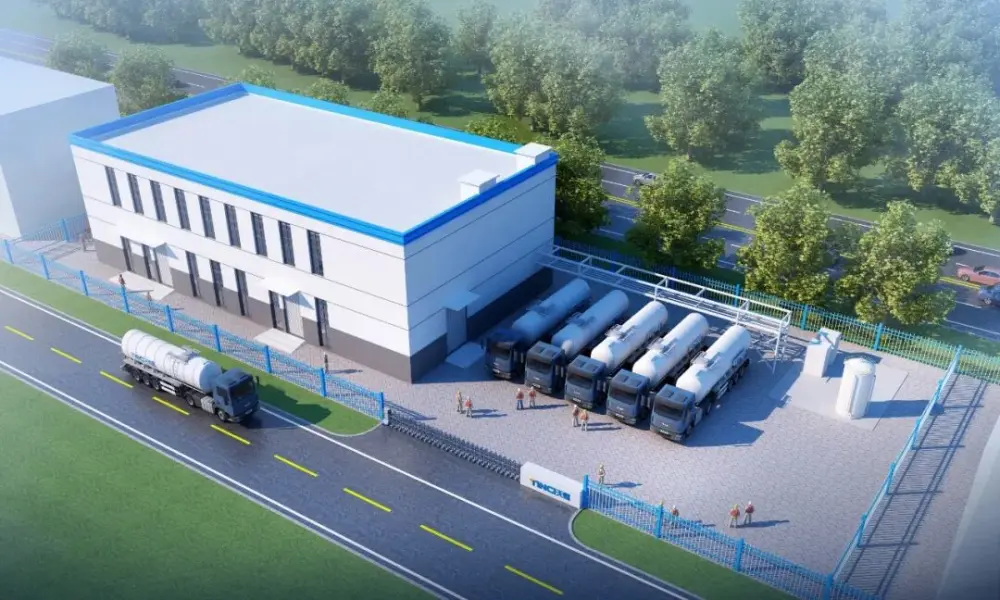
When Guangzhou Tinci Materials Technology—the undisputed titan controlling over 30% of the global lithium-ion electrolyte market—accelerates construction at its Indonesian industrial base targeting pilot production by December 2026, institutional investors take notice. The move into the Indonesia Weda Bay Industrial Park (IWIP) in North Maluku is universally billed as a masterstroke of supply chain internationalization, designed to track burgeoning Southeast Asian battery manufacturing and establish an offshore operational moat. Yet, beneath the corporate announcements lies an industry grappling with severe domestic margin collapse, perilous geopolitical tripwires, and profound chemical processing hurdles in tropical equatorial environments.
Historically, Chinese battery component leaders could rely on relentless domestic capacity additions to dominate global market share by sheer scale. Between 2020 and 2024, Chinese chemical giants drove the spot price of battery-grade lithium hexafluorophosphate (LiPF6) from historical highs exceeding 500,000 RMB per metric ton down to cyclical troughs hovering near 65,000 to 70,000 RMB per ton. This unprecedented commoditization decimated standalone operating margins, forcing tier-1 chemical synthesizers to either accept paper-thin margins at home or relocate capital expenditure abroad. Tinci's deployment to Indonesia represents the spearhead of this capital flight, seeking higher-margin downstream cell clients while navigating an increasingly hostile international trade architecture.
The Chemistry and Physics of Overseas Electrolyte Formulation
Battery electrolytes are arguably the most chemically unstable and logistics-sensitive components in the entire electric vehicle bill of materials. Unlike cathode active materials (CAM) or graphite anode powders, which can be stockpiled in dry warehouses for months without catastrophic chemical breakdown, formulated battery electrolyte has an unforgiving shelf-life. Composed of high-purity lithium salts (predominantly LiPF6), organic carbonate solvents (ethylene carbonate, dimethyl carbonate, ethyl methyl carbonate), and fractional functional additives (vinylene carbonate, fluoroethylene carbonate, and lithium bis(fluorosulfonyl)imide or LiFSI), the liquid solution begins degrading the moment it is blended.
The primary chemical vulnerability is hydrolysis. Lithium hexafluorophosphate reacts exothermically with trace atmospheric moisture (H2O > 10–20 ppm) to yield hydrofluoric acid (HF) and phosphorus oxyfluoride (POF3):
LiPF6 + H2O → LiF + 2 HF + POF3
Even parts-per-million levels of generated hydrofluoric acid rapidly attack the passivating solid electrolyte interphase (SEI) on graphite anodes and cause severe transition metal dissolution at the cathode interface, leading to catastrophic capacity fade, internal micro-shorting, and thermal runaway risks. Consequently, transporting pre-blended electrolyte across intercontinental maritime routes in standard ISO-tank containers presents severe risks: elevated ambient temperatures accelerate salt decomposition, while long transit times heighten the probability of moisture ingress. Formulating electrolyte locally within regional manufacturing clusters is an engineering necessity rather than a mere commercial preference.
| Metric / Attribute | Tinci Materials (IWIP Indonesia Project) | Capchem (Poland / European Operations) | Enchem (South Korea / US Georgia Plant) | Mitsubishi Chemical Group (Japan / Global) |
|---|---|---|---|---|
| Projected Regional Capacity | ~100,000–120,000 tonnes/year (Phase 1/2) | 40,000 tonnes/year | 40,000 tonnes/year (scaling to 100k) | ~30,000 tonnes/year (regional nodes) |
| Primary Salt Integration | In-house LiPF6 & LiFSI (imported from China) | External procurement / JV synthesis | Diversified merchant sourcing | Proprietary high-purity formulations |
| Proximity to End Customers | ASEAN hubs (HLI Green Power, CATL JV) | European gigafactories (LG, Northvolt, VW) | US OEM JVs (Ultium Cells, SK On JVs) | Domestic Japanese & select Western OEMs |
| Operational Power Source | Captive off-grid coal-fired power (IWIP grid) | European national grid (mixed renewables) | US utility grid (regulated mix) | Japanese industrial grid |
| Western Trade Qualification | Subject to strict US FEOC / EU Battery Rules | Partially compliant (EU localized) | Fully compliant for IRA Clean Vehicle Credits | Fully compliant across OECD jurisdictions |
By situating an electrolyte synthesis and blending footprint directly within Weda Bay, Tinci eliminates the six-to-eight-week maritime transport penalty from mainland China to regional assembly corridors. However, localizing blending operations does not eliminate raw material dependency: synthesizing high-purity LiPF6 requires precursor phosphorus pentachloride (PCl5) and anhydrous hydrofluoric acid (AHF), alongside ultra-purified lithium fluoride (LiF)—specialty chemical inputs that Indonesia does not natively produce at battery-grade specifications. Thus, the Indonesian plant will operate largely as an offshore mixing and formulation terminal, reliant on specialized intermediate imports from Tinci's mainland chemical bases in Jiujiang and Guangdong.
Weda Bay Ecosystem: Synergies and Infrastructure Realities
The selection of the Indonesia Weda Bay Industrial Park on Halmahera Island is fundamentally anchored in raw material co-location and heavy industrial co-existence. IWIP is already one of the world's most concentrated centers for High-Pressure Acid Leach (HPAL) operations and Rotary Kiln Electric Furnace (RKEF) lines, controlled predominantly by Chinese conglomerates like Tsingshan Holding Group and Huayou Cobalt. For Tinci, embedding inside this mega-complex offers immediate access to industrial infrastructure, port facilities, and an ecosystem focused on nickel-cobalt mixed hydroxide precipitates (MHP) and downstream battery precursors.
Yet, analyzing the bill of materials (BOM) cost structure reveals that an electrolyte plant derives far fewer direct input synergies from Weda Bay's nickel metallurgy than a cathode precursor facility would. Electrolyte formulations do not consume nickel or cobalt; their primary cost drivers are lithium salts (accounting for 45% to 60% of total electrolyte BOM cost depending on market cycles), organic carbonate solvents (30% to 40%), and performance additives (5% to 15%). Therefore, the commercial justification for IWIP relies primarily on utility arbitrage, shared port logistics, and regulatory treatment rather than on-site precursor integration.
Operating in North Maluku imposes tangible cost penalties. Highly purified organic solvents like dimethyl carbonate (DMC) and ethylene carbonate (EC) require hermetically sealed, nitrogen-padded stainless steel tankers to prevent moisture absorption. Shipping these flammable, Class 3 and Class 8 hazardous chemical payloads from petrochemical refineries in mainland China, Singapore, or South Korea to Halmahera introduces substantial maritime freight surcharges and complex inventory management cycles. While raw electricity costs inside IWIP are subsidized by captive coal-fired generation, overall operating expenditures (OPEX) are exposed to extreme logistics fragility.
Downstream Rebalancing: Who Captures Value and Who Is Exposed?
The acceleration of Tinci's Weda Bay facility directly reshapes competitive dynamics across Asian battery supply chains. The primary intended beneficiaries are regional cell manufacturing consortiums in Southeast Asia, notably HLI Green Power (the joint venture between Hyundai Motor Group and LG Energy Solution in Karawang, West Java) and upcoming packaging facilities under development by CATL and domestic Indonesian state enterprises. By establishing a local supply line within the ASEAN trade bloc, regional cell producers can mitigate trans-Pacific supply disruptions and compress inventory carrying costs.
For South Korean electrolyte competitors such as Enchem and Soulbrain, Tinci's overseas aggressive push presents a structural challenge in non-Western markets. Enchem has directed the majority of its balance sheet expansion toward the continental United States (Georgia) and Europe to capture subvention-driven Western business. Tinci's preemptive lock on Southeast Asian capacity could marginalize South Korean and Japanese competitors throughout the ASEAN corridor, where low-cost entry-level battery chemistries (both LFP and mid-nickel ternary) dictate vehicle affordability.
Conversely, the move underscores the intensifying isolation of Chinese specialty chemical producers from direct Western tier-1 supply networks. Domestic Chinese battery component producers are encountering an increasingly polarized market: while mainland Chinese factories operate at an estimated 40% to 55% average capacity utilization due to unprecedented domestic overcapacity, global Western markets are erecting steep institutional barriers. Tinci's capital allocation into Indonesia represents an effort to maintain volume velocity outside mainland China's saturated market borders.
The Reality Check: Environmental Exposure and the Greenwashing Paradox
While corporate equity presentations portray the Weda Bay expansion as a clean energy transition investment, an engineering and environmental audit exposes deep structural contradictions. This reality check separates commercial PR from industrial fundamentals.
First, the carbon footprint equation is severely compromised by IWIP's electrical generation architecture. Weda Bay functions entirely off an isolated, captive coal-fired microgrid. Electrolyte blending, continuous thermal-controlled chemical agitation, dry-room environmental control (requiring dew points below -40°C to -60°C), and automated filling systems consume substantial megawatt-scale base-load power. Every liter of electrolyte blended inside IWIP will carry an embedded Scope 2 carbon footprint significantly higher than identical production runs executed in Chinese industrial parks connected to hydro-rich provincial grids (such as Sichuan or Yunnan) or European facilities powered by nuclear and renewable energy.
Under the European Union's newly enacted Battery Regulation (Regulation EU 2023/1542), all EV batteries entering the European single market must carry a certified Carbon Footprint Declaration, progressing to mandatory maximum carbon threshold caps by 2027–2028. An electrolyte product synthesized using captive coal power in an equatorial island hub faces severe mathematical penalties under lifecycle assessment (LCA) audits, rendering it uncompetitive or outright non-compliant for European export-oriented OEM platforms.
Second, the chemical risk profile of operating advanced fluorinated synthesis in tropical marine ecosystems is non-trivial. Halmahera is subject to severe monsoonal rainfall, high ambient humidity (frequently exceeding 85%), and seismic activity. Maintaining ultra-dry handling conditions for LiPF6 and managing toxic organophosphorus and fluoride-heavy liquid waste requires rigorous effluent treatment infrastructure. Independent verification of environmental scrubbers and hazardous waste handling inside remote offshore concessions remains opaque, inviting heightened scrutiny from Western institutional asset managers governed by strict ESG disclosure mandates.
Inside the Physics: Why Electrolyte Localization Faces Steep Production Hurdles
While Tinci's pilot timeline suggests a mature industrial capability, electrolyte synthesis is notoriously sensitive to ambient humidity (H2O > 10–20 ppm). Achieving mass production in a tropical equatorial hub requires maintaining dew points below -40°C without prohibitive energy costs. If the facility utilizes advanced desiccant systems and closed-loop nitrogen purging, it could mitigate moisture ingress risks; however, scaling this infrastructure to handle 100k tonnes/year while preserving chemical purity represents a significant engineering leap over current industry standards in mainland China's controlled environments.
The operational reality is further constrained by the IWIP grid’s reliance on captive coal-fired generation. This creates a fundamental mismatch with EU Battery Passport mandates, which increasingly penalize high Scope 2 carbon footprints for battery components. While competitors like Enchem are positioning assets in US/EU grids to leverage IRA credits and lower emissions, Tinci must prove that its Indonesian output can meet strict LCA thresholds or remain viable solely through regional pricing power against established Western supply chains.
Long-Term Scenarios and Strategic Investor Implications
As Tinci Materials targets December 2026 for its initial trial runs at IWIP, the trajectory of this overseas deployment will test whether Chinese tier-1 upstream suppliers can survive global regulatory fragmentation.
Bull Case
Regional ASEAN electric vehicle production—anchored by Hyundai, SGMW, BYD, and VinFast—scales rapidly beyond conservative projections, absorbing 100% of Tinci's Indonesian output locally without needing export corridors into North America or Europe. Tinci successfully secures low-cost solvent inputs through dedicated Singapore logistics corridors, stabilizes dry-room operations amidst equatorial humidity, and leverages its scale advantage to box out South Korean competitors from emerging Southern Hemisphere markets. Return on invested capital (ROIC) rebounds as the offshore plant commands a 15% price premium over hyper-discounted Chinese domestic prices.
Base Case
The project completes pilot trials in late 2026 or early 2027 with minor delays, operating at restrained initial utilization rates (30% to 50%) due to slow regional gigafactory ramp-ups in Indonesia and Thailand. High logistics expenses for imported solvents and specialized salts erode anticipated overseas margin premiums, yielding unit economics roughly on par with top-tier mainland facilities. Western OEM export business remains blocked by FEOC and EU carbon rules, relegating the facility exclusively to localized ASEAN and South American supply contracts.
Bear Case
Escalating international scrutiny over IWIP's captive coal-fired environmental footprint prompts global automotive conglomerates to explicitly bar Weda Bay-origin chemical components from their Tier-1 supplier lists under ESG corporate governance mandates. Simultaneously, persistent chemical handling complexities and moisture contamination in tropical maritime transit drive up quality-defect scrap rates. Tinci faces elevated depreciation charges on its overseas balance sheet, exacerbating broader corporate cash-flow pressures in a depressed global battery materials market.
Strategic Takeaways for Executive Leadership
- Location Does Not Equal Compliance: Establishing chemical production in third-party jurisdictions like Indonesia does not neutralize US FEOC restrictions or EU carbon accountability for Chinese parent entities.
- Logistical Exposure Remains Upstream: Electrolyte formulation terminals abroad are entirely dependent on mainland Chinese precursor chemicals (LiPF6, LiFSI, solvents), creating an elongated supply chain vulnerable to maritime trade friction.
- The Scope 2 Carbon Penalty: Relying on off-grid, coal-fired industrial parks like IWIP introduces insurmountable carbon intensity liabilities under EU Battery Passport audits, limiting product deployment to emerging markets.
- Capital Flight from Hyper-Competition: Tinci's overseas movement is fundamentally defensive, catalyzed by catastrophic domestic price deflation and structural overcapacity within China's specialty chemical sector.