In the high-stakes theater of autonomous vehicle development, the engineering consensus for Level 4 commercial deployment has long been trapped in an expensive paradox. While long-range forward perception has captured headlines through 1,550 nm LiDAR benchmarks and multi-hundred-meter radar arrays, operational reality has dealt fleet operators a far more humiliating blow. The vast majority of disengagements, near-miss collisions, and low-speed navigation failures do not occur on straight, predictable highway stretches; they happen within a five-meter halo around the vehicle chassis during complex turning maneuvers, unprotected cross-traffic insertions, and dense urban curb navigation. Solving this operational vulnerability without bloating bill-of-materials (BOM) costs has become the defining industrial challenge for autonomous fleet commercialization.
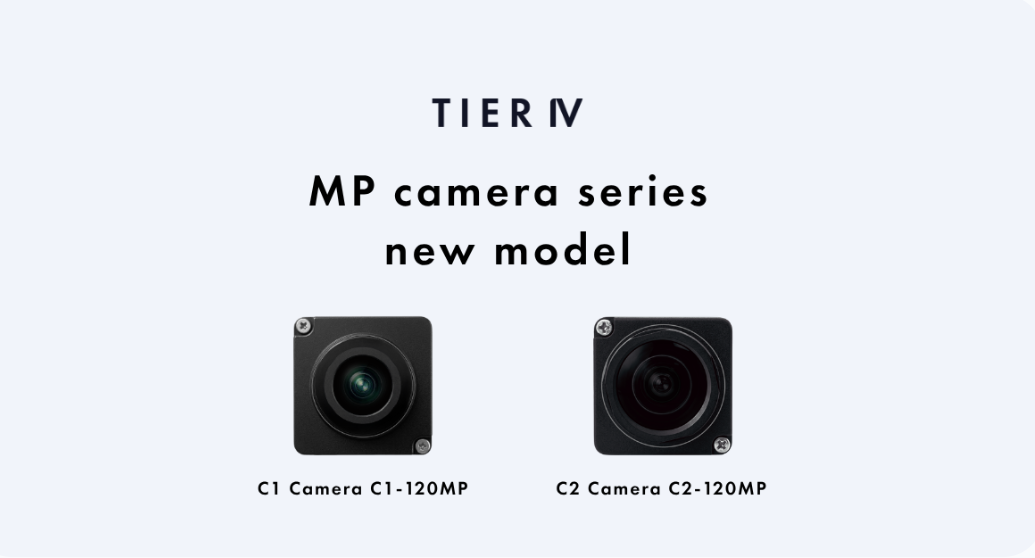
Against this backdrop, Tokyo-based autonomous driving software and system developer TIER IV—the intellectual shepherd behind the open-source Autoware platform—has broadened its proprietary hardware portfolio. By introducing a purpose-built wide-angle variant to its automotive-grade MP (Megapixel) series, TIER IV is not merely adding another stock-keeping unit to its catalog; it is mounting a calculated challenge to the sensor architecture orthodoxy that has dominated commercial autonomy for a decade. The central thesis is straightforward: replace or drastically minimize high-cost short-range solid-state LiDARs by leveraging an advanced L4 autonomous driving camera designed explicitly to master extreme peripheral fields of view.
The Peripheral Blind Spot: Optical Architecture and Sensor Physics
Peripheral perception for commercial Level 4 autonomous systems represents one of the most hostile operating envelopes in automotive engineering. Unlike narrow-angle forward-facing cameras that operate under relatively stable optical conditions and uniform focal distances, a wide-angle L4 autonomous driving camera mounted on the vehicle perimeter must process hyper-dynamic optical inputs across horizontal fields of view typically exceeding 120 to 150 degrees. At these severe viewing angles, standard lens assemblies suffer from pronounced radial distortion, chromatic aberration, and dramatic drops in relative illumination at the sensor edges—a phenomenon known as optical vignetting.
TIER IV's wide-angle addition to its MP portfolio addresses these optical physics constraints through custom-tailored lens geometry and high-performance automotive CMOS image sensor (CIS) silicon. In urban robotaxi or commercial low-speed autonomous shuttle operations, vulnerable road users (VRUs)—such as pedestrians stepping off curbs, couriers on electric scooters, or cyclists filtering through static traffic—enter the optical frame at severe slant ranges. If the peripheral imaging system lacks sufficient angular resolution at the periphery, deep-learning semantic segmentation networks fail to classify the hazard until it penetrates the critical braking threshold.
To combat this, the engineering specification of the wide-angle MP camera balances pixel density against modulation transfer function (MTF) performance across the entire focal plane. By maintaining edge sharpness and minimizing distortion through an optimized f-theta or equisolid angle projection lens design, the sensor suite allows object detection algorithms to maintain bounding-box stability without relying on extreme software-level de-warping that consumes precious compute cycles. Furthermore, these units incorporate rigorous hardware-level LED Flicker Mitigation (LFM) and High Dynamic Range (HDR) mechanisms—operating at or above 120 dB—to prevent sensor blinding when transitioning from dark underpasses into blistering sunlight, or when interpreting high-frequency pulse-width modulated (PWM) LED traffic signals and emergency vehicle lighting.
| Perception Metric / Parameter | TIER IV Wide-Angle MP Camera | Tesla Hardware 4.0 Peripheral | Mobileye SuperVision Peripheral | Hesai FT120 Solid-State Blind-Spot LiDAR |
|---|---|---|---|---|
| Primary Sensor Modality | Automotive CMOS (HDR/LFM) | Automotive CMOS (5.0 MP) | Automotive CMOS (8.0 MP) | Flash Solid-State 905nm LiDAR |
| Horizontal Field of View (H-FOV) | ~120° – 150° (Wide-Angle) | ~100° – 120° | ~120° | 100° x 75° |
| Dynamic Range (HDR) | >120 dB (with LFM) | ~120 dB (estimated) | >140 dB | Not Applicable (Active Photometry) |
| Interface Protocol | Automotive GMSL2 / FPD-Link III | Proprietary SerDes | GMSL2 | Automotive Ethernet (100Base-T1) |
| Environmental Resistance | IP69K, Automotive-Grade (-40°C to +85°C) | Integrated Chassis Mount | OEM Tier-1 Standard (IP67/69K) | IP67 / IP69K |
| Estimated Hardware BOM Cost | $90 – $150 | $65 – $90 (In-house scale) | $85 – $120 | $400 – $750 |
| Primary Compute Overhead | High (Edge Tensor Vision / CNN) | High (End-to-End Neural Net) | High (EyeQ6 High-Compute) | Low to Moderate (Point-Cloud Clustering) |
Supply Chain Dynamics and Tier-1 Bill of Materials Teardown
Understanding TIER IV's hardware trajectory requires deconstructing the bill-of-materials economics underpinning Level 4 autonomous platforms. Historically, an operational L4 shuttle or commercial delivery vehicle required a sensor suite exceeding $15,000 to $30,000 per unit, heavily weighed down by multi-layer mechanical or semi-solid-state LiDAR pods. While primary forward-facing LiDAR remains virtually non-negotiable for long-range spatial redundancy among safety-conscious Western and Japanese operators, short-range peripheral LiDARs represent a direct threat to commercial unit economics.
A typical commercial L4 architecture requires four to six peripheral sensing nodes to establish an unbroken 360-degree close-proximity safety cocoon. If an operator relies on short-range flash LiDAR modules, such as the Hesai FT120 or RoboSense E1, the peripheral sensing BOM alone commands between $2,000 and $4,500 per vehicle. By substituting or hybridizing these locations with a dedicated L4 autonomous driving camera, the peripheral hardware BOM collapses to roughly $500 to $900 across the entire vehicle perimeter.
TIER IV's supply chain strategy reflects a sophisticated synthesis of Japanese precision optical engineering and globally sourced automotive silicon. The underlying image sensors rely on proven automotive silicon platforms—predominantly Sony Semiconductor Solutions (such as the IMX490 family) or onsemi (such as the Hyperlux or AR0820 platforms)—which provide the necessary ASIL-B functional safety diagnostic coverage at the silicon level. The optical barrel assemblies demand precision glass-plastic hybrid lenses manufactured by top-tier optical suppliers like Sunny Optical or Largan Precision, capable of maintaining thermal stability across automotive temperature extremes (-40°C to +85°C) without focal drift. The serialization of the high-bandwidth raw pixel stream is handled via industry-standard Gigabit Multimedia Serial Link (GMSL2) or FPD-Link serializers, enabling transmission over unshielded or shielded twisted-pair cables up to 15 meters to the central compute node.
This component topology allows TIER IV to avoid the ruinous capital expenditures associated with custom silicon fabrication, instead positioning itself as an agile systems integrator and calibration master. By controlling both the camera hardware calibration routines and the downstream perception algorithms within Autoware, TIER IV captures value through software licensing, hardware margin, and turn-key reference designs for global commercial vehicle OEMs.
Competitive Impact Across Global Autonomy Ecosystems
The introduction of TIER IV's wide-angle peripheral camera reverberates across three distinct market segments: Western commercial robotaxi developers, Chinese integrated autonomous stacks, and traditional Tier-1 automotive suppliers.
In the Western hemisphere, companies like Waymo and Zoox have retained highly customized, proprietary sensor packages that integrate in-house designed cameras with customized LiDAR enclosures. However, Tier-2 and commercial logistics players—such as autonomous trucking firms, middle-mile transport operators (Gatik), and airport ground-handling vehicle developers—lack the billions in venture capital required to design custom optical hardware from scratch. For these entities, TIER IV offers an off-the-shelf, automotive-qualified hardware node that dramatically lowers the barrier to entry, bypassing the rigid, closed-ecosystem development cycles imposed by legacy giants like Continental, Bosch, or Magna.
In China, the autonomous driving perception landscape is locked in a fierce war of attrition. Domestic autonomous technology leaders such as Baidu Apollo, Pony.ai, and WeRide benefit from an intensely localized, low-cost supply chain ecosystem. Chinese domestic Tier-1 suppliers like Desay SV and Freetech have flooded the market with commoditized camera modules driven by aggressive domestic pricing wars. However, Chinese autonomous commercialization remains largely constrained within domestic regulatory pilots and state-sponsored smart-city zones. TIER IV's distinct advantage lies in its open-source Autoware footprint across North America, Europe, and Japan, where Western and Japanese OEMs are systematically de-risking their supply chains away from Chinese software platforms due to escalating data-sovereignty regulations and export control regimes.
Crucially, TIER IV's hardware expansion poses an indirect challenge to Mobileye's SuperVision and Drive platforms. While Mobileye demands that OEMs adopt its proprietary, black-box EyeQ silicon and closed perception algorithms, TIER IV couples its open-access software philosophy with standardized hardware modules. This empowers automotive engineering teams to retain full ownership of their perception neural networks and vehicle control logic, transforming the L4 autonomous driving camera into a modular, plug-and-play sensory organ rather than a vendor-locked proprietary trap.
The Reality Check: Optical Limits, Weather Degradation, and Compute Realities
Despite the commercial promises surrounding camera-centric peripheral perception, rigorous engineering analysis reveals profound technical constraints that corporate press releases routinely obscure. While an L4 autonomous driving camera offers dramatic cost savings over LiDAR, it introduces acute physical vulnerabilities that no software algorithm can entirely circumvent.
The first engineering constraint centers on the immutable physics of wide-angle optics. By expanding the field of view beyond 120 degrees, the effective angular resolution (measured in pixels per degree, or PPD) degrades sharply toward the outer perimeter of the lens. A 2.0 to 3.0 megapixel sensor distributed across an ultra-wide FOV yields an angular resolution that drops below 15-20 PPD at the periphery. In practical operational terms, while the camera can detect the presence of a pedestrian three meters away, its ability to extract subtle kinematic cues—such as head orientation, eye contact, or slight foot movements that signal an impending street crossing—is severely degraded compared to narrower focal-length arrays. The vehicle is forced to either widen its safety margins, leading to over-cautious 'phantom braking' and freezing behavior in tight urban corridors, or risk delayed perception response.
The second, and far more lethal, operational ceiling is environmental occlusion. Autonomous commercial fleets cannot operate solely under pristine Tokyo or Silicon Valley sunshine. In real-world commercial logistics, the vehicle's lower perimeter is constantly bombarded by road grit, mud, chemical de-icing salts, and turbulent rainwater spray kicked up by its own wheels. Unlike forward-facing cameras positioned behind windshield wipers inside the vehicle's swept cabin area, peripheral wide-angle cameras must be mounted on wheel arches, side mirrors, or rear quarter panels.
Without complex, maintenance-heavy auxiliary systems—such as high-pressure pulsed air nozzles, ultrasonic de-icing transducers, or hydrophobic physical lens coatings—an external camera can be blinded by a single splash of muddy road water. Active LiDAR sensors, while also vulnerable to dirt, operate via active time-of-flight photon emission and can frequently penetrate sparse aerosolized spray or light particulate matter where passive optical sensors register pure lens occlusion. The real-world deployment of TIER IV's wide-angle camera will remain strictly limited by the reliability and thermal management of the mechanical cleaning sub-systems supporting it.
Finally, the compute tax cannot be ignored. Ingesting four to six raw, uncompressed 24-bit automotive image streams at 30 to 60 frames per second over GMSL2 links demands massive PCIe and memory bus bandwidth inside the central autonomous computing unit. De-serializing, de-bayering, performing ISP tonemapping, and executing deep convolutional or vision-transformer feature extraction across multiple peripheral cameras simultaneously can consume upwards of 30% to 50% of the inference capability of an automotive SoC like the NVIDIA DRIVE Orin. If the fleet operator attempts to trim costs by deploying lower-tier silicon, the latency of peripheral threat detection expands dangerously, negating the very safety margins the wide-angle camera was installed to preserve.
Regulatory Compliance, Standards, and Geopolitical Bifurcation
The commercial deployment of commercial Level 4 autonomous systems is no longer merely a race of engineering capabilities; it is governed by an increasingly fragmented web of international safety certifications and geopolitical trade barriers. TIER IV's expansion of its camera series arrives at a pivotal juncture in global regulatory harmonization.
In Japan, the revision of the Road Traffic Act in April 2023 officially permitted commercial Level 4 autonomous driving services under specified operational conditions, establishing Japan as one of the most progressive regulatory testbeds for driverless public mobility. However, gaining formal type-approval for an autonomous vehicle from Japan's Ministry of Land, Infrastructure, Transport and Tourism (MLIT) mandates exhaustive verification of functional safety under ISO 26262 up to ASIL-D, alongside strict adherence to ISO 21448 (Safety of the Intended Functionality, or SOTIF). SOTIF compliance is particularly punishing for wide-angle camera systems, as it requires empirical proof that sensor performance limitations—such as optical flare, deep shadow latency, or sensor noise—will not trigger hazardous unintended system behaviors.
In the European Union, the regulatory baseline is dictated by UNECE Vehicle Regulations, notably UN Regulation No. 157 for Automated Lane Keeping Systems and the expanding framework for fully driverless commercial transport. The EU's rigorous General Safety Regulation (GSR II) mandates stringent vulnerable road user detection, making compliant peripheral sensing an absolute legal prerequisite. Crucially, European and North American regulators are showing heightened skepticism toward self-certified autonomy metrics, demanding third-party validation data covering thousands of edge-case operating hours.
Simultaneously, the geopolitical bifurcation of autonomous driving technology has created an impermeable wall between Western/allied ecosystems and the Chinese domestic market. Under United States regulatory scrutiny regarding connected vehicle technologies and national security risks associated with Chinese software and hardware supply chains, Western OEMs and municipal transport authorities are systematically auditing their Tier-1 and Tier-2 suppliers. Autonomous vehicles mapping urban environments collect petabytes of high-definition, georeferenced spatial data. TIER IV, operating out of Japan with transparent open-source code governance and non-Chinese supply chain alignment, positions itself as a geopolitically neutral, trustworthy alternative for Western municipal fleets, Japanese transit authorities, and European industrial operators seeking to insulate themselves from future cross-border technology sanctions.
Strategic Outlook and Long-Term Investor Implications
As the commercial autonomous vehicle industry shifts from capital-fueled experimentation to brutal unit-economics discipline, the role of specialized sensor hardware will dictate which operating models survive. The trajectory of TIER IV and its evolving L4 autonomous driving camera portfolio reveals clear divergent paths for market adoption over the coming five-year horizon.
Bull Case
Under the optimistic scenario, TIER IV successfully leverages its wide-angle MP camera to establish a standardized, highly optimized reference architecture within the Autoware ecosystem, capturing substantial market share across low-speed autonomous logistics, municipal shuttles, and industrial yard operations globally. OEMs and fleet retro-fitters embrace the camera-centric peripheral architecture, successfully utilizing advanced vision-foundation models to eliminate short-range LiDAR entirely. By reducing vehicle sensor BOM costs by $3,000 to $5,000 per unit, commercial L4 fleets achieve positive gross margins on a per-vehicle basis by 2027. TIER IV transforms into a dominant global tier-1.5 technology supplier, monetizing high-margin software stack integration and specialized vision hardware across Japan, North America, and Europe.
Base Case
In the realistic baseline scenario, TIER IV's wide-angle camera experiences steady, incremental adoption primarily in controlled Operational Design Domains (ODDs)—such as geofenced campus shuttles, dedicated bus rapid transit (BRT) lanes, and port logistics facilities. However, harsh real-world weather vulnerabilities force fleet operators to maintain a hybrid peripheral architecture, retaining at least two short-range solid-state LiDARs alongside four wide-angle cameras to guarantee SOTIF compliance and prevent rain-induced service halts. Commercial L4 scaling proceeds at a measured, regional pace dictated by local municipal subsidy allocations rather than sudden market-driven inflection points. Hardware margins remain modest due to component competition from established automotive Tier-1s, but TIER IV cements its status as an indispensable specialized player in the global autonomy toolchain.
Bear Case
Under the pessimistic scenario, rapid price erosion in the solid-state LiDAR sector—driven by hyper-scaled Chinese manufacturers dumping low-cost flash sensors into global-compatible supply chains—collapses the cost advantage of camera-only peripheral perception. Concurrently, high-profile accidents involving peripheral optical blind spots or lens-soiling failures prompt regulatory bodies in the US, Europe, and Japan to mandate multi-modal sensor redundancy (mandating both active LiDAR and passive optical vision) for all driverless commercial permits. The compute overhead required to process multiple high-resolution peripheral video streams overstretches fleet operating economics, stalling widespread commercial adoption outside of narrow research environments. TIER IV's hardware division faces severe margin compression, forcing the enterprise to retrench into pure software development and academic open-source stewardship.
Executive & Investor Takeaways
- Peripheral Perception Is the True Commercial Battleground: Long-range highway sensing is largely solved; the ultimate barrier to scaling L4 autonomous unit economics lies in cost-effective, zero-blind-spot coverage within five meters of the chassis.
- BOM Compression Drives Modality Shifts: Fleet operators are actively seeking to replace multi-thousand-dollar short-range LiDAR pods with advanced automotive-grade camera nodes, creating substantial market opportunities for precision optical and CIS integrators.
- The Weather and Lens-Soiling Vulnerability: Investors must scrutinize autonomous fleet reliability metrics; passive optical cameras deployed on vehicle perimeters without active, high-pressure cleaning systems represent an acute single point of failure in non-pristine weather.
- Geopolitical Supply Chain De-Risking: Open-source, allied-nation autonomous stacks like TIER IV's Autoware represent a critical hedge for Western and Japanese transport operators navigating regulatory bans on Chinese connected software and telemetry hardware.