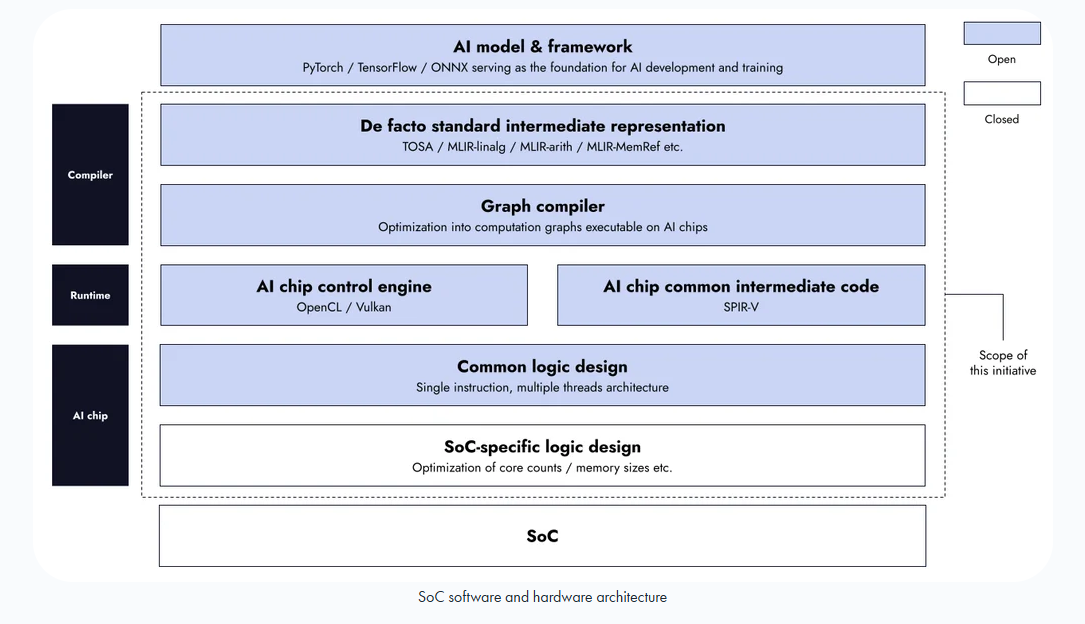
Autonomous driving pioneer TIER IV, globally recognized for creating the open-source Autoware software, has announced a groundbreaking evolution in its product strategy. By introducing plans to develop an open-source autonomous driving chip designed for Level 4 (L4) autonomy, the company is extending its open-source philosophy from system software directly into silicon design. Backed by the Japan Science and Technology Agency (JST), this initiative marks a major shift that could democratize autonomous vehicle (AV) hardware development and challenge the market dominance of proprietary chip manufacturers.
From Autoware to Silicon: The Open-Source Leap
For nearly a decade, TIER IV has championed the democratization of autonomous driving technology through Autoware, the world's leading open-source operating system for self-driving vehicles. While software-defined vehicles (SDVs) have gained massive traction, hardware has remained highly proprietary, expensive, and concentrated in the hands of a few key system-on-chip (SoC) providers. By introducing an open-source autonomous driving chip design, TIER IV aims to dismantle these high entry barriers.
This initiative is part of a research project under the Japan Science and Technology Agency (JST). The goal is to establish a verified, referenceable chip architecture that automakers and Tier 1 suppliers can adapt, modify, and manufacture without being locked into restrictive proprietary ecosystems. This strategy aligns perfectly with the automotive industry’s shift toward supply chain resilience and collaborative technology integration.
Strategic Implications for the Global AV Supply Chain
From an investment and strategic perspective, this development introduces healthy competition to a market currently dominated by high-cost chip giants. For global automotive OEMs and Tier 1 suppliers, an open-source silicon option offers several strategic advantages:
- Reduced R&D Cycle Times: Engineering teams can leverage a pre-designed, open-source RTL (Register-Transfer Level) blueprint, significantly narrowing the gap between system design and physical tape-out.
- Suppliers and Cost Optimization: By bypassing heavy licensing fees and vendor-specific developer kits, manufacturers can lower the total cost of bill of materials (BOM) for Level 4 systems.
- Strategic Sourcing Alliances: OEMs can partner with local foundries, optimizing strategic localization and minimizing exposure to geopolitical supply chain disruptions.
| Strategic Metric | Proprietary Silicon Providers | TIER IV Open-Source Initiative |
|---|---|---|
| IP Licensing Cost | High upfront fees & royalty locks | Royalty-free base architecture |
| Hardware Co-Design | Restricted to vendor customization limits | Full flexibility to modify logic and peripherals |
| Software Ecosystem | Proprietary SDKs and APIs | Native integration with Autoware and ROS |
Fostering International Collaboration and Technology Integration
As the autonomous driving space matures, developers are realizing that no single company can solve the L4 edge-case puzzle alone. This reality has catalyzed cross-border collaboration and strategic sourcing alliances. In this light, TIER IV's open-source chip project is not merely a technical endeavor; it is an ecosystem-building initiative.
By offering an open-source architecture, TIER IV creates a bridge between Western developers, Japanese semiconductor researchers, and global manufacturing hubs. Western OEMs looking to enhance their localization strategies in highly competitive markets can leverage these designs to develop bespoke, region-compliant driverless shuttle and logistics platforms.
The Analyst's View: Challenges and the Path Forward
While the promise of an open-source autonomous driving chip is immense, the road to commercial volume production is paved with stringent safety requirements. Autonomous driving silicon must comply with rigid automotive safety integrity levels (such as ISO 26262 ASIL-D). Achieving and verifying these standards in an open-source context will require robust testing frameworks and collaborative support from international certification bodies.
Furthermore, the physical cost of silicon fabrication (wafer pricing, packaging, and testing) remains high. The success of this initiative will ultimately depend on how successfully TIER IV can build a consortium of semiconductor foundries, design houses, and automotive system integrators willing to manufacture and support this open reference design at scale.