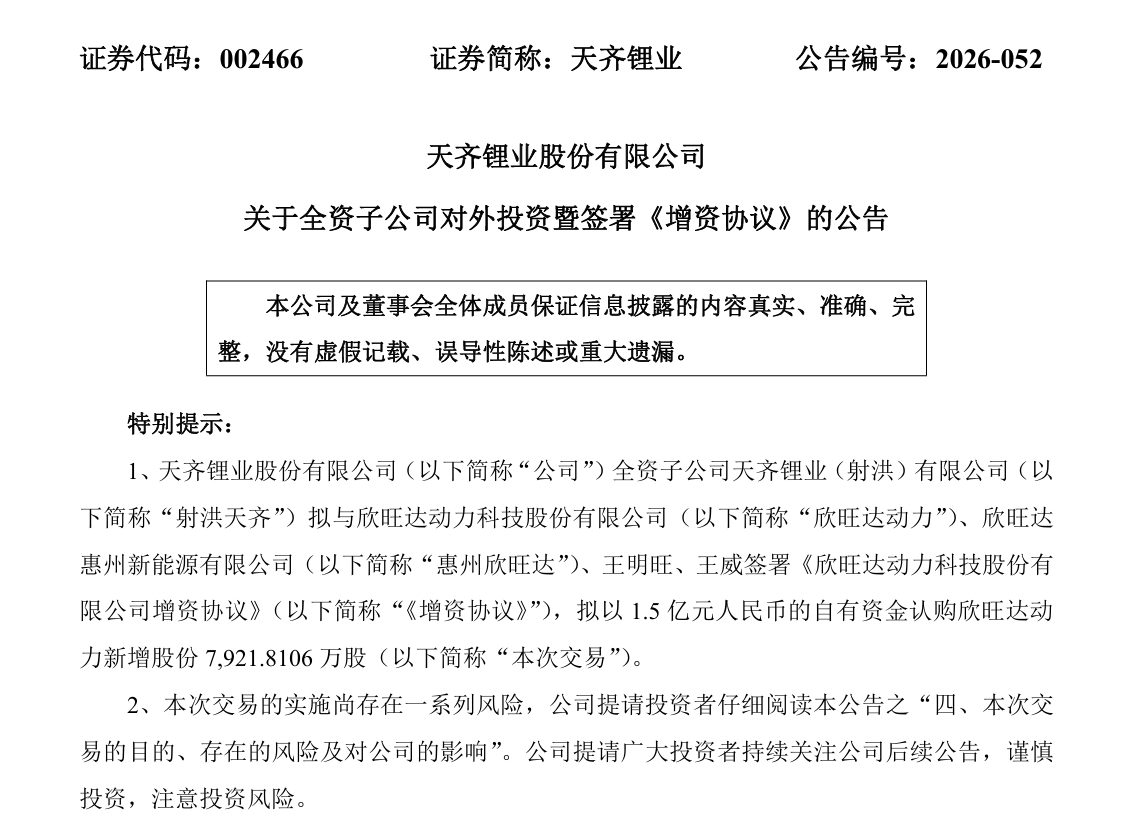
In the highly cyclical and capital-intensive world of electric vehicle (EV) manufacturing, securing the upstream supply chain has evolved from a competitive advantage to a fundamental survival strategy. Upstream mining behemoth Tianqi Lithium is actively consolidating its grip on the midstream sector. The recent announcement that its wholly-owned subsidiary, Tianqi Lithium (Shehong) Co., Ltd., intends to execute a strategic investment in Sunwoda Mobility Energy Technology Co., Ltd. (SEB) highlights this industry shift. This landmark Tianqi Lithium Sunwoda partnership serves as a textbook example of vertical supply chain integration, structured to mitigate raw material price volatility and secure predictable demand channels.
The Strategic Blueprint Behind the Alliance
The collaboration between Tianqi Lithium, one of the world's leading lithium producers, and Sunwoda SEB, a rapidly expanding manufacturer of high-performance EV battery cells, comes at a critical juncture. After two years of aggressive price fluctuations in lithium carbonate, both mining firms and battery producers have realized that purely transactional spot-market procurement introduces unsustainable financial risk.
By shifting from simple supply contracts to equity-based strategic investments, Tianqi Lithium secures a reliable, high-volume customer for its refined lithium products. Concurrently, Sunwoda SEB gains a direct, privileged conduit to raw battery-grade lithium. This dual-sided security mechanism is highly valued by Western OEMs seeking stable strategic sourcing alliances amidst shifting macroeconomic conditions.
Analyzing the Upstream-Midstream Vertical Dynamics
In the global EV battery supply chain, the relationship between raw material extractors and battery manufacturers has traditionally been arms-length. However, as global automakers demand longer-term price guarantees and strict environmental, social, and governance (ESG) compliance, tighter integration is required. This partnership delivers several mutual advantages:
- Price Hedging & Stabilization: Direct equity links allow both companies to co-develop internal transfer pricing mechanisms, smoothing out the peaks and valleys of spot lithium prices.
- Technological Synchronization: Joint R&D initiatives can optimize lithium chemical formulations (such as advanced lithium hydroxide or carbonate specifications) directly for Sunwoda's next-generation LFP and ultra-fast-charging battery chemistry.
- Supply Chain Transparency: Clear tracking of materials from primary mining sources to final cells helps downstream automotive brands meet rigorous traceability expectations in North America and Europe.
How Upstream Alliances Compare Globally
To understand the competitive landscape of this strategic move, we can look at how leading players are structured across the industry value chain:
| Partnership / Alliance | Upstream Player | Midstream/Downstream Player | Primary Strategic Objective |
|---|---|---|---|
| Tianqi & Sunwoda | Tianqi Lithium | Sunwoda SEB | Mutual price hedging, deep chemical-to-cell R&D, and supply security. |
| Ganfeng & GAC Aion | Ganfeng Lithium | GAC Aion / Greater Bay | Direct mineral-to-EV integration and solid-state battery research. |
| CATL Mining JVs | Various Mineral Consortia | CATL | Securing direct asset ownership to defend global cell manufacturing margins. |
Strategic Implications for Global Investors and Western OEMs
As a professional market analyst tracking global technology integration, this alliance demonstrates that Chinese EV supply chains are actively reinforcing their structural resilience. For Western automakers, this development signals that securing battery supply requires looking far upstream. Merely purchasing cells is no longer sufficient; the future belongs to highly integrated consortia that manage the entire process from the mine to the finished vehicle pack.
Furthermore, this integration is not about bypassing market rules, but about building long-term strategic resilience. By aligning upstream miners with midstream cell manufacturers, the industry is establishing a standardized, highly predictable production paradigm. This offers global automakers a blueprint for how to structure cross-border collaborations and strategic sourcing alliances to de-risk their own supply chains.