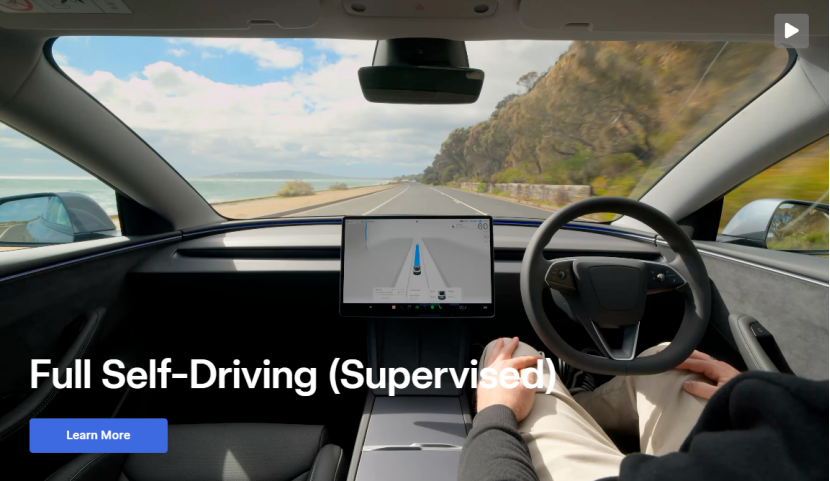
As Tesla pushes to expand its Full Self-Driving (FSD) beta globally, securing Tesla FSD Europe approval has emerged as one of the most complex geopolitical and technological standoffs in modern automotive history. While North American markets operate under a post-market surveillance and self-certification model, Europe’s strict pre-market type-approval system presents a fundamentally different challenge for end-to-end neural network architectures.
The Core Dilemma: Proprietary AI vs. Public Safety Transparency
The technical architecture of Tesla's FSD V12 relies heavily on end-to-end deep learning, where neural networks process raw video input directly into control outputs (steering, braking, acceleration). This 'black box' approach eliminates millions of lines of hand-coded rules, delivering more human-like driving behavior. However, it also presents a significant regulatory hurdle.
European regulators, operating under the United Nations Economic Commission for Europe (UNECE) framework, traditionally require manufacturers to demonstrate how a vehicle makes decisions. When a system relies on deep learning weights rather than explicit code, proving compliance and absolute safety becomes an abstract challenge. Tesla must balance the defense of its commercial intellectual property—its training data and model weights—with the public's right to transparent risk assessment.
UNECE DCAS: The Gatekeeper to European Roads
In early 2024, the UNECE adopted new regulations for Driver Control Assistance Systems (DCAS). This development established a formal pathway for advanced hands-on and hands-off systems in Europe, but under much more restrictive conditions than those found in the United States.
The regulatory divergence between the two regions shapes how autonomous driving software is validated and deployed:
| Regulatory Metric | United States (NHTSA) | Europe (UNECE / DCAS) |
|---|---|---|
| Validation Model | Self-certification by the manufacturer. | Pre-market Type-Approval by third-party technical services. |
| System Transparency | Iterative OTA updates with retrospective federal reviews. | Strict verification of system limits, driver monitoring, and transition phases before deployment. |
| Driver Engagement | Flexible camera-based monitoring with dynamic warnings. | Mandatory hands-on detection limits and highly standardized driver-gaze tracking. |
Strategic Implications for Global OEMs and Western Investors
The path Tesla carves to achieve Tesla FSD Europe approval will establish the blueprint for all Level 2+ and Level 3 systems entering the European market. For Western legacy OEMs, this regulatory friction offers a strategic window. While Tesla refines its validation methodologies to appease European authorities, local manufacturers are leveraging strategic technology integration with established software providers to deploy highly localized, safety-first ADAS platforms.
For institutional investors, the regulatory timeline in Europe serves as a critical indicator of Tesla's long-term software-as-a-service (SaaS) valuation. If Tesla can successfully validate its neural network models under UNECE DCAS without compromising its proprietary algorithms, it will prove that end-to-end AI is globally scalable. Conversely, prolonged delays could signal that localized, HD-map-reliant, or hybrid sensor architectures (utilizing LiDAR and radar alongside cameras) remain the preferred path for European regulators.
Looking Ahead: The Compliance Roadmap
Achieving compliance in Europe requires a shift in communication strategy. Tesla is actively working with European testing agencies to develop novel validation frameworks that can assess neural network safety without demanding full disclosure of proprietary training code. This collaborative model—relying on extensive scenario-based physical testing and simulation auditing—suggests that the industry is moving toward a more structured, standardized future for artificial intelligence on public roads.