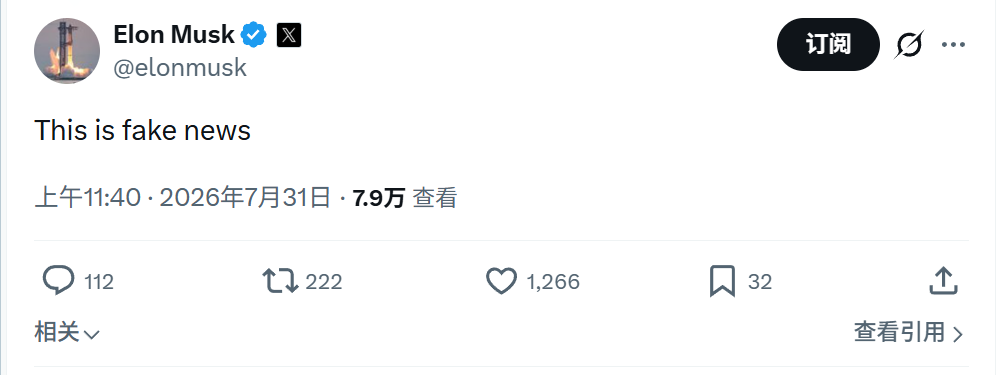
Rumors regarding a potential restructuring or strategic spinoff of Tesla's Chinese operations have recently surfaced, sending ripples through the global automotive and investment landscape. As international market analysts scrutinize the future of the Sino-US electric vehicle (EV) corridor, these Tesla China restructuring rumors present a compelling case study in geopolitical risk management and corporate adaptability.
Decoding the Rumor: Spinoff or Strategic Localization?
Speculation surrounding the separation of Tesla's Chinese business operations reflects a broader macro trend: the necessity of localized corporate architecture in an era of heightened regulatory oversight. For Tesla, its Gigafactory Shanghai is not just a high-volume manufacturing hub but a critical component of its global balance sheet. However, operating deeply within the Chinese ecosystem exposes the conglomerate to complex cross-border compliance demands.
Rather than a retreat from the world's largest EV market, industry observers view these structural considerations as a form of strategic localization. By potentially ring-fencing its Chinese assets, Tesla could protect its domestic US operations and defense-related sister entities, such as SpaceX, from foreign ownership scrutiny and national security concerns raised by Western regulators.
The Geopolitical Catalyst: Defense Contracts and Trade Adaptability
One of the primary drivers behind any structural shift in Elon Musk's business empire is the strict compliance requirements of US government and defense contracts held by SpaceX. As geopolitical friction between Washington and Beijing intensifies, the operational overlap between a consumer automotive business deeply integrated with Chinese supply chains and an aerospace entity critical to US national security becomes increasingly difficult to navigate.
To mitigate these challenges, corporate restructuring serves as a tool for trade adaptability. Creating clear operational boundaries ensures that Tesla can continue to leverage China's unparalleled battery supply chain efficiency while remaining fully compliant with Western defense and technology transfer regulations.
Supply Chain Implications and Regional Footprints
Tesla’s reliance on Chinese suppliers, particularly for Lithium Iron Phosphate (LFP) battery technology and advanced ADAS components, remains unmatched. A structural reorganization would likely seek to preserve these sourcing advantages while shifting final assembly or data processing structures to align with regional trade policies.
| Region | Primary Operational Role | Compliance Strategy |
|---|---|---|
| China (Gigafactory Shanghai) | High-volume production, regional supply hub | Localized data storage, domestic supply chain integration |
| North America (Texas/Nevada) | Advanced R&D, domestic manufacturing | IRA compliance, localized battery sourcing |
| Europe (Gigafactory Berlin) | Continental production, regional assembly | Diversified component sourcing, EU regulatory alignment |
What This Means for Global EV Investors
For institutional investors, the take-away from the Tesla China restructuring rumors is clear: the era of unified, frictionless global tech platforms is yielding to localized corporate frameworks. Western OEMs and suppliers are increasingly forced to adopt dual-track strategies—one for the highly competitive, fast-moving Chinese market, and another designed to meet the stringent regulatory frameworks of the US and EU markets.
Ultimately, a structured reorganization of Tesla's Chinese business should not be interpreted as a sign of weakness, but rather as a sophisticated strategy to maintain market dominance in China while insulating global operations from geopolitical volatility.